ETM and Impactaland 2026: Everyone Wants a Check. Few Understand the Person Signing It
VC is recovering in Latin America, but it is not reaching everyone. In Santiago, the fifth edition of Impactaland brought funds and entrepreneurs together around a question not everyone fully considers: Do you know how the person you are asking for money makes decisions?


Santiago, Chile, November 22, 2026. The deck is ready. The market looks enormous. The numbers, at least on the slides, are trending upward. The founder finishes the presentation, fields a few questions, and hears a phrase as polite as it is difficult to interpret: “Let’s keep talking.”
Then, silence.
For David Alvo, managing partner of Impacta VC, many opportunities begin slipping away before the conversation ever turns to valuation. The mistake is treating all investors as if they were different versions of the same bank account. They are not.
An executive evaluating an investment for a corporation does not necessarily have the same incentives as an angel investor putting personal wealth on the line. Nor does that executive make decisions the same way as a fund accountable to its own investors. Delivering exactly the same pitch to all of them may save preparation time, but it can cost a second meeting.
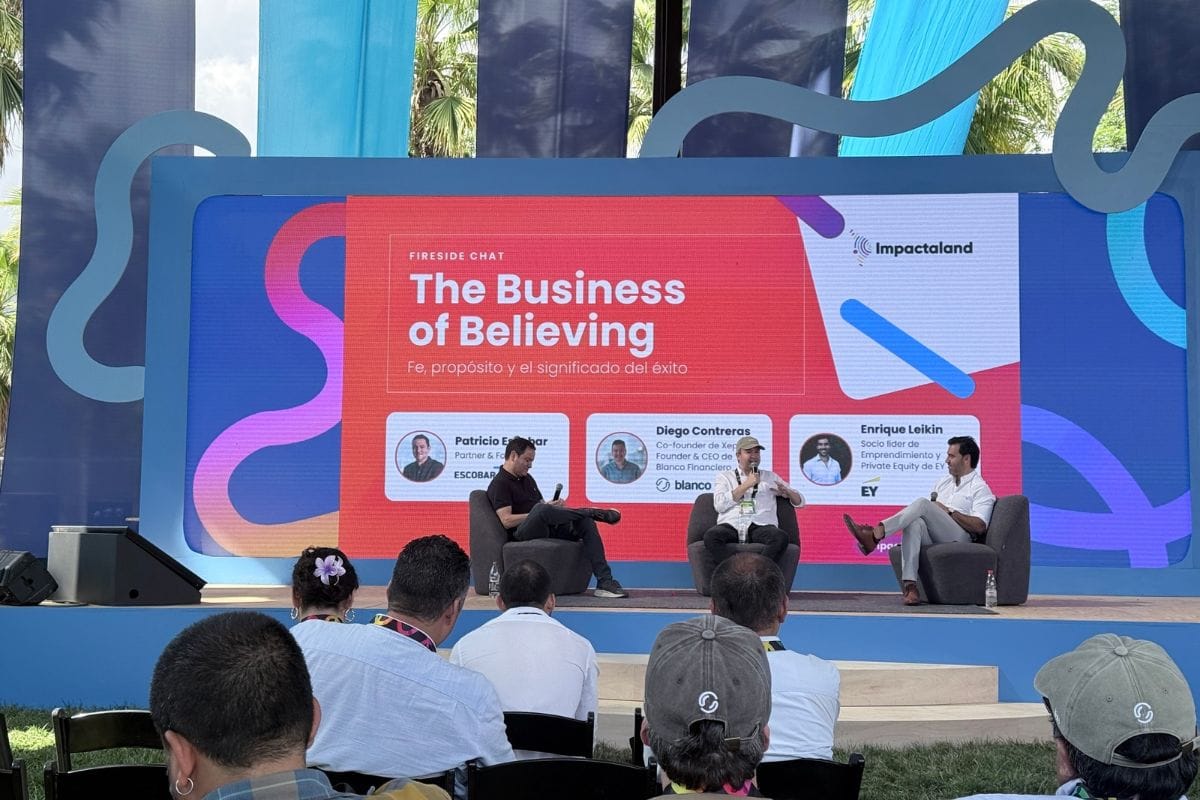
That distinction was at the heart of the fifth edition of Impactaland, the investment hub at ETM 2026. Organized by Impacta VC, the three-day gathering brought together startups, venture capital funds, angel investors, corporate investment vehicles, and family offices from across Latin America.
The idea was to put them face-to-face. The far more complicated challenge was getting them to speak the same language.
They All Have Capital. They Do Not All Want the Same Thing
Participating firms from Mexico included Redwood Ventures, Nomada Fund, Decile Hub and 500 Latam. Alaya Capital, Lucha, and Panambi Ventures were also among the participants representing Argentina and Peru, alongside Chilean firms such as Fen Ventures, Araucaria Ventures, Driven VC, and Carozzi Ventures. The lineup, which included many other firms, traced a regional map. But the most interesting distance was not measured in miles.
In a single day, an entrepreneur could go from speaking with someone able to invest personal funds to presenting the business to an organization with committees, procedures, and corporate priorities. The startup was the same. The decision it needed to prompt was not.
Alvo, whose experience includes more than 35 investments, over 400 startups accelerated, and roughly a dozen ventures founded, puts it this way:
“The biggest mistake I see is that entrepreneurs do not understand who is sitting across from them. An angel investor moves quickly because they are investing their own money; a venture capital fund manages other people’s capital and has more structured processes; and at a corporate fund, the decision-maker often is not even focused on putting the company’s money at risk, but on meeting internal targets. If you do not prepare for each of them, you waste opportunities.”
His point highlights a task less glamorous than polishing slides: researching the person across the table. Understanding what they can approve, what they need to demonstrate, and where the startup might fit among their priorities.
For Latino entrepreneurs seeking to build investor relationships, particularly in the United States, this was one of the gathering’s most transferable lessons: Crossing borders does not eliminate the need to understand who makes the decision on the other side.

The Cost of Misreading a Meeting
Frustration sets in when a founder interprets every promising conversation as an investment in the making.
According to Alvo, some entrepreneurs discover too late how different types of capital work. By then, they have accumulated rejections, exhaustion, and months of conversations that go nowhere. In some cases, they end up leaving their startups for corporate jobs.
That does not mean better preparation can prevent every rejection. It means that failing to understand the investor adds an obstacle the business did not need.
Impactaland sought to address that gap through one-on-one meetings, panels, and informal networking. Discussions organized by Impacta VC explored business purpose and the development of Chile’s venture capital industry. Beyond the formal program, the goal was to keep connections going. Because getting a few minutes of someone’s attention and building a relationship are two very different outcomes.
The Counterintuitive Advice: Stop Selling for a Moment
At an event full of potential investors, the natural impulse is to pitch the company as often as possible. Alvo suggests starting somewhere else: Ask questions.
Learn about the investor’s background. Listen to what has worked for them and what has not. Understand how they got into investing and what they are looking for. Only then ask for 15 minutes to discuss the business.
“No one is going to write a check after two meetings. What lasts after these gatherings is not the pitches, but the memorable connections: the faces, the experiences, and the emotions you managed to convey.”
The advice is not to disguise a request for money as a friendship. It is to abandon the idea that every conversation must close a sale.
A first meeting can reveal that there is no fit. Or identify missing information. Or simply give both sides a concrete reason to speak again. That does not deliver the immediate impact of announcing a funding round. But it may be the work that makes one possible.
The Money Is Coming Back. Easy Access Is Not Necessarily Following.
The regional backdrop adds pressure. According to industry figures, investment in Latin American startups increased in 2025, while the number of funding rounds declined for the third consecutive year. The distinction matters: A recovery in the amount invested does not mean access to financing has recovered.
There can be more money and, at the same time, fewer companies receiving it.
The regional map is shifting, too. According to data from LAVCA and Cuantico VP, Mexico challenged Brazil for the lead in capital raised during 2025 and the opening quarters of 2026. The participation of Mexican funds in Impactaland brought Chilean entrepreneurs closer to one of the markets driving that shift.
Chile, meanwhile, saw investment recover after its 2024 decline, although it still faces the challenge of deepening its industry and expanding its regional influence.
Having Talent and Being Seen Are Different Challenges
For Jose Kont, managing partner of Nomada Fund, the capabilities of Chilean entrepreneurs are not in question. The next challenge is making sure those capabilities are recognized beyond their home market.
“The talent and capabilities of Chilean entrepreneurs are impressive. Collaboration between the public sector, through agencies such as CORFO, and private investment players has undoubtedly helped nurture entrepreneurs who are increasingly prepared to compete regionally. More than capital, what we see as the challenge today is giving them visibility and positioning them in other ecosystems across the region and globally.”
His argument shifts the focus: A company can be ready to compete and still be off the radar of those who could finance its growth.
From that perspective, bringing together funds from different countries does more than multiply potential sources of money. It also allows founders to test their propositions with people who know other markets and use different reference points to evaluate a business.
A Full Calendar Is Not a Funding Round
After five editions, Impactaland’s ambition is less immediate than collecting contacts: improving the quality of the relationship between those who build companies and those who finance their growth.
For Impacta VC, that professionalization includes both founders preparing their first rounds and limited partners, the investors who commit capital to funds.
The gathering does not guarantee checks. Nor does putting a company in front of the right person automatically make it investable. What it can do is expose a costly misconception: that raising capital is primarily about telling a good story.
The story matters. But before rehearsing the pitch again, it may be worth answering a less obvious question: Do you know what the person across from you needs to hear—and verify?