Montreal Ventures Expands Startup Investment Strategy with US$5.8M Fund
Montreal Ventures has US$5.8 million to invest in startups while restructuring its accelerator and exploring future acquisitions.


Montreal Ventures, the corporate venture capital arm of Brazilian technology group Montreal, has R$30 million, approximately US$5.8 million, available to invest in startups. As the fund reaches its third investment, the company is also restructuring its acceleration program to support early-stage businesses that could eventually receive investment from the vehicle.
Montreal Ventures combines investments with strategic capabilities
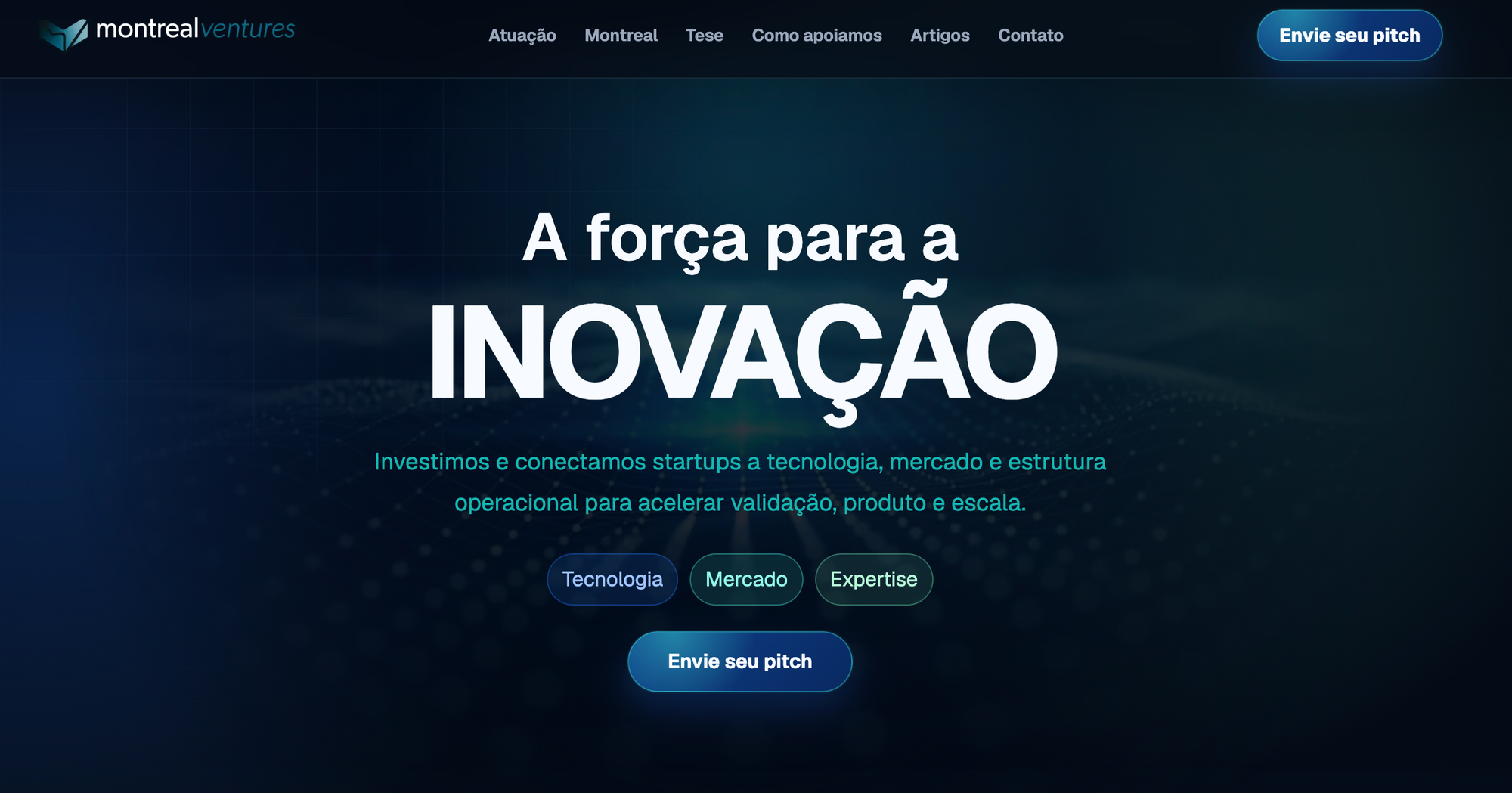
Launched in a more structured format in 2024, Montreal Ventures is part of Montreal, a Rio de Janeiro-based technology group specializing in solutions for governments. The company has around 40 years of experience, approximately 5,000 employees and a strong track record in large-scale projects for governments and financial institutions.
According to Vinícius Marcílio, Head of Montreal Ventures, the company sees its investment strategy as a long-term relationship with the startups it supports, including the possibility of becoming a future buyer of the business.
“I don’t enter a startup thinking about the exit. We invest primarily thinking about increasing our exposure and potentially becoming the buyer of that business in the future,” Marcílio said.
For Montreal, capital is not the only resource it can offer to startups. Marcílio highlights the group’s execution capabilities, access to customers, technological expertise and market knowledge as strategic assets that can support the development of technology companies.
As a result, Montreal Ventures looks for startups where the relationship with the group can create value for both sides.
Government, healthcare and education among the focus areas
The fund is interested in companies operating across government, healthcare and education, particularly businesses working at the intersection of the public and private sectors.
At the same time, Montreal also sees startups as a way to expand its exposure to the private market.
Artificial intelligence is among its technology priorities, with a specific focus on AI applications that address efficiency challenges within companies. Other areas of interest include user experience, sales, specialized ERP solutions, logistics, private pension services, credit and financial services.
Rather than investing in an isolated technology, the thesis focuses on businesses that have a connection with capabilities Montreal already possesses.
Acquisitions are also on Montreal’s radar
With potential acquisitions in view, Montreal’s CVC strategy is developing across two fronts.
The first is its acceleration program, which serves as an entry point for early-stage startups. The second involves dedicating more attention to acquiring larger stakes or even controlling interests in more mature businesses.
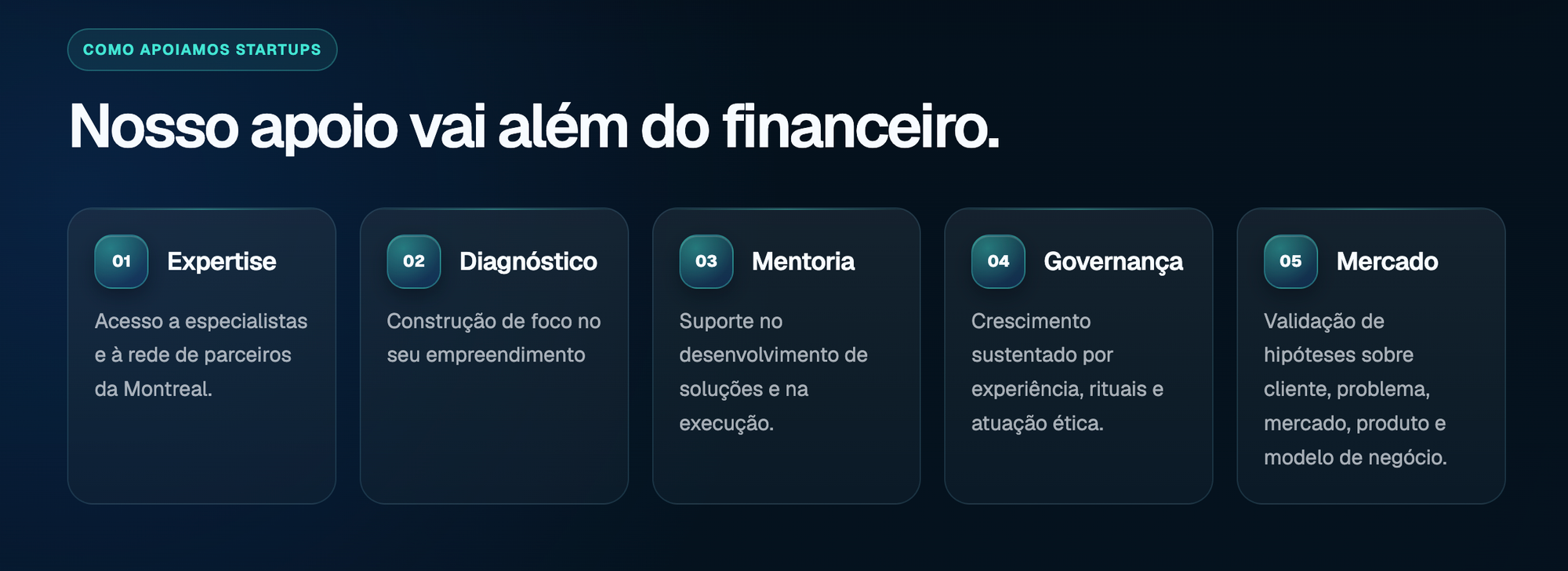
The company is now restructuring its accelerator for a new phase and will select 14 companies for its next cohort through a more rigorous curation process.
The program’s first edition was closer to a business development initiative, with Montreal working directly alongside the startups. The new approach moves earlier in the entrepreneurial journey, focusing on companies that are still in the validation stage.
The methodology is designed to help founders gather evidence about their businesses before moving forward with the development of their solutions. At the end of the process, Montreal and the startup may establish a joint work plan and evaluate a potential investment.
Marcílio said he would consider it a strong outcome if around one-third of the selected companies became investable businesses with which Montreal could agree on a joint plan.
“Ideally, if I have good investable businesses in one-third of that cohort, with which we can agree on a plan together, I would already be very satisfied,” he said.
He noted that this would be above the average for acceleration programs, but pointed to the rigorous selection process and the way incentives are being structured for both Montreal and participating startups.
The accelerator aims to support different founder profiles
Marcílio identifies two recurring founder profiles among entrepreneurs who approach Montreal.
The first is the technical entrepreneur: someone with deep knowledge of a particular segment who developed a solution based on that experience but may need support with sales and go-to-market strategies.
The second profile is nearly the opposite. These founders have a deep understanding of the market and the customer but need support to develop the technology behind their businesses.
Montreal’s acceleration program was also designed to bring these profiles closer together.
“In a perfect world, they get married,” Marcílio joked.