Multigenerational Leadership: How CMI Strengthens Its Governance and Corporate Purpose
CMI’s multigenerational leadership strengthens governance, corporate purpose, and ethical culture across its multilatina operations


Leadership within a family-owned multilatina corporation presents specific challenges related to continuity, decision-making, and consistency of purpose. In the case of CMI, Corporación Multi Inversiones, generational transition has not represented a break with its identity, but rather an evolution of its governance model and strategic leadership.
Founded in Guatemala and now led by the third generation of the Gutiérrez-Bosch family, CMI has consolidated an approach that combines long-term vision, professionalization, and shared values. This model has allowed the corporation to maintain a strong ethical culture while articulating strategic decisions aligned with its corporate purpose: to generate with family warmth, opportunities for change lives. The way the organization approaches new markets and redefines its business lines reflects how governance translates into concrete action.
Corporate Governance with Generational Continuity
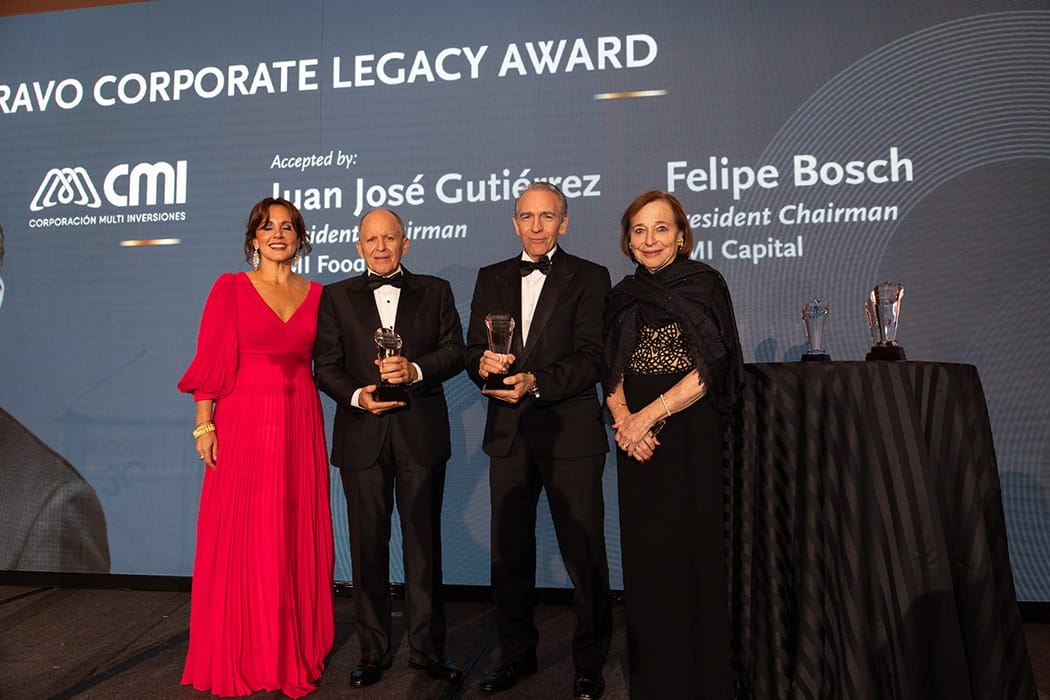
One of the pillars of leadership at CMI is the clear separation between ownership, corporate governance, and executive management. This structure has allowed active family involvement at the strategic level without interfering in day-to-day operations. Today, the corporation is led by Juan José Gutiérrez Mayorga, President Chairman of CMI Foods and Chairman of The Board of Del Real Foods; Felipe Bosch Gutiérrez, President Chairman of CMI Capital; and Juan Luis Bosch Gutiérrez, Chairman of CMI’s Board of Directors, all representing the third generation of the family.
This structure strengthens governance based on formal decision-making processes, accountability, and a shared vision. In addition, generational continuity is supported by the transmission of principles and management criteria rather than by concentration of power. Leadership is therefore exercised through institutional coherence, enabling stability even when entering new business environments.
This logic has guided recent strategic decisions, such as CMI’s entry into the U.S. market. For the corporation, this step represents a natural evolution of its model, following a decade of sustained growth in Central America, a period during which the company tripled its size through regional expansion of its operations.
Strategic Vision Applied to New Markets and Businesses
CMI’s multigenerational governance shapes how the corporation evaluates and manages opportunities. In the United States, this vision is expressed through two clear initiatives: the majority stake in Del Real Foods, a company specializing in Hispanic-inspired refrigerated foods, and the continued strengthening of Pollo Campero’s presence, one of its flagship brands.
These decisions reflect a strategic reading of the market and a long-term commitment consistent with the organization’s planning culture. From a leadership perspective, entering new markets is not viewed as an isolated objective, but as part of an orderly growth process supported by clear governance structures and collective decision-making.
At the same time, CMI Capital has transformed its model toward an Active Asset Management approach, focused on actively managing investments and attracting new investors, supported by the corporation’s institutional reputation. This evolution of the business portfolio demonstrates how governance enables strategic adaptation without losing alignment with the corporate purpose.
REIR Values as the Core of Leadership and Organizational Culture
Leadership culture at CMI is built around its REIR values: Responsibility, Excellence, Integrity, and Respect. These principles serve as an operational framework for decision-making in contexts of growth, diversification, and entry into new markets. Far from being purely declarative, these values are embedded in internal policies, investment criteria, and relationships with communities and strategic partners.
From this perspective, multigenerational leadership translates into a consistent organizational culture in which decisions take into account economic, social, and reputational impacts. This coherence has received international recognition, including at the 2025 Council of the Americas Symposium held in Miami, where Juan José Gutiérrez Mayorga and Felipe Bosch Gutiérrez received the BRAVO Award for Business Legacy.
Leadership That Combines Vision, Processes, and Purpose
CMI’s leadership model is based on a balanced combination of family vision and professional management. This approach allows the corporation to maintain clarity around strategic priorities while preserving operational flexibility. Key elements of this leadership include:
- Clear definition of roles among family ownership, corporate governance, and executive management.
- Structured decision-making processes aligned with institutional purpose.
- Continuity of the family legacy through shared values.
- A long-term focus on business sustainability and community impact.
These elements help the corporation sustain a clear identity, even while operating across multiple countries and industries.
The CMI case shows how multigenerational leadership, when supported by strong governance and clear values, can become a strategic asset. The Gutiérrez-Bosch family has successfully combined continuity, professionalization, and corporate purpose without resorting to grandiose narratives.
Instead, it has consolidated a model in which culture, processes, and long-term vision underpin decision-making. This approach enables CMI to operate as a coherent multilatina corporation, with ethical leadership and governance that reinforces its institutional stability over time.