
Ridery, The Venezuelan Startup Redefining Ride-Hailing in Latin America Through Profitability
Ridery is redefining ride-hailing in Latin America with a profitability-first model, local capital, and a diversified mobility ecosystem.


Ridery is emerging as one of the most closely watched mobility startups in Latin America, proving that scale and sustainability can be built without relying on massive venture rounds.
Founded in 2021, the Venezuelan company has adopted an uncommon regional strategy: local capital, early diversification, and a strong focus on profitability in a highly volatile market.
A Different Growth Thesis in Latin American Ride-Hailing
In a regional ride-hailing market dominated by capital-heavy global players, Ridery has positioned itself around operational discipline and margin optimization by vertical. Rather than pursuing aggressive fundraising, the company has communicated a strategy centered on building business units that can absorb demand shocks and sustain growth internally.
“From the beginning, we made a decision to grow with discipline. In markets where capital isn’t infinite, profitability isn’t a future plan, it’s part of the product,” said Gerson Gómez, Founder and CEO of Ridery. “We bet on local talent and financing because sustainability is built from within, not from the expectation of the next round.”
The Entrepreneurial Journey Behind Ridery

Ridery’s trajectory is closely tied to the entrepreneurial path of its founder. Before entering mobility, Gómez spent years in e-commerce, starting in the mid-2000s with early online sales initiatives and later pivoting to a marketplace for Venezuelan-made products.
That experience shaped two critical lessons: operating efficiently in constrained markets and building trust with users and suppliers where institutional frameworks are fragile. These foundations became central to Ridery’s operating philosophy when the company launched in 2021.
From Ride App to Mobility and Logistics Ecosystem
Ridery was born with a core hypothesis: to address gaps in supply and reliability in urban mobility through a collaborative economy model adapted to local market conditions. Over time, the company evolved from a ride-hailing app into a broader ecosystem designed to capture value across multiple points in the mobility and logistics chain.
“We don’t compete to be just another ride app. We’ve built an ecosystem that solves mobility and logistics in daily life, people, cargo, fleets, and complementary services,” said Gómez. “The goal now is to prove that what we learned operating under complex conditions can scale across Latin America with efficiency and trust.”
Today, Ridery’s portfolio includes passenger mobility, logistics and cargo services, bus ticket sales, fleet programs, and an advertising unit.
Diversification as a Risk Management Strategy

This multi-vertical architecture responds to a clear market logic: when a single vertical is vulnerable to seasonality or pricing pressure, diversification helps stabilize revenue and utilization.
Operationally, Ridery has reported transaction volumes that position it as a national reference point, supported by a broad base of certified drivers that ensures service availability.
A Milestone in Financial Strategy: Local Market Financing
In 2025, Ridery took an uncommon step for mobility startups by financing itself through a local market issuance of commercial paper, a short-term debt instrument comparable to corporate credit placed with institutional investors at defined rates and maturities.
Accessing this type of financing requires financial order, repayment capacity, corporate governance processes, and operational consistency, a level of institutional maturity that markets can assess. Beyond funding, this move also signals an alternative path for regional startups when venture capital is scarce or expensive.
For businesses generating cash flow with predictable revenues, short-term debt can become a growth lever without equity dilution, supporting expansion, technology investment, or working capital under clear cost and time rules.
A Model Built on Cost Control and Vertical Monetization
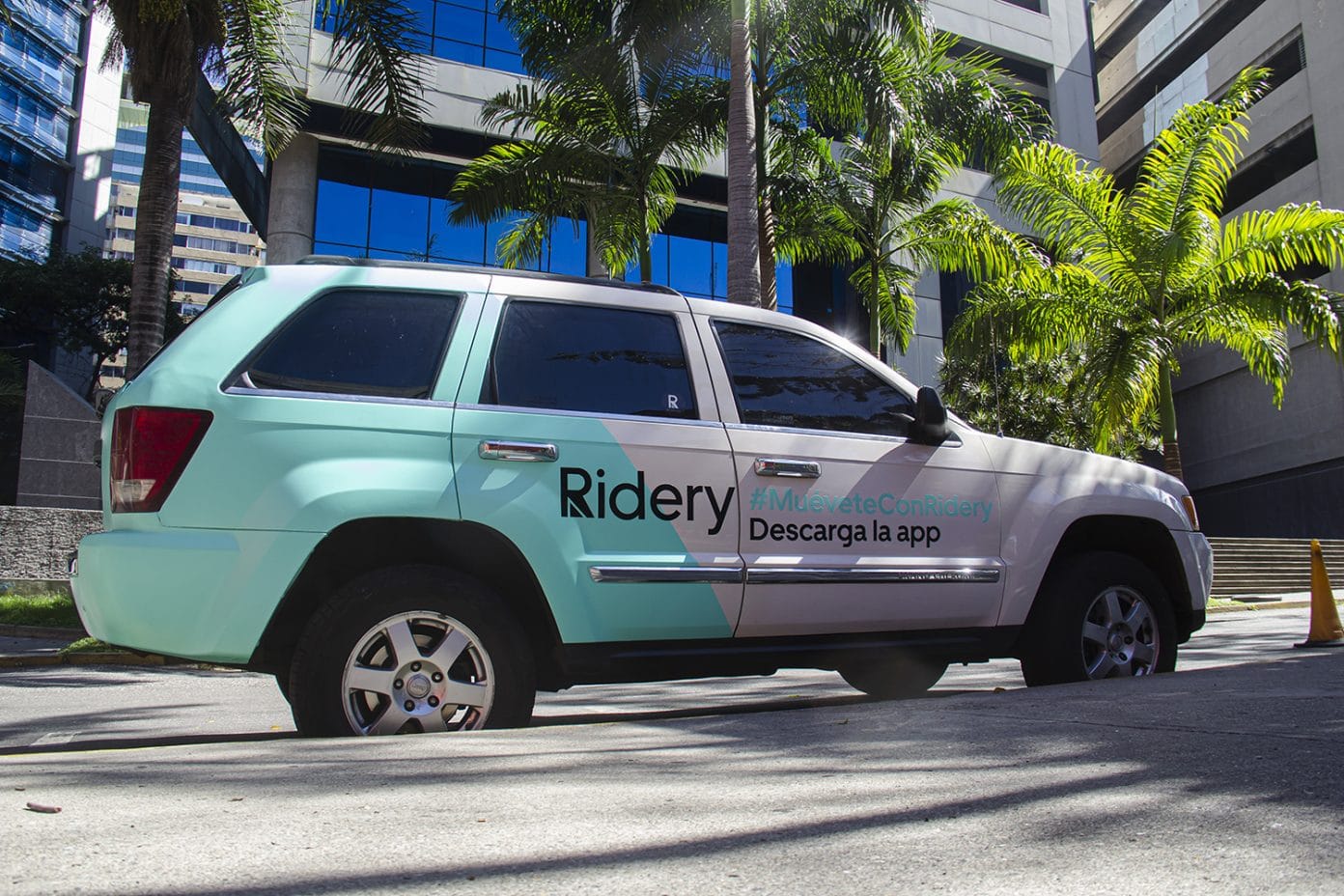
In a Latin American context where many mobility startups grew under subsidy-driven and hyper-expansion models, Ridery’s path reflects a different logic: controlled growth, vertical-level monetization, and the use of local financial tools to sustain operational momentum.
Social Impact Through Mobility and Access to Income
Ridery frames part of its growth in social terms. In markets with mobility gaps, access to transportation directly supports productivity — enabling people to reach jobs, hospitals, administrative services, and essential activities.
The company has also promoted schemes that allow drivers without their own vehicles to participate through self-management models and fleet partnerships, expanding income opportunities in an environment dominated by informality and labor instability. For ecosystem observers, this operational network, built around availability, safety, response times, and trust, is as critical to scale as the technology itself.
Regional Expansion: The Next Test
The chapter most closely watched across LATAM is Ridery’s international expansion. The company has reported progress outside Venezuela through its verticals and has reiterated its ambition to scale regionally.
This represents the ultimate test: competing in markets with strong incumbents, more stable regulation, and different consumer expectations. If Ridery succeeds in transferring its efficiency, forged under constraint, into more competitive environments, it could become a reference case for startups born in complex markets that aim to scale without depending on abundant capital.