Rock Encantech Acquires Akropoli Reshaping Brazil’s Retail Finance Landscape
Akropoli joins Rock Encantech to integrate Open Finance and retail data in Brazil, enabling new credit, payment, and personalization use cases.


Brazilian retail is entering a new phase where understanding how consumers pay, not just what they buy, has become a strategic priority. In this context, Akropoli, a regulated Open Finance infrastructure startup, is now at the center of a move that aims to connect consumption data with financial intelligence at scale.
Retail data meets Open Finance intelligence
The Brazilian retail sector is experiencing a quiet but decisive race for data. The focus has shifted from purchase behavior alone to a deeper understanding of consumers’ real financial capacity. This convergence is becoming the foundation for new credit models, personalized offers, and embedded financial services.
Against this backdrop, Rock Encantech, a São Paulo–based company operating one of the country’s largest consumer behavior data ecosystems, has acquired Akropoli, an Open Finance intelligence and infrastructure startup from Santa Catarina regulated by Brazil’s Central Bank. Although the transaction value was not disclosed, the deal significantly expands Rock Encantech’s technological scope.
For retailers, the promise lies in access to a unified data layer that combines purchase behavior, location intelligence, and consumer-authorized financial information, capabilities that until now were largely limited to banks and fintechs.
Why the timing matters
The integration comes at a moment when combining these data sets has become technically and commercially viable. Akropoli is growing its access to financial data at a rate of approximately 86% per month, nearly ten times faster than the Brazilian market average.
Meanwhile, Rock Encantech monitors around 130 million consumers and processes more than 1.3 billion transactions annually. Together, the companies see an opportunity to create what they describe as “a new market,” bridging retail, payments, and credit.
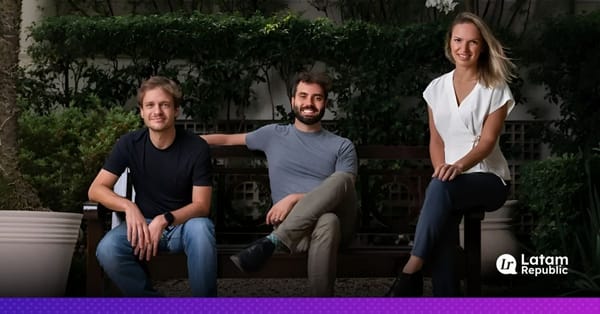
“We saw a massive opportunity to unite consumption data with financial data to generate intelligence,” says Paulo Valadares, co-founder of Akropoli alongside Ricardo Toledo. “This volume of information will create a new paradigm for the market.”

From mass adoption to real-world use cases
With 84 million active Open Finance users in Brazil, the sector has reached its first moment of critical mass. The Rock–Akropoli integration aims to anticipate practical use cases such as credit assessment based on combined data, Pix payment initiation directly within retail environments, and personalized offers aligned with a shopper’s real financial capacity.
“The big vision is to have a holistic view of the customer and deliver value at the right moment,” explains Ricardo Toledo, co-founder of Akropoli.
He adds that consumers are often overwhelmed by irrelevant offers: “When we combine consumption science with financial data, we identify what truly matters to the customer.”
Akropoli’s journey in Open Finance
Akropoli’s origins are closely tied to its founders’ experience in the financial sector. Valadares built his career at Itaú, IBI,the financial arm originally created by C&A, and Sicredi, where he led credit operations. In 2020, after relocating to Florianópolis, he began studying the implications of Open Banking regulation.
The turning point came when he realized the regulatory shift would fundamentally change how both banks and retailers assess risk and design products.
“After returning from an Open Banking seminar, it was clear we needed to completely rethink the strategy. It was a new paradigm,” Valadares recalls.

Shortly after, he invited Toledo to join the venture, a decision made, as he puts it, “in 30 seconds.” Toledo, a physicist trained at Unicamp, previously worked in credit and risk modeling at Unibanco and helped launch Itaú’s card operations in Mexico, an experience he describes as his “first startup.” Back in Brazil, he became involved in loyalty programs and the Santa Catarina innovation ecosystem, actively contributing to Open Finance forums and creating the Fintech Trends event.
Akropoli was founded with the mission of extracting value from Open Finance data. The startup participated in LIFT, the Central Bank’s regulatory innovation lab, and was twice a finalist at Next–Fenasbac. Today, it processes more than 12 million transactions per month.
How Rock Encantech completes the picture
While Akropoli focused on financial infrastructure, Rock Encantech operated at the opposite end of the spectrum: retail. The company works with behavioral data, CRM, retail media, and analytics, serving clients such as Pague Menos, Assaí Atacadista, Arezzo&Co, and Livelo. Its platform analyzes an annual GMV exceeding BRL 310 billion in identified purchases.
By integrating Akropoli, Rock extends its capabilities into financial journeys, enabling retailers to operate services traditionally associated with financial institutions, including credit, payments, reconciliation, and fraud prevention.
“The combination with Akropoli allows us to integrate financial information with what we already know about consumption and territory,” says Carlos Formigari, CEO of Rock Encantech. “This creates new ways to support retailers in offering financial services.”
Akropoli will remain operationally autonomous within the Rock Encantech ecosystem, retaining its team and partners. Valadares and Toledo will focus on technological integration and the advancement of Open Finance, AI, security, and data-driven products.

What lies ahead for retail financial services
The first joint deliveries are expected in the first half of 2026, with pilots already underway in areas such as in-app payments within Rock’s Super App, advanced reconciliation, and antifraud solutions that combine consumption data with transactional infrastructure.
However, the main challenge is not purely technical. Merging purchase behavior with financial life requires clear consumer consent, transparent value propositions, and a cultural shift within retail, a sector traditionally characterized by tight margins and risk aversion.
Retail is also entering regulated territory long dominated by banks. To compete, companies must balance personalization, security, and governance.
“It’s the mindset of truly putting the customer at the center that will determine whether these offerings make sense,” Toledo concludes. “This is not technology for technology’s sake. It’s about efficiency and relevance.”
For the founders, the partnership with Rock Encantech enables a new kind of ecosystem, one that connects consumption, territory, and finance through a single intelligence layer. In a market that has rapidly adopted Pix and consistently embraces tools that improve conversion, Brazilian retail may be on the verge of its next financial disruption.