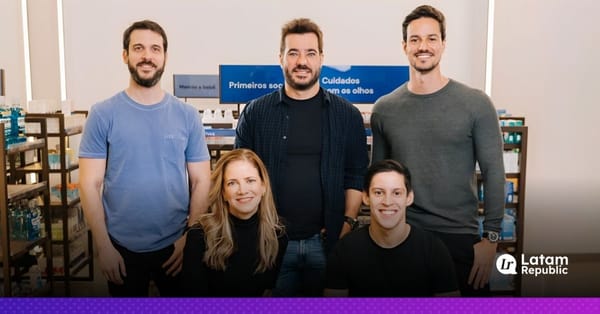
Tess AI Raises US$5M to scale Autonomous Agents and Expand to Silicon Valley
Tess AI raises US$5M and moves to Silicon Valley to scale its autonomous agents platform and disrupt SaaS with task-based AI.


Tess AI, a Brazilian-founded autonomous agents platform, is moving its headquarters to Silicon Valley following a US$5 million seed round, as it positions itself to expand globally and challenge traditional SaaS models with task-based AI automation.
From Brazil to Silicon Valley after US$5M seed round
Tess AI was founded by Brazilian entrepreneurs and is now preparing to relocate to San Francisco in April as part of its international expansion strategy.
The move follows a US$5 million seed round led by Hi Ventures, DYDX Capital, and Honeystone, investors with strong ties to the global tech ecosystem.
The startup, which currently operates with around 30 remote employees, still has 80% to 85% of its customer base in Brazil. However, it already serves companies across 25 countries, including Publicis Groupe, Maple Bear, and State Grid.
Replacing software, not people
Tess AI’s core thesis challenges the traditional narrative around automation and jobs.
“When Tess enters a company, within the first six months, four to five software tools are canceled. It’s the software that gets fired, not employees,” said Ricardo Barros, co-founder and CEO.
He adds that “the number one enemy of agents is SaaS, not workers,”
Highlighting the company’s positioning against legacy software systems.

A new pricing model in the era of “SaaSpocalypse”
The company is entering the market at a time when traditional software companies are facing pressure from AI-native solutions, a trend often referred to as the “SaaSpocalypse.”
According to Barros, the investor lineup reflects both technical and academic validation of this thesis. The round includes figures such as:
- Federico Antoni, early investor in Cornershop
- Ryan Nichols, former CPO of Salesforce Service Cloud
- Sarah Soule, dean of Stanford Graduate School of Business
Unlike most enterprise AI tools that charge per user, Tess AI adopts a task-based pricing model. This approach aims to reduce costs and improve ROI.
The company claims:
- Up to 68% savings compared to ChatGPT Business
- Up to 90% savings compared to ChatGPT Enterprise
Additionally, the platform removes adoption barriers by allowing any employee to create and share agents without requiring IT approval or additional licenses.
“Vibe working”: a viral adoption model
Tess AI’s growth strategy relies on what it calls “vibe working,” where employees organically adopt AI agents across teams.
“In practice, Tess only succeeds if someone inside the company succeeds first. That creates a viral effect,” Barros explained.
This model has already shown traction:
- Over 16,000 employees have adopted the platform
- 2.1 million autonomous tasks executed in one year
- 600,000 tasks completed in the last month alone

Renato Ferreira, co-founder and COO, emphasizes that the platform goes beyond coding assistance.
“Professionals can use agents to unlock skills and perform tasks they couldn’t do alone,” he said.
Enterprise adoption and real-world use cases
One of the most notable examples is Grupo Profarma, which employs around 9,000 people.
Within 90 days:
- More than 60 employees adopted the platform
- Over 90 autonomous agents were created
- A new AI-focused department was established
This demonstrates how Tess AI can scale internally within organizations through decentralized usage.
A marketplace of 50,000 AI agents
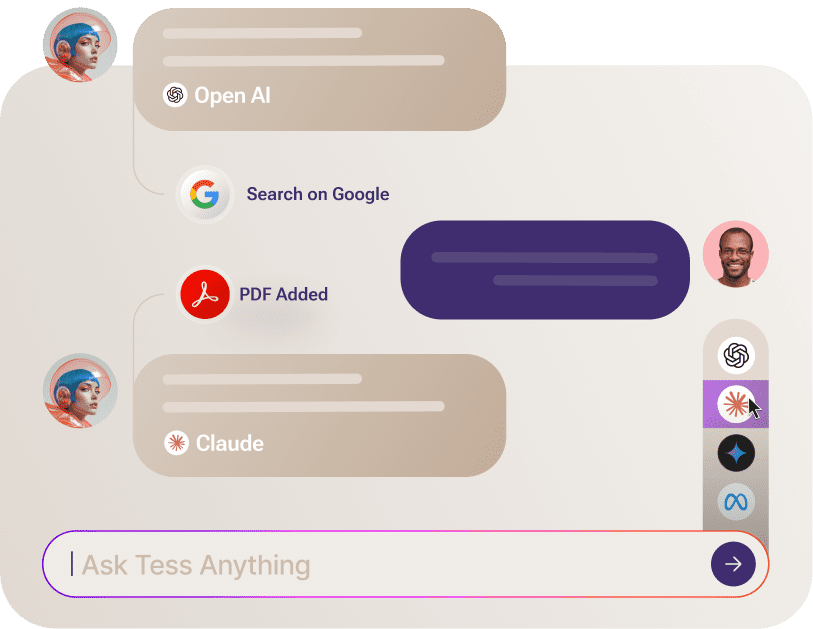
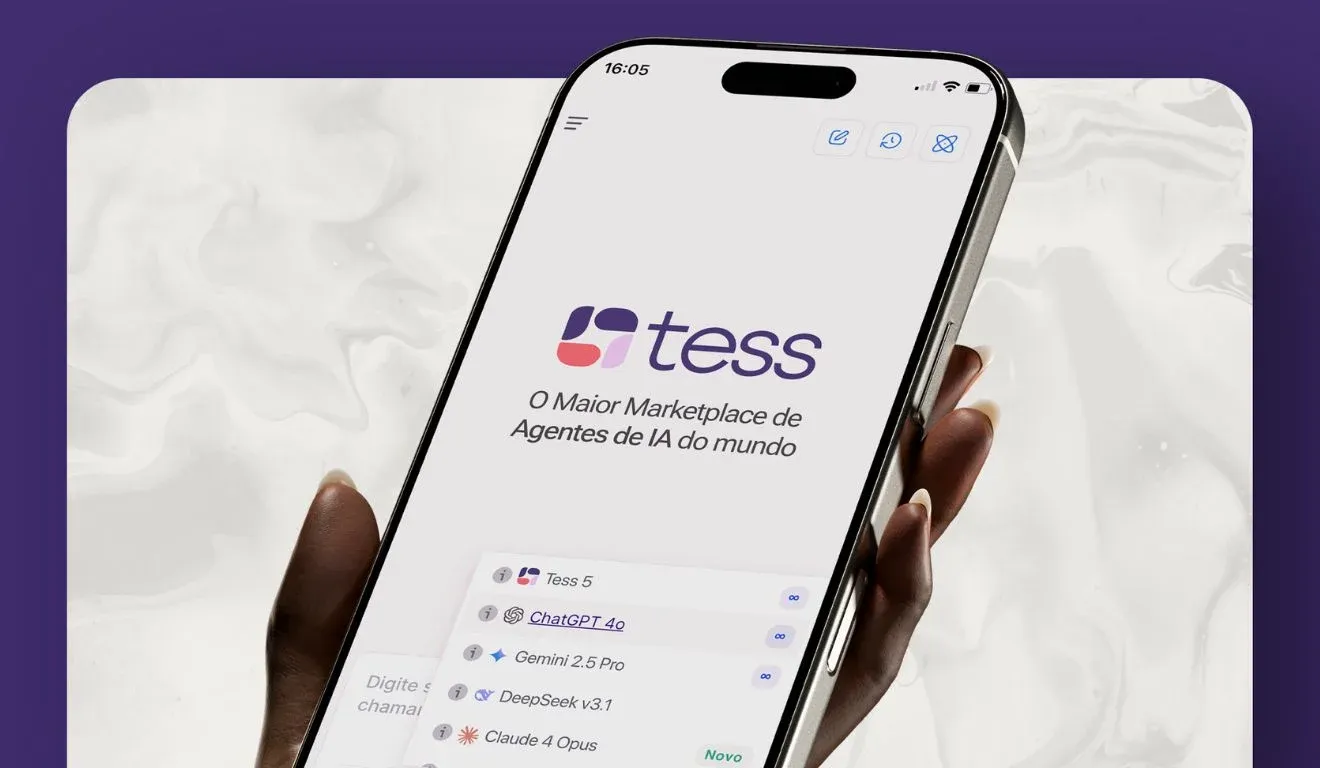
Tess AI operates as a marketplace with more than 50,000 agents powered by 268 language models from providers such as OpenAI, Anthropic, Deepseek, Meta, Cohere, and Google.
Rather than acting as a simple aggregator, the company defines itself as an “agentic orchestration platform.”
Barros explains that when a user makes a request, the system creates a customized workflow where multiple AI models interact. The platform also introduces a “consensus” feature, allowing users to compare outputs from different AI systems and detect potential biases.
Outperforming competitors and scaling globally
According to the company, Tess AI outperforms Manus AI by 10% in the GAIA benchmark, a key industry evaluation for autonomous agents. Manus AI was acquired by Meta for over US$2 billion.
Looking ahead, Tess AI aims to reach US$10 million in revenue by 2026, representing more than 3x growth.
The company expects this growth to come from:
- International expansion
- Continued organic adoption within existing clients
For the founders, the move to Silicon Valley reflects a broader shift in the startup ecosystem.
“In the past, companies had to prove themselves locally before going global. Now, if an AI company isn’t global from day one, it doesn’t exist,” Barros said.