
With a Valuation of Over US$1.2 B, Enter Becomes Latin America's First AI unicorn
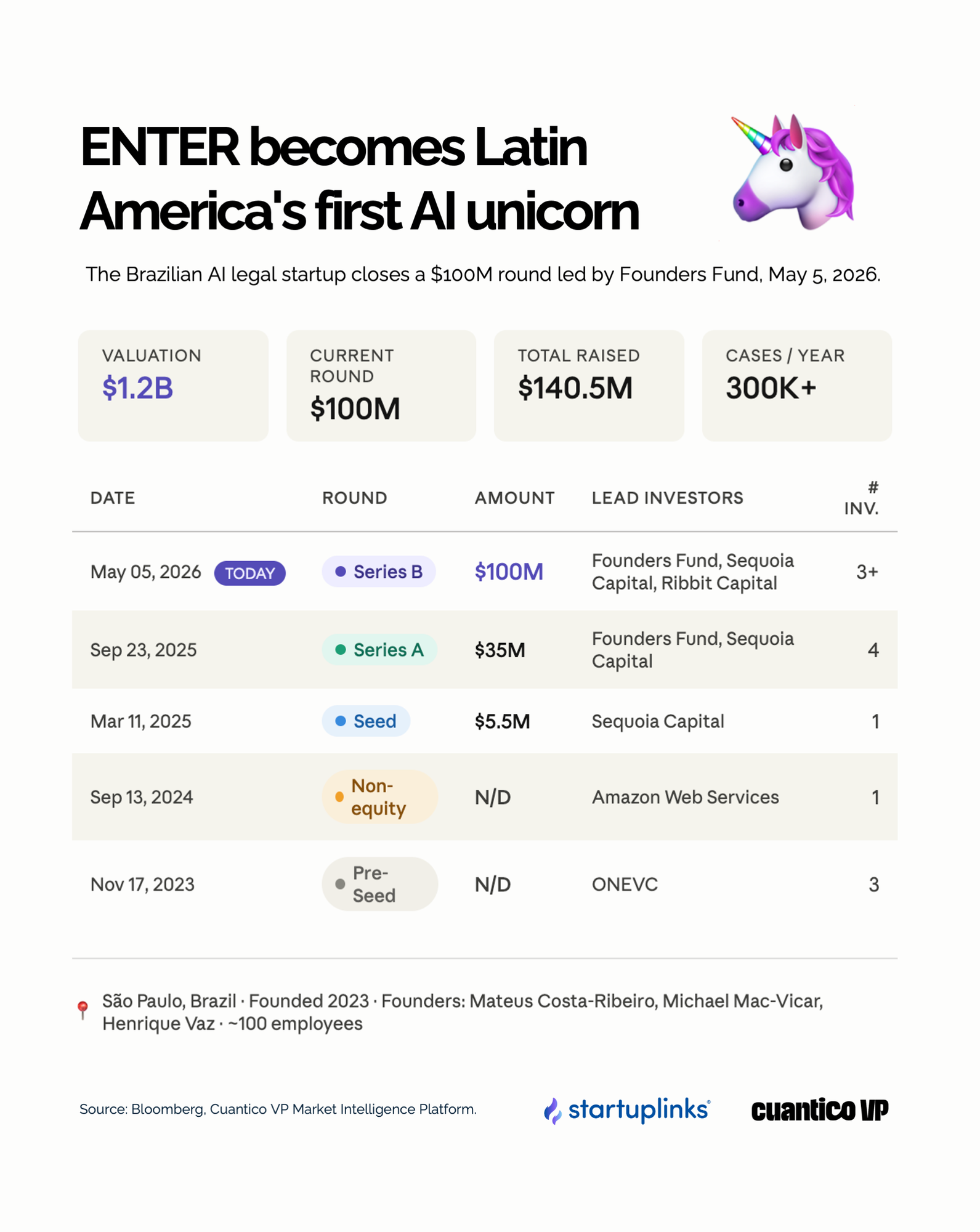
Enter, the Brazilian legaltech startup founded by former Wildlife Studios executives, became Latin America’s first AI unicorn after raising a US$100 million Series B led by Founders Fund, Sequoia Capital, and Ribbit Capital.

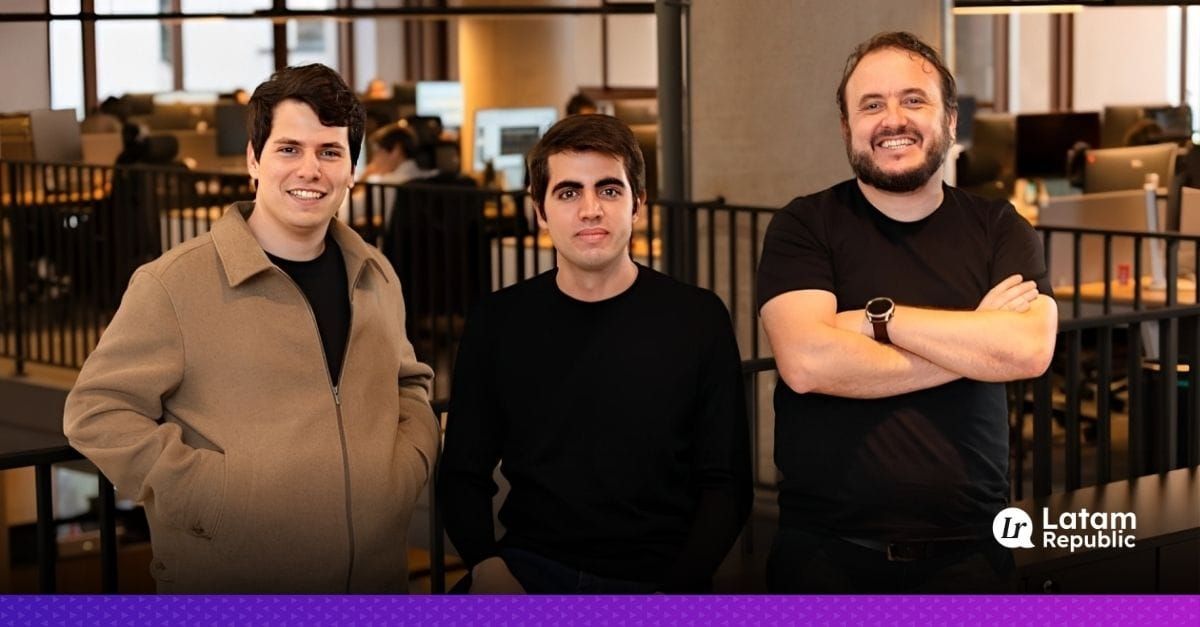
Enter has become Latin America’s first AI unicorn after securing a US$100 million Series B round that valued the Brazilian legaltech company at US$1.2 billion. Founded in São Paulo in 2023, the startup is reshaping how companies handle large-scale litigation by combining artificial intelligence with Brazil’s uniquely complex legal environment.
A Legaltech Startup Built by Former Wildlife Studios Executives
Enter was founded in São Paulo by Mateus Costa-Ribeiro, Michael Mac-Vicar, and Henrique Vaz, three former executives from Wildlife Studios, once considered Brazil’s largest technology success story.
Rather than coming from traditional legal backgrounds, the founders approached the sector with a product-focused and scalability-driven mindset. Their objective was to address one of Brazil’s most persistent structural challenges: an overloaded judicial system with more than 80 million active legal cases.
For large corporations operating in Brazil, including companies such as Airbnb and LATAM Airlines, labor and consumer litigation generates a massive operational burden. Enter identified this complexity as an opportunity rather than a limitation.
The company’s model improves as it processes more legal cases, allowing its artificial intelligence systems to become increasingly accurate and efficient over time.
How Enter Uses AI to Manage Litigation End-to-End
Enter’s platform goes beyond automating legal paperwork. Its technology manages the judicial process from beginning to end through AI-powered workflows.
The system drafts legal motions, estimates optimal settlement costs, investigates contextual evidence, and coordinates processes before escalating cases to human professionals when necessary. According to the company’s model, even external variables such as weather conditions in canceled flight claims can become part of the analysis process.
Another defining aspect of the company’s business structure is its incentive alignment. Thirty percent of Enter’s fees are directly tied to case outcomes, connecting the company’s revenue to the effectiveness of its legal resolutions.
Each successful case also contributes to improving the platform’s performance, reinforcing the company’s competitive advantage over time.
The Funding Journey That Turned Enter Into a Unicorn
Enter’s capital trajectory reflects growing investor confidence in the company’s long-term potential and in AI-driven legal infrastructure across Latin America.
Pre-Seed Round Led by ONEVC
In November 2023, Brazilian venture capital firm ONEVC backed Enter during its pre-seed stage. At the time, the company had not yet established a proven product, but investors recognized the founders’ experience and the scale of the market opportunity.
Although the amount raised was not publicly disclosed, the round established the foundation for the company’s future growth.
Sequoia Capital Leads Seed Round
The company reached a major milestone in March 2025 when Sequoia Capital led a US$5.5 million Seed round.
Sequoia’s participation carried broader significance for the Latin American ecosystem, particularly because the firm rarely invests in the region solely for geographic exposure. The investment positioned Enter as a company with the potential to define a new category within the legal sector.
Founders Fund and Sequoia Back Historic Series A
In September 2025, Enter raised a US$35 million Series A round co-led by Founders Fund and Sequoia Capital.
Within Latin America, rounds of this size had traditionally been associated with large fintech companies operating at massive scale. For a legaltech startup, the financing was considered unprecedented in the region and notable even globally, where legal sector Series A rounds typically remain below comparable levels.
The participation of Founders Fund, founded by Peter Thiel, reinforced investor confidence in Enter’s ability to tackle a market widely viewed as difficult to modernize.
Ribbit Capital Joins US$100 Million Series B
In May 2026, Enter secured a US$100 million Series B round led by Founders Fund, Sequoia Capital, and Ribbit Capital, officially reaching unicorn status with a valuation of US$1.2 billion.
Ribbit Capital’s involvement added another layer of significance to the transaction. Known for backing companies such as Nubank, Brex, and Robinhood, the fund’s participation suggests investors increasingly view Enter not only as a legaltech company, but also as infrastructure for managing corporate legal risk.
The company’s valuation tripled compared to its previous financing round, marking one of the fastest growth trajectories for an AI startup in Latin America.
Why Brazil’s Legal Complexity Became Enter’s Competitive Advantage

Enter’s growth highlights a broader pattern emerging across Latin America’s technology ecosystem.
Many of the region’s largest opportunities are rooted in structural inefficiencies that global companies often struggle to solve externally. Brazil’s litigation-heavy environment represents one example of this dynamic.
Other sectors facing similar conditions include healthcare, tax and accounting services, education, and customs logistics. These industries share characteristics such as fragmented regulations, market-specific complexity, and high volumes of unique operational cases.
For AI-first companies, this complexity creates the possibility of building highly specialized systems trained on local realities that international competitors may find difficult to replicate.
What Enter’s Success Means for Latin America’s Startup Ecosystem
Enter’s rise also raises questions about the role of regional venture capital firms in identifying these opportunities before global investors enter the market.
ONEVC’s early backing of Enter demonstrated the importance of local investors capable of recognizing structural opportunities at an early stage. As more AI startups emerge across Latin America, the ability to identify and support these companies during their earliest phases may become increasingly important for the region’s investment ecosystem.
Enter’s trajectory suggests that the next generation of billion-dollar companies in Latin America may emerge not from replicating global models, but from solving deeply local problems through artificial intelligence at scale.