Eight Funds Redefining Impact Investing in Latin America in 2026
A group of firms is poised to set the course for purpose-driven capital in Latin America in 2026.


Latin America’s impact investing ecosystem went through a significant transformation in 2025, consolidating the region as one of the most attractive emerging destinations for purpose-driven capital. According to the Global Impact Investing Network (GIIN), 46% of global impact investors plan to increase their allocations to Latin America, while Latin American families have already deployed around US$1.4 billion in impact investments and plan to mobilize an additional US$725 million.
Against this backdrop, a group of specialized managers is poised to set the tone in 2026: eight funds that combine institutional-grade financial discipline with measurable impact theses and are rapidly becoming the preferred vehicles to channel this wave of capital into the companies that are redefining Latin America’s economy.
Vox Capital: The Brazilian Pioneer That Transformed the Market
Vox Capital holds the title of Brazil’s first certified impact investing fund, founded in 2009 by Daniel Izzo and his co‑founding team. Izzo, who built a 12‑year career at Johnson & Johnson and at Brazilian e‑commerce pioneer Submarino, brought his entrepreneurial vision into the world of purpose‑driven investing. As of 2025, he remains CEO, leading a platform that manages more than US$300 million in assets under management (AUM).
Vox Capital’s institutional credibility is reflected in its B Corp certification since 2018 and in being the first asset manager in Latin America verified by BlueMark (Tideline) under the Operating Principles for Impact Management (OPIM). This level of technical validation underscores the rigor with which Vox Capital designs and executes its impact strategy.
Fund Structure and Investment Thesis
Vox Capital operates a diversified investment architecture: eight venture capital funds complemented by a private debt fund. This configuration positions it as the only Brazilian manager with multiple asset classes that systematically applies a positive impact lens across all investment decisions and product structures.
Its impact thesis revolves around four strategic pillars aligned with the Sustainable Development Goals (SDGs):
Pillar 1: Universal Fulfillment — Financial inclusion, income generation, health, education, food and housing.
Pillar 2: Institutional Equity — Digital inclusion, empowerment of minority groups, public‑sector efficiency and information flows.
Pillar 3: Livable Cities — Mobility, sanitation, circular economy, recreation and culture.
Pillar 4: Regenerative Planet — Climate, pollution reduction, forests, sustainable agriculture and accessible clean energy.
This conceptual architecture is not a theoretical exercise: 100% of Vox Capital’s investments are explicitly aligned with this thesis, integrating financial and impact criteria into a unified due diligence process.
Flagship Portfolio
Vox Capital’s 2025 portfolio shows the maturity of Brazil’s impact startup ecosystem. Wellhub (formerly Gympass), one of its flagship investments, completed the acquisition of its European competitor Urban, consolidating its global expansion. The corporate wellness platform is a case study in how Brazilian impact solutions can compete and win in developed markets.
Cubos Academy, another portfolio company, developed Emy, an AI‑based educational tool adopted by MUST University in the United States. This illustrates a “reverse innovation” effect: Brazilian education technology designed to democratize access to technical skills is now being exported to the US market.
Nude, highlighted for its sustainable practices and circular‑economy focus, reflects Vox Capital’s emphasis on businesses that deliver both financial returns and environmental transformation.
IGNIA: Architects of Impact Venture Capital in Mexico
IGNIA, founded in 2007, was Mexico’s first venture capital fund built around an explicit impact thesis. It was conceived by Álvaro Rodríguez Arregui and Michael Chu following their extraordinary success in microfinance: both were part of the leadership team at Banco Compartamos, which generated 250x returns for its investors and revealed the massive opportunity in serving Mexico’s emerging middle class.
Chu brings a distinguished track record as former CEO of ACCION International and a private equity veteran at KKR, later co‑founding Pegasus Capital in Argentina. Rodríguez Arregui blends operational and capital markets experience in base‑of‑the‑pyramid markets. Fabrice Serfati joined in 2008, complementing the firm’s leadership bench and helping to institutionalize operations.
Strategic Evolution and Fund Model
IGNIA operates from Boston (corporate headquarters), Mexico City and Monterrey, managing more than US$400 million across three successive funds. The firm invests in early stages (seed, Series A and Series B), backing globally‑minded tech entrepreneurs who address fundamental pain points in Latin American markets.
Its core demographic target is Mexico’s emerging middle class, representing roughly 70% of the population and an estimated US$426 billion market that has grown at 7% annually over the past 15 years. This is not an abstract statistic: it refers to 88 million people underserved by incumbents and hungry for innovative products and services.
IGNIA’s evolution from Fund I to Fund II illustrates institutional learning. In Fund I, few portfolio companies were truly tech‑intensive; some investments were in agribusiness and B2B models. In Fund II, every investment positions technology as a core operating component. IGNIA exited deals that required major behavioral changes from consumers, stepped away from agribusiness models dependent on government contracts and pivoted decisively toward B2C.
Fintech moved from marginal to central: today IGNIA has a strong presence in payments systems, P2P lending and financial marketplaces—anticipating the fintech wave that would dominate Latin American venture investing in subsequent years.
Capital Structure Innovation
IGNIA achieved a historic milestone when its second fund became the first venture capital fund in Mexico to secure commitments from Afores, the country’s pension funds. This opened a new channel for domestic institutional savings to flow into local venture opportunities, reducing the reliance on development institutions and foreign capital that had characterized its first fund.
High‑Impact Portfolio
Aviva (2024) combines artificial intelligence and real‑time video through a network of innovative physical kiosks to deliver financial services to unbanked communities in Mexico. The model solves the digital inclusion paradox by using advanced technology in a physical format to serve people who lack smartphones or reliable connectivity.
Covalto made history in 2022 by becoming the first fintech company to acquire a bank in Mexico. Founded by David Poritz and Allan Apoj, Covalto offers an integrated platform that bundles multiproduct credit, banking services and analytics tools for SMEs. IGNIA invested in 2018, backing digital banking infrastructure well before the regional fintech boom.
Ver de Verdad, founded by Hugo Moreno, democratizes access to affordable eyeglasses for low‑income segments through a network of small optical stores located in strategic urban areas. IGNIA invested in 2011, illustrating that impactful innovation can be physical as well as digital.
The portfolio also includes high‑profile companies such as Rapyd, Nuvemshop, Petlove and ProducePay, showcasing IGNIA’s ability to spot regional and global winners at early stages.
NESsT: Cross‑Border Impact Investing with an Environmental Lens
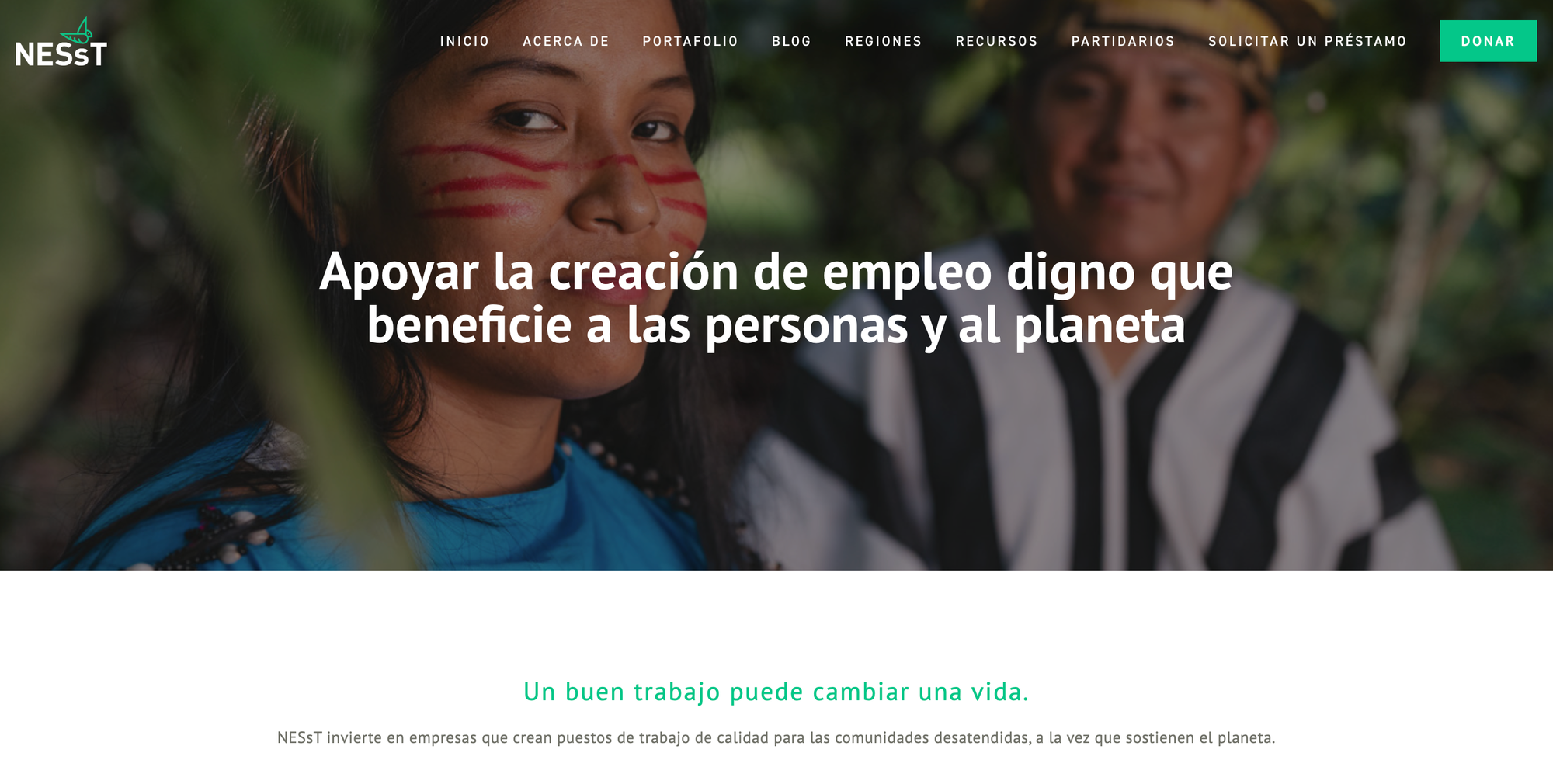
NESsT is an international impact investing organization founded in 1997, with operations in Brazil, Chile, Colombia, Ecuador and Peru, as well as Poland and Romania in Central and Eastern Europe. In April 2025, NESsT underwent a major leadership transition when Chad Sachs was appointed CEO and Chief Investment Officer, succeeding Kirsten Dueck, who had led the organization through a transformational period that expanded its impact from 1 million to 3.3 million people.
Sachs brings over 20 years of experience in renewable‑energy investing and capital raising. Before joining NESsT in 2019, he founded and scaled two solar‑power companies, raising more than US$1.1 billion. His financial expertise complements NESsT’s social mission, positioning the organization for its fourth decade with a combination of rigor and impact.
Investment Architecture: Lirio Fund and Complementary Programs
NESsT structures its capital through multiple vehicles designed for different business stages and geographies.
The NESsT Lirio Fund specializes in debt capital for small and medium‑sized enterprises (SMEs) in the Andes–Amazon region of Peru and Colombia, and is expanding into Brazil. Loan sizes range from US$50,000 to US$500,000, offering flexible financing aligned with the costs and risks faced by impact enterprises.
Since its launch in 2018, Lirio has committed US$3.7 million in loans, supporting 10 SMEs that provide livelihoods for more than 3,300 smallholder farmers and workers, 47% of whom are women. NESsT deliberately integrates a gender‑inclusion lens into its investment structures.
The fund’s model has received international recognition: NESsT won Environmental Fund of the Year, Latin America, in 2023, highlighting its innovative use of catalytic capital for environmental conservation and community‑based economic development.
The NESsT Accelerator Program South America complements Lirio with equity capital and hands‑on business development support, while NESsT Amazonia—launched in partnership with the Inter-American Development Bank (IDB)—focuses on indigenous enterprises in the Amazon basin, implemented in Colombia together with OPIAC, the National Organization of Indigenous Peoples of the Colombian Amazon.
Institutional Impact Footprint
NESsT’s aggregate metrics point to substantial operational scale: more than US$41 million invested, over 37,000 entrepreneurs trained and supported across 50 countries, more than 300 enterprises accelerated or financed, and 129,000+ formal jobs created, improving the lives of 3.3 million people from underrepresented communities worldwide.
Social Enterprise Portfolio in the Region
In July 2025, NESsT formalized its legal presence in Colombia by opening a new office, signaling long‑term commitment to the country. It currently provides custom business support and flexible finance to 13 social enterprises there.
Delzur, a women‑led international fashion brand, promotes and sells products and experiences created by over 250 indigenous community members, more than 90% of whom are women. Delzur joined the portfolio in 2024, illustrating how fashion can serve as a vehicle for indigenous economic empowerment.
Bioingredientes Amazónicos (BioIncos), an indigenous‑led company based in Putumayo, sources wild fruits from more than 170 suppliers in Colombia’s Amazon foothills and transforms them into natural oils for the cosmetics industry. BioIncos pays above‑market prices and supports small producers while preserving high‑biodiversity corridors. NESsT is helping the company expand its commercial strategy toward leading natural‑cosmetics brands in Europe and the United States by improving the traceability of products sourced from tropical forests to meet international certification standards.
Cattleya, a flower production company, received a term loan from NESsT that provides structured working capital, allowing operational flexibility while maintaining a reliable supply to its main customer.
Alaya Capital: Regional‑Footprint Venture Capital from Argentina
Alaya Capital was founded in 2011 in Córdoba, Argentina, by Luis Bermejo, initially as an experimental fund to test regional investing strategies. The firm has since evolved into a regional investment powerhouse that is helping to redefine Latin America’s tech future and attract international venture funds into the region.
In 2021, Alaya’s leadership structure was significantly strengthened with the addition of Lorena Suárez and Juan Manuel Giner as Managing Partners, providing additional expertise just as the firm began raising its third fund. This transition reflects Alaya’s maturation from a founder‑led fund into an institution with distributed executive capacity.
Fund Progression and Learning
Alaya’s fund trajectory illustrates organic growth driven by learning:
- Fund I (2011): A pilot fund that established its initial track record.
- Fund II (2017): A US$20 million vehicle that meaningfully expanded its market presence.
- Fund III (2022): A US$25 million fund that capped more than a decade of learning and adaptation to Latin America’s unique market dynamics.
By December 2025, Alaya had completed 64 investments, demonstrating a consistent pace of deal sourcing and execution.
Strategic Differentiation: Regional Infrastructure and Deep Support
What truly sets Alaya apart is its recognition that Latin American startups need far more than capital to navigate complex markets. The firm has built a multi‑layered support model:
- Hands‑On Operational Support — Working side by side with founders on go‑to‑market strategies, pricing and commercial introductions across the region.
- Future Fundraising Preparation — Actively preparing founders for subsequent rounds, helping with pitch design, data room readiness and introductions to a broad network of regional and international investors.
- Regional Expansion Infrastructure — With team members based in Mexico, Colombia, Peru, Chile and Argentina, Alaya offers genuine on‑the‑ground support to companies expanding into new markets.
Sector Investment Thesis
Alaya has identified several sectors where regional startups can leverage local conditions for differentiated growth:
- AgriTech — Investing in companies such as Kilimo (water efficiency), Loads and Aquabyte to tackle challenges in water use, sustainability and food production.
- Fintech — Backing innovators like Finerio, Lemon, Versal, Creditop, PaGo46 and Preauth to reach large underbanked populations.
- EdTech and Talent — Supporting platforms such as Talently and Teamcubation that connect Latin America’s tech talent with global opportunities while closing skills gaps.
- HealthTech — Investing in companies like Entelai and Motivia to improve care delivery and access through technology.
Representative Portfolio
Betterfly is an intelligent ecosystem that combines wellness, insurance and social purpose, with the ambition of protecting the future of 100 million families.
Moova is a digital platform that captures idle logistics capacity and transforms it into highly efficient and cost‑competitive last‑mile solutions, tackling structural inefficiencies in regional supply chains.
Pago46 enables cash payments for online purchases without credit cards or bank accounts, combining digital payment rails with on‑demand agent services—an approach tailored to millions of Latin Americans who are excluded from formal finance but active in e‑commerce.
In 2025, Coba, a cross‑border fintech, closed a US$2.2 million seed round led by Alaya Capital and Switch VC, with additional backing from Banco BASE and experienced regional financial investors including Topaz. Alaya’s most recent disclosed investment is Ximple (December 2025).
Canary: Leading the Pre‑Seed Revolution in Brazil

Canary was founded in 2017 in São Paulo as an early‑stage venture capital fund focused exclusively on Latin America. Partner Izabel Gallera leads dozens of investments in the region. Trained as an engineer, she discovered startups after entering the job market, working at Endeavor where she met Canary’s founding partners and transitioned into venture capital.
Managing Partner Marcos Toledo co‑leads a firm that describes itself as an “operator fund”: its partners are tech and investment entrepreneurs with first‑hand experience and “battle scars” from building and scaling products, teams and organizations.
Transforming Brazil’s Pre‑Seed Ecosystem
Canary has fundamentally reshaped Brazil’s pre‑seed investment landscape. Founders and ecosystem leaders often speak of “before Canary and after Canary,” recognizing the paradigm shift in how very early‑stage teams are evaluated and backed.
The fund is industry‑ and business‑model‑agnostic because its main objective is to get involved early and accompany founders throughout their journey. Canary aims to be the first institutional investor in startups that can disrupt markets and whose founders are committed to building massive businesses.
Fund Structure
In December 2019, Canary closed a US$75 million fund to invest in around 50 startups, mainly in Brazil. Fund IV later secured a US$15 million strategic investment from the International Finance Corporation (IFC) in September 2025, bringing total fund size above US$100 million.
Canary invests from US$250,000 to more than US$15 million, but typically leads the first round, providing the largest check and setting legal terms. Standard tickets for pre‑seed and seed range between US$150,000 and US$1 million.
By September 2025, Canary had executed 135 investments in Brazil and built a portfolio of over 100 companies, the difference reflecting multiple rounds into selected winners as they scale.
Investment Criteria Beyond Product
Canary’s evaluation criteria go well beyond product or market analysis:
- Operational Background — What has the founder already built? Execution history matters more than academic credentials.
- Ambition — The founder’s vision must align with the fund’s ambition to build transformative businesses.
- Ability to Build Teams and “Sell the Dream” — Considered “super important” when starting from zero; the capacity to recruit top talent and articulate a compelling vision is seen as a critical predictor of success.
- Founder‑Market Fit — The team’s background and experience must be closely aligned with the problem they are tackling, reducing execution risk.
High‑Impact Portfolio
Guppy is one of Canary’s emblematic success stories. CEO Mariana Dias had a strong leadership background at AB InBev, known for producing high‑caliber talent in Brazil. When Canary invested in 2017 (Fund I’s first year), Guppy had only a few months of runway left. After Canary’s investment, the company survived and today operates as a significant B2B e‑procurement player in Brazil.
Arvo raised a US$20 million Series A led by Kaszek and Base10 Partners in 2025, the largest Series A in Brazil’s healthcare sector at the time.
Lastro secured a US$15 million Series A round led by Prosus Ventures in October 2025, further validating Canary’s strategy of betting early on resilient founder teams.
Strategic Institutional Partnerships
IFC’s September 2025 investment in Canary’s Fund IV was more than a capital injection; it was a strategic move to strengthen Brazil’s venture capital ecosystem and accelerate innovation in fintech, healthtech, edtech and logistics.
IDB Lab also has a history of partnering with Canary, reinforcing the firm’s institutional credibility and positioning it as a bridge between global institutional capital and Latin American tech entrepreneurship.
Impacta VC: Connecting Purpose and Capital from Chile
Impacta VC emerged in 2020 in Santiago de Chile as a direct response to a core conviction: entrepreneurship can and must be an active part of the solutions the planet needs. Founded by David Alvo, Alan Farcas and Stephen Jackter, the fund brings together three successful careers aligned around “giving back” to the Latin American startup ecosystem.
Managing Partner and CEO David Alvo is an Endeavor Entrepreneur and impact investor with a degree in Industrial Engineering and a Master’s in Business Engineering from Universidad Adolfo Ibáñez. He has founded, invested in or worked at more than 10 startups, taken part in over five global accelerators (including Founder Institute), invested as a VC/angel in 30+ companies and helped accelerate over 130 early‑stage Latin American startups.
General Partner and CIO Alan Farcas co‑founded Nazca Ventures, one of Chile’s pioneer venture funds, and previously served as Executive Director of Endeavor Chile for more than five years, later leading innovation and entrepreneurship at Universidad Adolfo Ibáñez and working as Business Director at AVINA; he now also leads Fundación COPEC‑UC.
COO & CMO Catalina Taricco Zañartu brings deep experience in commercial, marketing and operations roles across multinationals and SMEs; she holds a business degree from Universidad Adolfo Ibáñez, a Master’s in Marketing and a Master’s in Hospitality Management from University College Sant Pol de Mar in Barcelona and directs Impactaland, Impacta’s flagship investment hub.
Alejandro Carboni later joined as General Partner, completing the executive team with more than 25 years of experience in process restructuring, growth strategies, M&A, negotiation and financing structures.
Fund Structure and Strategic Progression
Impacta VC currently runs two vehicles with a combined AUM of around US$12 million:
Fund I — Closed in December 2023 at US$7 million with 100% of capital committed, backed by 66 LPs from six countries, 80% of whom are founders and entrepreneurs—by design, to create a value‑adding investor base for portfolio companies.
Impact Ventures PSM Seed — A US$5 million fund launched in March 2025 as a strategic alliance with Promotora Social México (PSM), operated by Impacta VC (led by Corinne Lebrun and Victor Lau) to invest in 20 early‑stage impact startups across Latin America.
In parallel, the firm is preparing a US$20 million Fund II, signaling its ambition to scale multiple vehicles and deepen support to impact founders in the region.
Thesis: Impact at the Center, Not an Add‑On
Alejandro Carboni summarizes the firm’s philosophy: “Companies are the best vehicle to generate scalable solutions to the world’s most urgent problems.” This is reflected in practice: 100% of the fund’s investments are aligned with the SDGs and must be accompanied by rigorous impact measurement.
Impacta VC invests at early stages with a focus on early‑revenue companies but also considers teams at prototype or scaling stage. Typical ticket sizes range from US$250,000 to US$500,000, targeting the pre‑seed/seed gap where capital scarcity is most acute.
The team evaluates three core aspects: problem magnitude, solution scalability and team execution capacity—with each investment including a detailed impact assessment and ongoing strategic support.
Portfolio: From Unicorns to Transformational Companies
Fund I has made 12 investments; more than 80% of the first eight have raised follow‑on rounds at higher valuations, an exceptional follow‑on rate for an early‑stage fund.
Lab4U is a science‑education EdTech platform that democratizes access to lab experiments through mobile technology, allowing students to run experiments using smartphones and tablets instead of costly physical equipment.
Kilimo tackles agricultural water efficiency at a time when water scarcity is growing and farming accounts for most water consumption in the region.
Airbag is a Mexican insurtech addressing one of the leading causes of death worldwide: traffic accidents. Impacta VC invested US$300,000 in May 2023, followed by a US$200,000 top‑up round in December 2024.
Honorable Mentions: Additional High‑Impact Funds
The universe of impact‑oriented investors in Latin America is expanding rapidly, spanning everything from specialized venture capital funds to mezzanine vehicles, family offices and catalytic development finance, which makes any attempt at an exhaustive list both incomplete and outdated almost by definition.
Still, two platforms stand out for how their strategies are reshaping access to capital in segments that are critical for sustainable development in the region, even if they do not fit neatly into a “pure” impact‑VC label: Pomona Impact, which focuses on the missing middle of SMEs in Central America using flexible structures that are closer to private debt and growth capital than classic venture, and 500 LatAm, which does not brand itself as an impact fund but has become one of the most influential seed engines for tech entrepreneurship across emerging ecosystems in the region, including many founders solving structural social and economic challenges.
Pomona Impact: Capital for the Northern Triangle
Pomona Impact, founded in 2011 by Managing Partner Richard Ambrose and Partner Daniel Granada, specializes in small growing businesses in Central America, Mexico, Colombia and Ecuador. Fund I deployed US$2 million across 20 investments, while Fund II, launched in April 2021, reached a first close of US$10 million.
At least 75% of Pomona’s portfolio is allocated to Central America, targeting the “missing middle” of businesses that are too large for microfinance yet too small for traditional private equity. Focus sectors include agro‑processing, basic services (energy, water, education, health, housing) and the digital economy (e‑commerce, fintech, edtech and agtech).
Flagship investments include Vexi (a Mexican neobank for the underbanked, US$500,000), Tunart (a Guatemalan fish‑processing business working with 200+ artisanal fishers and tripling revenues, US$500,000 with a 23% IRR) and Fun Crafts International (educational toys in El Salvador, US$1.5 million in June 2025).
500 LatAm: Democratizing Seed Capital Across the Region
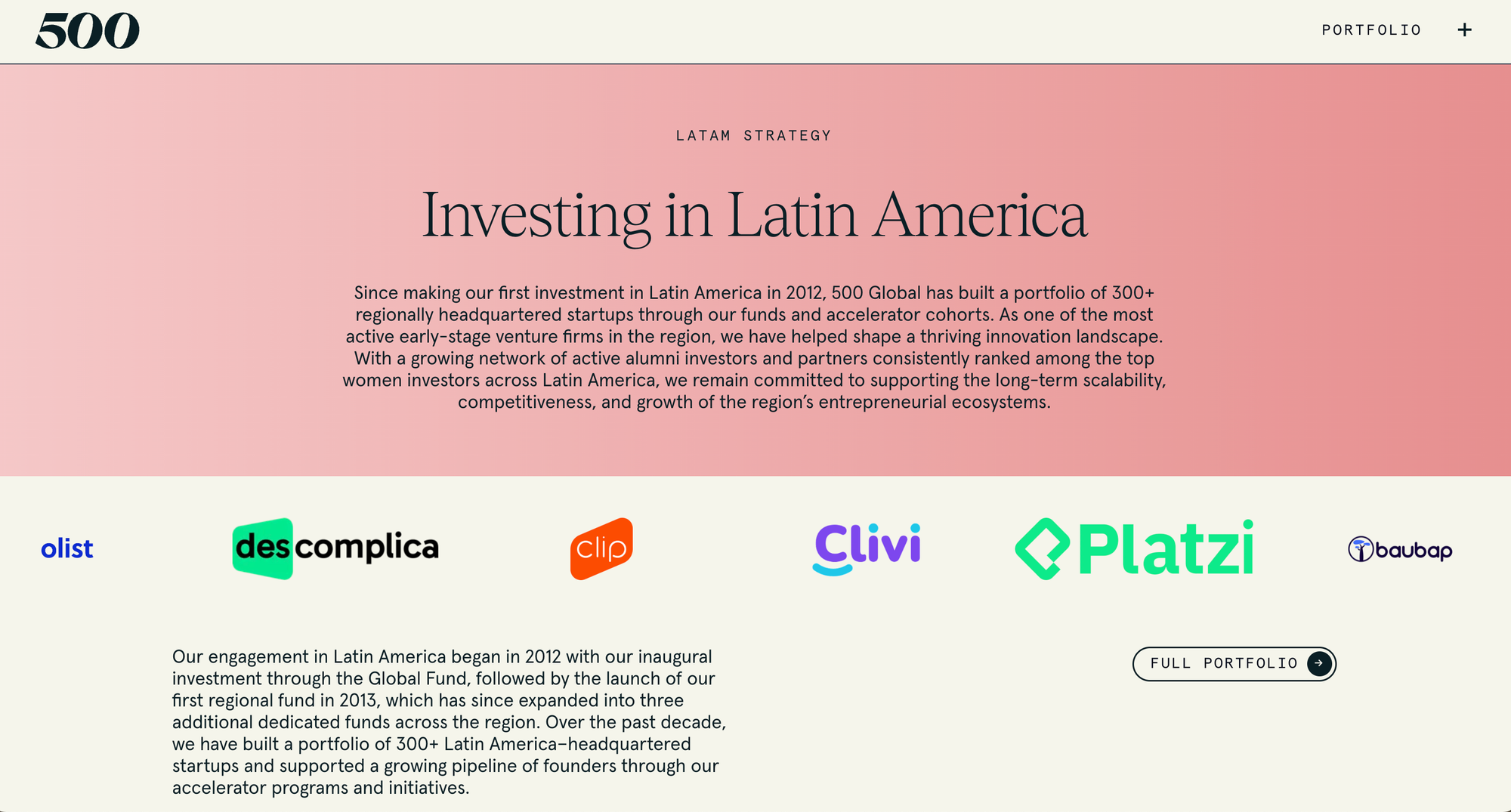
500 LatAm’s Fund IV totals US$30 million, including a US$2 million strategic investment from IDB Lab announced in September 2025. The fund will back about 40 early‑stage tech startups in emerging ecosystems such as Costa Rica, the Dominican Republic, Ecuador, Guatemala, Peru and Uruguay.
Each startup receives US$300,000 plus a tailored mentorship program covering product development, talent, monetization, customer acquisition, international expansion and follow‑on fundraising. Since 2013, 500 LatAm has invested in more than 300 startups across nine Latin American countries.
Its previous fund, Luchadores III (2020), supported over 100 startups that created more than 10,000 direct and indirect jobs and reached over 2.6 million users, demonstrating the scalable impact of well‑structured seed investing.
Latin American Impact Market Dynamics for 2026
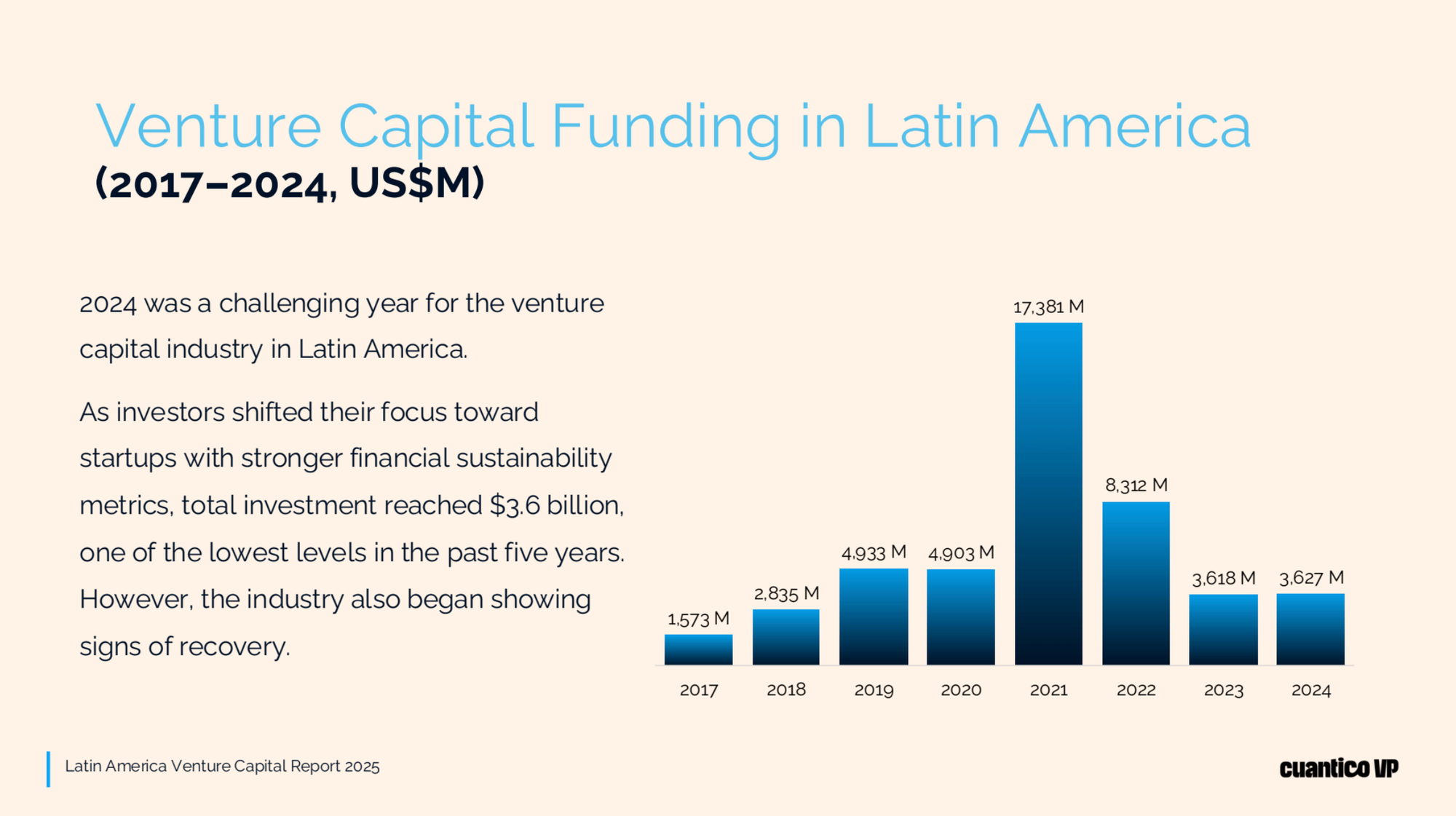
Latin American venture capital reached roughly US$3.6 billion in 2024, a moderate 7% year‑over‑year increase according to Cuantico VP (excluding debt), signaling that the post‑2021 correction phase may be over. Brazil and Mexico continue to dominate, capturing the largest shares of regional investment.
A key shift has been the growing emphasis on profitability. Investors are increasingly backing startups with clearer paths to positive cash flow and more experienced founding teams. As Jose Kont, Executive Director of Cuantico VP, notes, “Raising venture capital in Latin America is no longer a growth experiment; today it is more a signal of resilience, scale and global vision.” This marks a clear departure from the “growth at all costs” mindset that characterized the boom years.
What This Means for LPs and Family Offices
For sophisticated LPs, the strategic opportunity over the coming years hinges on three concrete moves:
- Using these funds as “tip of the spear” vehicles to build a staged exposure (internal funds‑of‑funds that combine VC, debt and regional seed),
- Leveraging their deal flow and local insight as a privileged channel for direct co‑investments into portfolio winners, and
- Aligning their own impact mandates with already proven theses in education, financial inclusion, climate, agtech and biodiversity where Latin American families are already leading allocations.
Those who move early with the right partners will not only capture returns in a region undercovered by global institutional capital, but will also help set the standards —on governance, measurement and risk structures— that will define how impact investing is done in Latam over the next decade.
A Transforming Ecosystem
The eight profiled funds represent distinct archetypes of impact investing in Latin America.
- Vox Capital shows how institutional rigor and international certifications can raise impact investing to global standards.
- IGNIA reflects the evolution of an investment thesis shaped by learning, pivoting from broad base‑of‑the‑pyramid opportunities to a focused financial‑inclusion fintech strategy.
- NESsT demonstrates how flexible debt models can serve the missing middle while preserving critical ecosystems.
- Alaya Capital proves that distributed regional infrastructure and hands‑on support can overcome geographic and regulatory fragmentation.
- Canary validates the power of betting early on resilient founders with strong founder‑market fit to transform entire ecosystems.
- Impacta VC stands out as a revealing case study: founded in 2020 amid a global pandemic, the Chile‑based fund built a portfolio including a unicorn (Betterfly), created regional ecosystem‑building programs (IFSP, supporting 350+ startups), launched an annual investment hub (Impactaland), earned peer recognition as a “key ecosystem actor,” and forged cross‑border alliances (Impact Ventures PSM) in just three to four years.
- Pomona Impact embodies the Central American approach to patient capital for SMEs in agro‑processing, basic services and the digital economy, directly targeting the region’s missing middle.
- 500 LatAm has democratized access to seed capital across the region, with more than 300 startups financed and a new US$30 million Fund IV backed by IDB Lab, acting as a launchpad for founders in emerging ecosystems.
Collectively, these funds manage more than US$1 billion in AUM, have executed over 450 investments and directly or indirectly touch the lives of millions of Latin Americans through companies that democratize access to finance, healthcare, education, sustainable agriculture, environmental conservation, accessibility and wellbeing.
2025 marked a clear inflection point for impact investing in Latin America. What began as a set of experiments driven by development institutions and visionary pioneers is now attracting domestic capital, multilateral financial institutions, an expanding base of Latin American family offices and new collaborative fund‑to‑fund models.
The challenge ahead is no longer proving that impact investing works—the data is there—but scaling the most successful models, deepening local capital markets and ensuring that the next generation of funds builds on the lessons of these pioneers.