Bionexo acquires Tasy from Philips for US$170 million to dominate the hospital management market in LatAm
Bionexo completed the US$182 million acquisition of Tasy from Philips, expanding its healthcare software operations to seven Latin American countries and integrating clinical, operational, and financial solutions into a single digital platform.


Bionexo has completed the acquisition of Tasy, previously owned by Philips, in a US$170 million transaction. Following approval from Brazil’s Administrative Council for Economic Defense (CADE) and fulfillment of regulatory requirements, the combined company will now operate under the name Bionexo Tasy.
The transaction expands the company’s footprint in Latin America from five to seven countries, strengthening its position in the regional healthcare technology market.
Bionexo Tasy Expands Operations Across Seven Countries
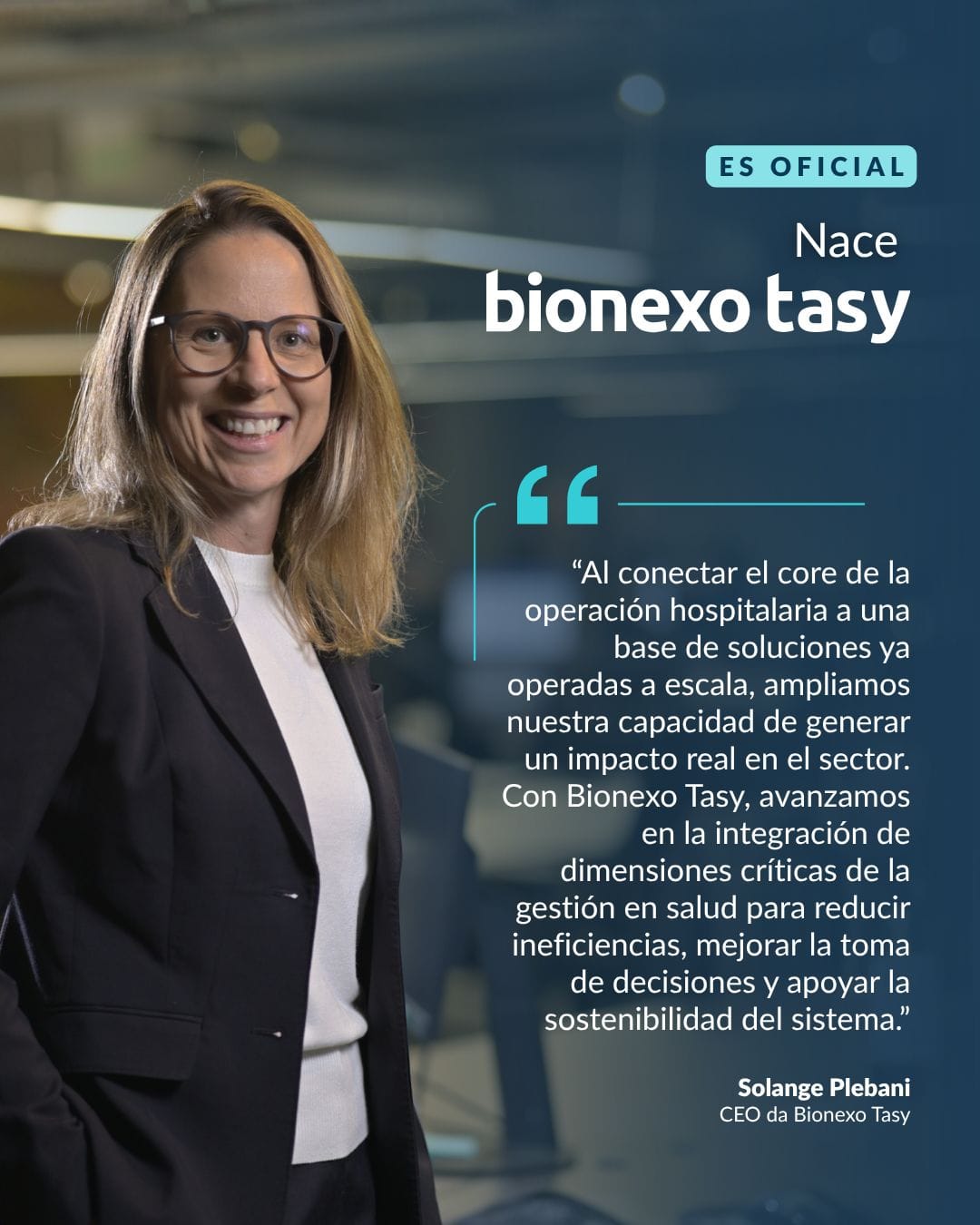
With the acquisition finalized, Bionexo Tasy will now operate in Brazil, Argentina, Colombia, Mexico, the Dominican Republic, Bolivia, and Ecuador. The consolidated operation brings together more than 11,000 clients, 1.2 million active users, and approximately US$8 billion transacted annually.
The company aims to integrate systems that traditionally operate separately within the healthcare industry into a single digital platform. The solution connects data and processes across several stages of the healthcare chain, including medical supply procurement, patient care, billing, and payments between healthcare providers and insurers.
Integration Focuses on Interoperability and Artificial Intelligence
According to Solange Plebani, the merger combines complementary capabilities developed by both companies over more than two decades in the healthcare sector.
“It is not every day that two companies with more than 25 years in healthcare come together with this level of complementarity. We are bringing 800 software talents from Tasy into Bionexo — with a development center in Blumenau — to accelerate a truly integrated platform,” she said.
Plebani also highlighted that integrating clinical, operational, and financial processes natively could help healthcare professionals save time, improve predictability across the supply chain, and support better decision-making with direct impact on patient care.
The integration is also expected to increase the volume of available data for the development of artificial intelligence applications, including demand forecasting, automation of administrative processes, and clinical decision support.
Consolidation Strategy in the Healthcare Technology Sector
For Maurício De Lázzari Barbosa, the acquisition represents a major consolidation move in the healthcare technology industry.
“The completion of this transaction is one of those milestones that changes the scale of the sector. By bringing together two companies with more than 25 years of history built within healthcare, we are creating a platform with scale and reach across Latin America — along with an engineering team focused on accelerating innovation,” he stated.
Barbosa added that the company’s strategy is centered on simplifying operations, increasing interoperability, and using data and artificial intelligence responsibly so that hospitals, clinics, and healthcare operators can work more efficiently while improving patient experience.
No Immediate Changes for Existing Clients
In the short term, the company stated that clients will not experience operational changes. Existing contracts, customer service channels, and ongoing operations will remain unchanged while the integration of the solutions is implemented gradually.
According to the company, the transition process will prioritize operational continuity and service stability throughout the integration phase.