hiSofi Secures US$1M to Expand AI-Powered Debt Collection in Latin America
hiSofi raises US$1M to establish an AI and data science hub in Uruguay, expanding its messaging-based debt collection platform across Latin America.


hiSofi, a fintech that automates debt collection through conversational messaging instead of traditional call centers, has raised US$1 million to establish a regional artificial intelligence and data science hub in Uruguay. The move comes six years after the company relocated its operations to Brazil in 2020.
A Messaging-First Approach to Debt Collection
Co-founded by CEO Tatiana Pomar and Leonardo Paladino, hiSofi was built around the idea that debt collection in Latin America could operate differently from the traditional model of outsourcing recovery efforts to third-party call centers.
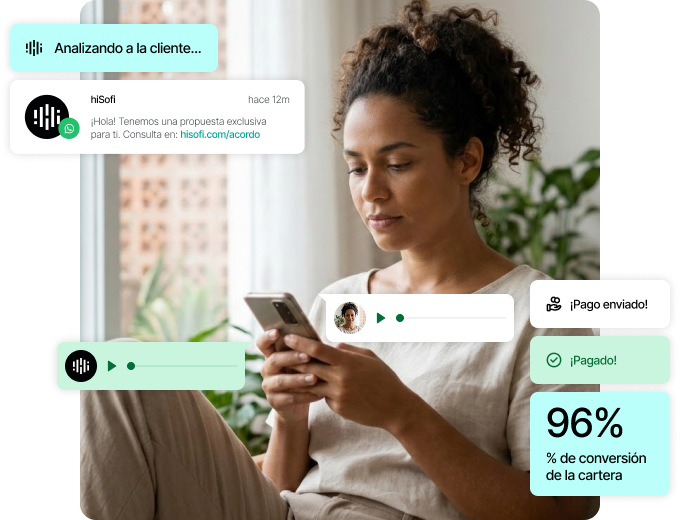
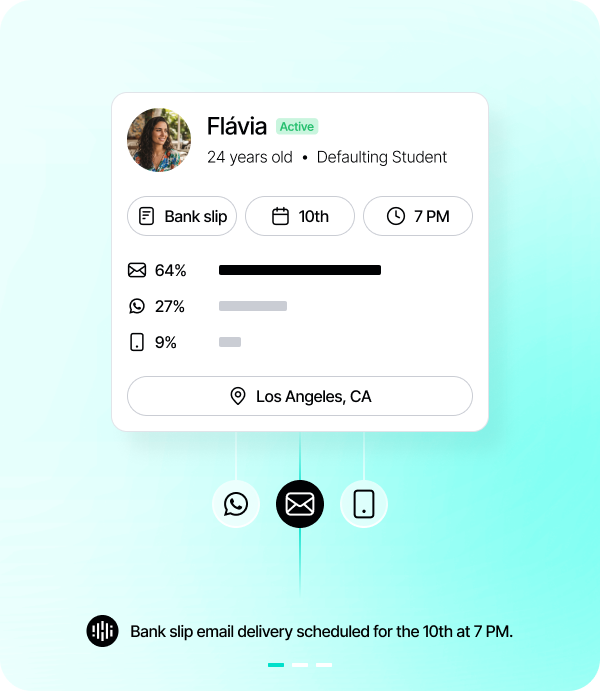
The company's platform analyzes debtor behavior to identify the most appropriate channel, timing, and approach before contacting customers through WhatsApp, RCS, email, and landing pages.
It also provides self-service portals where debtors can negotiate payment plans directly.
Pomar summarizes the company's approach:
“If I send you a WhatsApp or an RCS, you'll probably see it. If I call you, you probably won't answer.”
The model is designed to allow the original brand to communicate directly with its customers rather than selling or outsourcing the debt.
US$1M Round Led by SaaSholic
The US$1 million funding round was led by SaaSholic, a Brazilian fund specialized in B2B software with more than 40 companies in its portfolio.
The round also included US$250,000 co-invested by Uruguay's National Research and Innovation Agency (ANII) through its matching funds program.
The capital will support the creation of hiSofi's new regional hub in Uruguay, with the company planning to hire across engineering, data science, and product development.
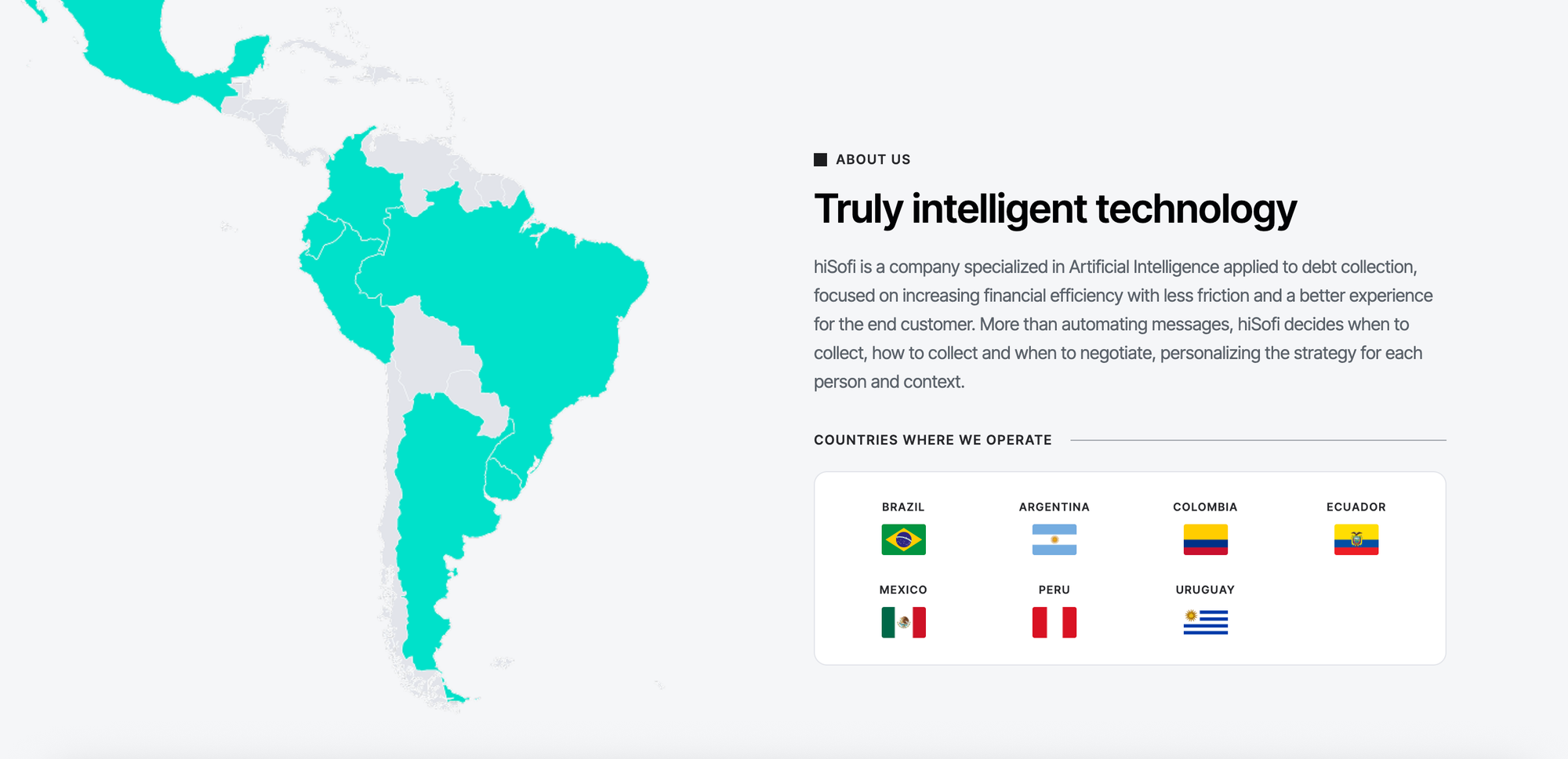
The company currently has a team of 28 employees and operates across Brazil, Mexico, Peru, Colombia, Ecuador, and Argentina.
From 44 Million Debts to US$61M Recovered
hiSofi's platform managed more than 44 million debts in 2025, while closing over 451,000 payment agreements and recovering US$61 million for its clients.
Among the companies using its platform are iFood, Natura, and Credicard.
The scale of these operations has allowed hiSofi to build a significant base of behavioral data around debt collection, which is central to the company's approach to determining how and when customers should be contacted.
Why Uruguay?
The decision to establish the new hub in Uruguay reflects both the country's technology ecosystem and a deliberate policy effort to attract and retain technology companies.
ANII's co-investment program operates as part of the Uruguay Innovation Hub initiative. The program matches private capital invested in early-stage startups operating in priority areas, including advanced digital technologies. Before the state commits capital, startups must undergo due diligence from a registered private investor.
For Pomar, Uruguay offers access to high-quality technical talent and an established technology ecosystem. There is also a practical advantage in managing operations for Spanish-speaking markets from a Spanish-speaking country rather than from Brazil.
A Favorable but Challenging Market for Collections
The expansion comes as credit conditions across Latin America put additional pressure on borrowers.
Moody's has warned of deteriorating credit quality across the region in 2026, following roughly three years of aggressive credit expansion that outpaced borrowers' ability to repay.
In Argentina, household delinquency has reached its highest level in more than two decades, while corporate delinquency among small and medium-sized businesses reached 3.3% by May 2026.
In Brazil, consumer debt has also increased as digital banks expanded unsecured lending.
Persistent inflation, elevated interest rates, and weak economic growth have added further pressure across most major banking systems in the region.
What hiSofi's Expansion Means for the US
The company's model also addresses challenges relevant to the US collections industry, which remains heavily dependent on call centers and operates under strict rules established by the Fair Debt Collection Practices Act governing how and when debtors can be contacted.
hiSofi's approach focuses on having the original brand communicate directly with the customer rather than selling or outsourcing the debt. This addresses a challenge that US companies also face: aggressive third-party collection practices can damage the customer relationship that lenders have invested in acquiring.
For US fintech investors following Latin America, hiSofi also offers a test of whether messaging-first collections can translate across markets with very different communication habits. WhatsApp's dominance across Latin America has no direct equivalent in the United States.
A Return to Uruguay With a Broader Regional Role
For Uruguay, hiSofi's return represents a measurable outcome for a state-backed initiative designed to make the country more attractive for technology companies that might otherwise establish operations in larger markets such as Brazil or Mexico.
The company's decision highlights technical talent, language compatibility, and Uruguay's technology ecosystem as factors that can support regional operations while keeping engineering capabilities in the country.
This reasoning also points to a broader competitive argument for smaller economies in Latin America seeking to attract technology companies that serve regional markets.
The Questions Behind the Expansion
Is US$1M Enough to Build a Regional AI Hub?
The US$1 million round is relatively modest compared with the ambition of building a regional AI and data science hub.
A quarter of the funding comes from a public agency, while hiSofi plans to hire simultaneously across engineering, data science, and product development with a current team of 28 people.
The hub's ability to deliver on its ambitions will depend in part on whether the company can attract senior technical talent in a small market where the same profiles are also being recruited by larger and better-funded companies.
Does Easier Debt Collection Benefit the Debtor?
hiSofi positions its model around a better customer experience, self-service negotiations, and fewer harassing calls. However, the underlying business remains focused on recovering money from people who may currently be unable to pay.
Messaging platforms also allow companies to reach individuals across many more moments of their daily lives than traditional landline calls.
As Moody's reports rising household delinquency across the region, the appropriate frequency of contact through personal messaging applications becomes a consumer protection question that regulations in many Latin American markets have not yet clearly addressed.
Can hiSofi Maintain Its Position as Competition Grows?
Collections technology is attracting significant investment across Latin America, while hiSofi's advantage is based largely on behavioral data accumulated through 44 million debts, rather than technology that competitors cannot replicate.
Larger fintech companies and banks also have access to substantial data and direct customer relationships, giving them the ability to develop similar capabilities internally.
For hiSofi, the next stage will therefore test whether its data-driven, messaging-first approach can maintain its position as the collections technology category continues to develop.