
Nubank Acquires Banco Porto Real to Secure Full Banking License in Brazil
Nubank has agreed to acquire Banco Porto Real to secure a full banking license in Brazil, reinforcing its regulatory position as new naming rules take effect.


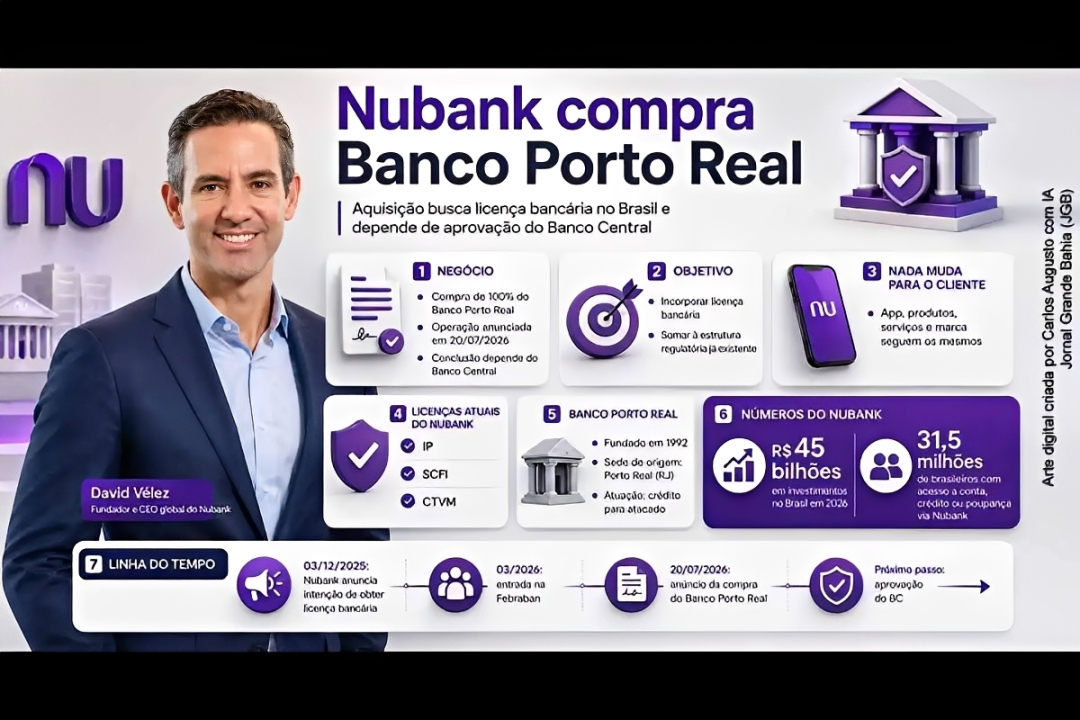
Nubank has signed an agreement to acquire 100% of Banco Porto Real de Investimentos, a transaction designed to strengthen its regulatory structure in Brazil rather than expand its operations. Pending approval from Brazil's Central Bank, the acquisition gives the fintech access to a full banking license while allowing it to maintain the "bank" name under new regulatory requirements.
A strategic acquisition focused on regulatory compliance
Nubank, the largest private financial institution in Brazil by customer base, announced the agreement to acquire Banco Porto Real de Investimentos, a wholesale bank founded in Rio de Janeiro in 1992.
Although structured as a full acquisition, the transaction is primarily aimed at obtaining Banco Porto Real's banking charter. As of March 2026, Banco Porto Real held US$6.3 million (approximately R$32.1 million) in assets, a relatively small figure compared to Nubank's scale of 115 million customers across Brazil.
Rather than acquiring the lender for its operations or assets, Nubank is seeking the regulatory authorization attached to the institution.
New regulation prompted the transaction
The acquisition follows the introduction of Brazil's Joint Resolution No. 17, issued in November 2025 by the Central Bank and the National Monetary Council.
The regulation establishes standardized rules governing how regulated financial institutions may use certain names. Under the new framework, institutions without a full banking license would no longer be permitted to use the word "bank" in their brands after November 2026.
For Nubank, whose identity has been built around its name since its launch, preserving the brand represented a strategic priority. Instead of pursuing a lengthy licensing process or changing its branding, the company opted to acquire an institution that already held the required authorization.
What Nubank is actually acquiring
The transaction centers on Banco Porto Real's banking license rather than its existing business.
Banco Porto Real has historically operated as a wholesale lender serving corporate clients, but its financial operations are not material to Nubank's business.
Brazilian regulation distinguishes payment institutions from fully licensed commercial banks. While payment institutions can issue payment cards and hold customer deposits, they cannot legally identify themselves as banks or provide the complete range of banking products available to licensed institutions.
Today, Nubank serves 115 million customers through a structure that includes a payment institution, a finance company and a securities brokerage. The banking license acquired through Banco Porto Real completes that regulatory framework.
Customers and financial structure remain unchanged
According to Nubank, once regulatory approval is obtained, Banco Porto Real's banking license will be incorporated into the Nu Pagamentos prudential conglomerate.
The company stated that the addition will not generate new capital or liquidity requirements, allowing its balance sheet to remain unchanged.
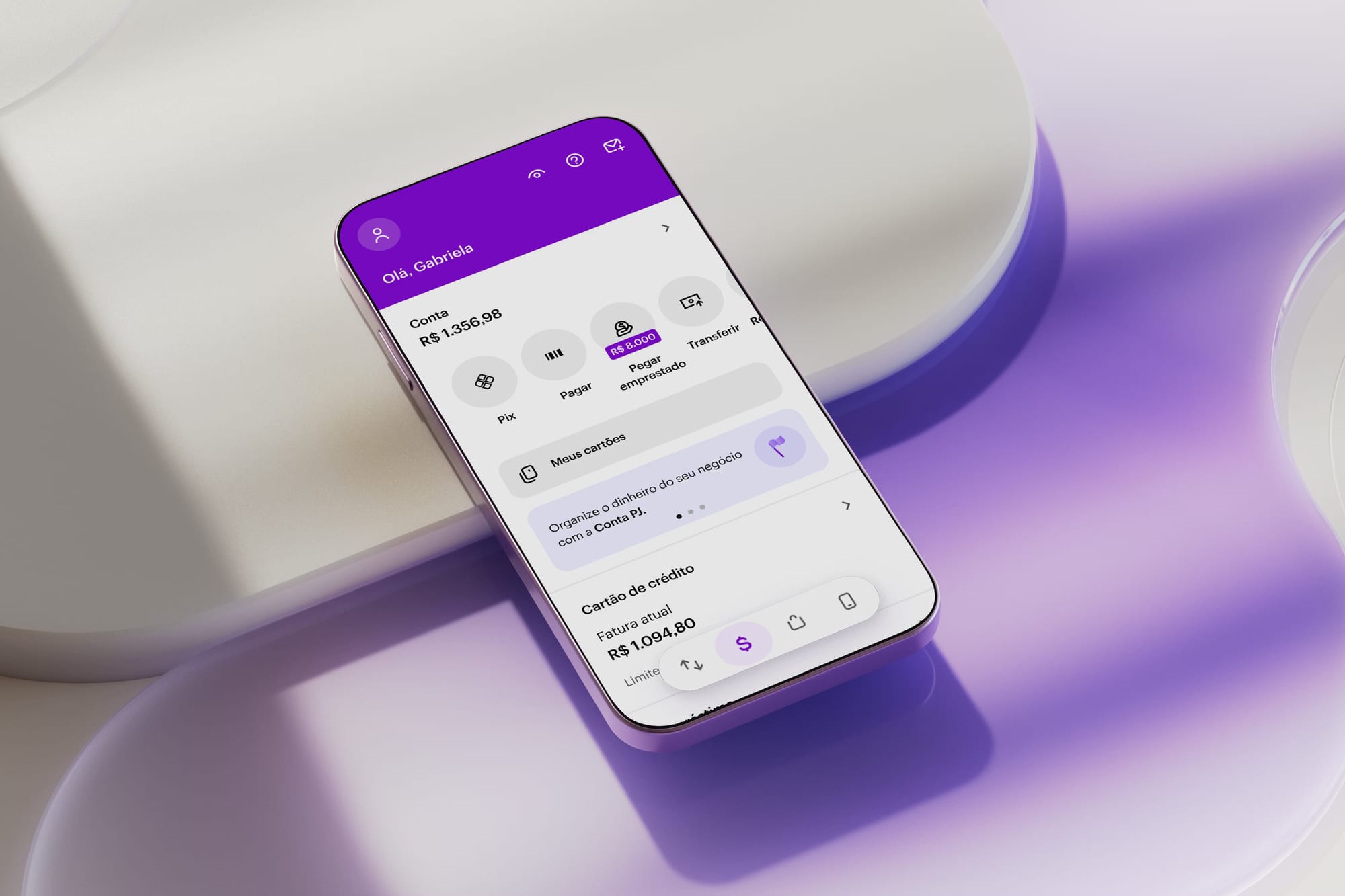
For customers, the acquisition is expected to have no operational impact. The Nubank app, products, services and brand identity will continue operating as before, with the transaction designed specifically to avoid disruption while ensuring regulatory compliance.
Acquiring an existing licensed institution also provides a faster and more predictable path than applying for a new banking charter, a strategy commonly used by fintech companies that have outgrown their original regulatory licenses.
The deal reflects a broader shift in Latin American fintech
The acquisition comes as Latin America's largest fintech companies increasingly adapt to regulatory frameworks originally designed for traditional banks.
Brazil has been at the forefront of this transition, with regulators formalizing requirements for digital financial institutions that have grown into systemically important players.
Nubank had already indicated its intention to pursue this strategy in December 2025, making the announced acquisition the execution of a previously communicated plan rather than an unexpected move.
The importance of the decision is amplified by the strength of the company's brand. Bain & Company's NPS Prism ranked Nubank as the financial institution most frequently chosen by Brazilians to centralize their salaries and financial products during the fourth quarter of 2025, reinforcing the value associated with its name.
Key takeaways for founders and investors

The transaction illustrates how regulatory developments can directly influence corporate strategy and capital allocation.
Rather than seeking operational expansion, Nubank invested in a regulatory asset to preserve its ability to operate under an established brand. The case demonstrates that compliance requirements can become strategic investments rather than administrative obligations.
It also highlights the value of protecting intangible assets. For Nubank, retaining the "bank" designation represents more than a branding decision; it protects consumer recognition and trust in one of Latin America's largest financial platforms.
Another lesson is the role of mergers and acquisitions in regulated industries. When the primary asset is a license instead of a business operation, acquiring an existing institution may offer a more efficient path than pursuing a new authorization through regulators.
Finally, the structure of the transaction reflects a growing trend among mature fintech companies: completing acquisitions that achieve regulatory objectives without materially affecting customers, capital requirements or financial performance.
As Latin America's leading fintechs continue to scale, transactions like Nubank's acquisition of Banco Porto Real suggest that regulatory compliance is becoming an increasingly important component of long-term competitive strategy, reshaping both the operating costs and the strategic priorities of the sector's largest companies.