Volcano Innovation Summit 2026 Brings Capital, Innovation and Purpose Together to Antigua
Volcano Innovation Summit 2026 brought together 2,200+ leaders from 35 countries to drive innovation, investment, trust and collaboration in Latin America.


From September 5 to 7, Volcano Innovation Summit 2026 transformed Antigua Guatemala into a meeting point for more than 2,200 entrepreneurs, investors, scientists, creatives, and leaders from 35 countries. Away from traditional event settings, the seventh edition brought together different sectors of the Latin American ecosystem around innovation, entrepreneurship, collaboration, and long-term growth.
Rather than focusing on isolated industries, Volcano positioned itself as an ecosystem-building platform working throughout the year around seven fundamental ecosystems: Purpose, Trust, Community, Innovation, Impact, Transformation, and Expansion.
Volcano Summit: Building an ecosystem beyond an annual event
The seventh edition was framed around the idea that the world is not simply experiencing an era of change, but a change of era.
Amid accelerated technological development, the summit emphasized that Latin America's future will depend not only on artificial intelligence or financial capital, but also on the ability to create trust and build long-term human connections.
Since its founding in 2018, Volcano has evolved from an annual gathering into an active ecosystem with 11,000 members across more than 45 countries. To date, the platform has facilitated more than 100,000 strategic connections, which have inspired approximately US$1.7 billion in economic, educational, and social investment across Latin America.
For Janma Bardi, founder of Volcano, trust represents a fundamental element of economic development.
“Trust is not a ‘soft’ concept, but the economic infrastructure needed to grow in the long term.”
Bardi also highlighted the importance of social capital, describing the relationships people build and the opportunities they create for one another as a mechanism that helps connect financial capital and human talent.

International leaders brought different perspectives to the conversation
The stages of the seventh edition became spaces for dialogue between local and international leaders focused on the future of Latin America and the role of collaboration and trust in the new economy.
Among the speakers were Stephen M.R. Covey, Co-Founder & Global Practice Leader at FranklinCovey; Ed Soo Hoo, Global Innovation & Transformation Executive at Lenovo; and Robert Mortati, President & CEO of Harvest Hill Beverage Company.
The program also featured Oke Okaro, Founder of Okaro Advisory and former SVP Business Operations at The Walt Disney Company; Ivana María Moreno Valle, CEO of Dalia; and Beatriz de los Mozos, Founder & CEO of Flabelus.
From the regional business ecosystem, participants included Roberto Lara, CEO of Castillo Hermanos; Rolando Carvajal, General Manager of Heineken Costa Rica; Abdon Nacif, Founder of Nexu; Alejandro Zárate, Chief Data Officer & AI Officer at Banco Santander México; and Dileep Thazhmon, Founder & CEO of Jeeves.
Their participation addressed topics ranging from trust, leadership, innovation, and transformation to technology, business strategy, artificial intelligence, and financial infrastructure.
Startup Avenue connected Latin American startups with capital

One of the key components of the summit was Startup Avenue, which brought together 50 Latin American startups seeking not only to pitch their companies, but also to raise capital and establish strategic partnerships.
The initiative evaluated companies based on factors including scalability, resilience, and long-term relevance. In 2026, Startup Avenue continued to evolve beyond a pitch competition into a platform designed to support startups throughout the year.
Pre-Seed
BioGrip, from Mexico, took first place in the Pre-Seed category. The healthtech develops non-invasive neuromuscular interfaces that combine sensors and artificial intelligence to translate human intent into natural control of prosthetics, rehabilitation technologies, and robotic systems.
The finalists were:
- NANOWEAVE, from Colombia, a climate-tech company developing modular plasma-powered biorefineries that transform agricultural waste into high-purity cellulose and regenerative fertilizers without toxic chemicals.
- Intelital, from Mexico, an intelligence platform for the AI agent economy that develops company context models to help agents and operators make decisions using data, probabilities, and real-world signals.
Early Stage
In the Early Stage category, ZULA, from Argentina, won fisrt place. Its cybersecurity platform combines artificial intelligence, gamification, microlearning, and realistic cyberattack simulations to help companies measure, reduce, and predict human risk.
The finalists were Oncoliq, from Argentina, and Muyu Education , from Ecuador.
Oncoliq is a healthtech company developing a scalable early cancer detection platform based on circulating microRNAs, proprietary diagnostics, PCR processes, and the infrastructure required for large-scale screening programs.
Muyu Education is an edtech company that uses artificial intelligence to provide personalized coaching and feedback to teachers, allowing schools and education systems to scale professional development and support.
Growth & Scalability
Radar, from Mexico, was the winner of the Growth & Scalability category. Its fintech platform uses artificial intelligence and a single API to help companies send, monitor, and reconcile payments at scale across different banks and payment rails in Latin America.
The finalists were DeltaX, from Bolivia, and Creditop, from Colombia.
DeltaX is an AI-native platform for freight transportation in Latin America that automates processes including matching, dispatch, tracking, and billing, while also connecting carriers with factoring and leasing solutions.
Creditop provides credit infrastructure for Latin American commerce, connecting businesses with multiple financing options so they can offer credit alternatives to customers directly during the purchasing process. The company also received the Highest Scalability Potential recognition.
Special Mention: Beserva
Beserva, from Mexico, received a Special Mention for its artificial intelligence-based operating system built on WhatsApp for beauty and wellness businesses.
The platform automates reservations, customer communication, reminders, and management tasks, helping professionals save time and increase their income.
Publimovil awarded US$125,000 in media grants
As part of Startup Avenue, Publimovil joined the Startup Avenue Competition platform and awarded a total of US$125,000 in media grants.
The amount was distributed among five selected companies, with US$25,000 in media grants per company. The benefit was provided free of equity, meaning the startups did not have to give up ownership in exchange for the media support.
Startup Avenue will continue beyond Volcano Summit
The Pitch Competition represented only one part of Startup Avenue's broader 2026 initiative.
The platform will continue throughout the year with an acceleration program focused on preparing Latin American companies to raise capital, strengthen their strategies, and connect with investors, mentors, and other relevant actors who can contribute to their growth.
Volcano4Good connects innovation with social impact

The summit also highlighted Volcano4Good , the initiative through which Volcano brings innovation into communities where it can have a direct impact.
One of the featured collaborations was the partnership between FUNDEGUA and Nutrilisto, which combines medical science and digital health to address chronic childhood malnutrition in Guatemala.
Through almaRED, an intelligent assistant operating directly through WhatsApp, health workers and families can access Ministry of Health protocols and nutrition tools.
The integration of Nutrilisto, a supplement focused on the first 1,000 days of life, into FUNDEGUA's network seeks to turn artificial intelligence into an accessible tool for direct human support.
Volcano4Good and Funsepa expand technology access in schools
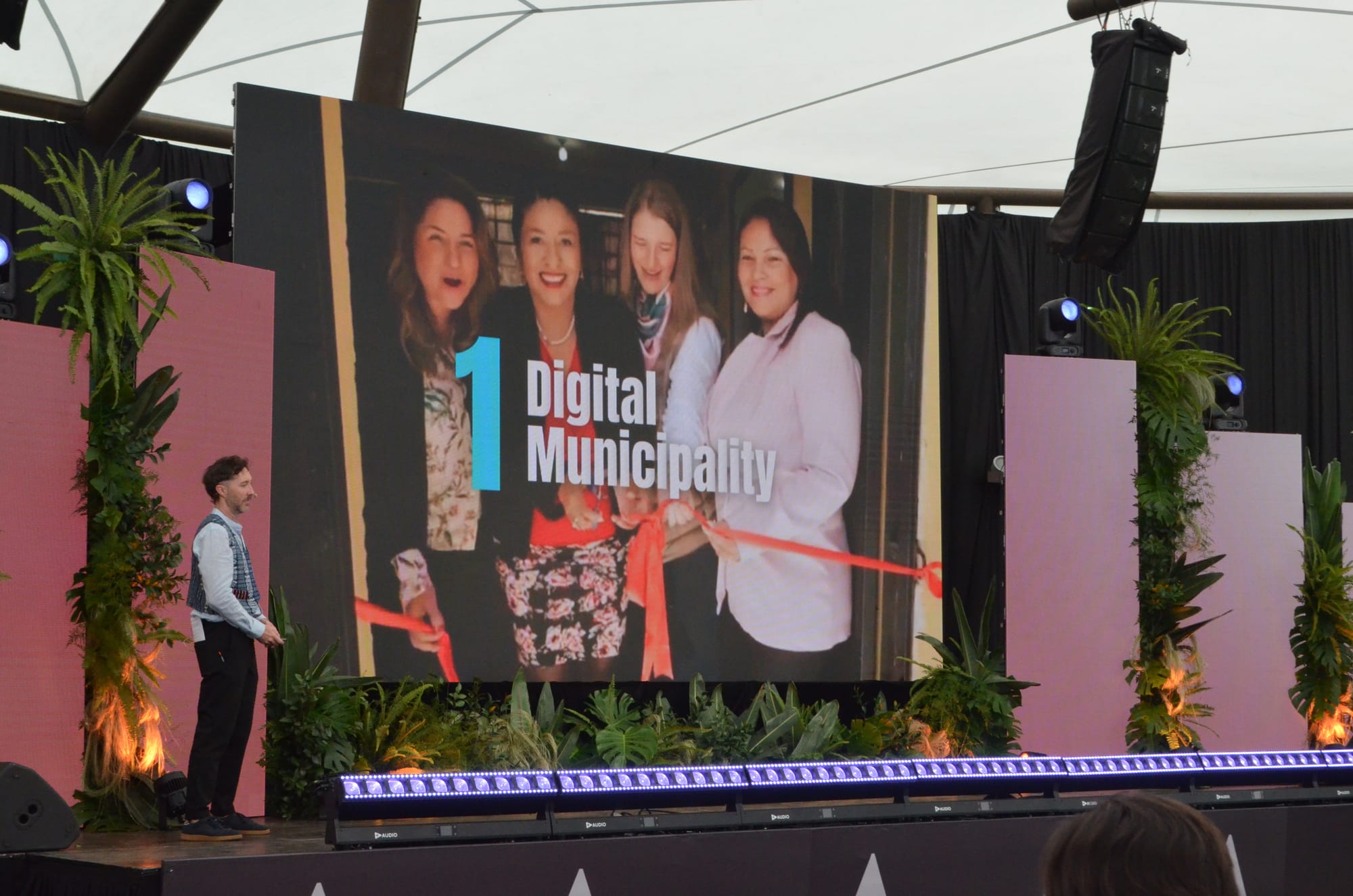
Volcano4Good and Funsepa also continued their work connecting innovation and education in Ciudad Vieja.
The partnership inaugurated a virtual learning environment at EORM La Comunidad, in the San Lorenzo El Cubo area of Ciudad Vieja. It is one of two schools that the alliance will equip in the municipality this year.
The second school is EOUN Francisco Marroquín. Together, both schools will receive 34 technological devices, accompanied by teacher training designed to integrate digital resources into teaching and strengthen student learning.
With the projects planned for this year, the partnership will have equipped six primary schools: three in San Bartolomé Milpas Altas and three in Ciudad Vieja, where one school had already been equipped in 2025.
The initiative will reach a cumulative total of 119 technological devices delivered and 1,969 students benefited across Sacatepéquez.
Volcano Purpose Series brings the AI conversation to Guatemala
The discussions around technology and the future of work also extended beyond the three-day summit through the Volcano Purpose Series 2026.
The program brought international experts and representatives from academia and business to Guatemala to examine the impact of artificial intelligence on work, innovation, leadership, and the capabilities people and organizations need to develop in response to technological change.
The program featured two sessions, held on September 4 and September 8, combining panels with academic and business representatives and keynote presentations by international experts.
AI, culture, and purpose at UVG
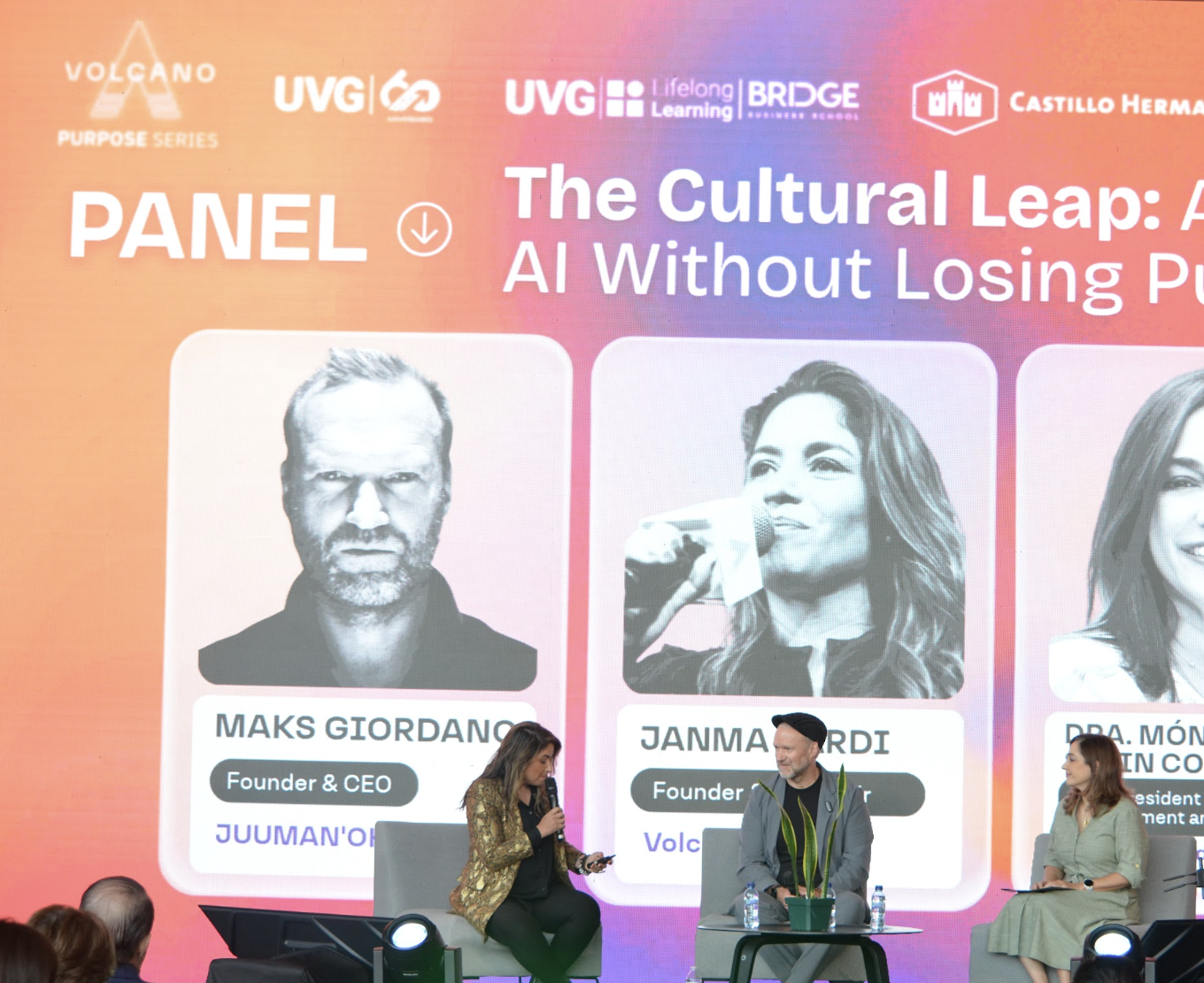
The first session took place at the Universidad del Valle de Guatemala (UVG), with the support of Castillo Hermanos and Banco Industrial.
The session featured Maks Giordano, a digital strategist with three decades of experience in technological transformation who had worked with companies including Apple, Red Bull, and Mercedes-Benz.
His participation focused on one of the challenges surrounding artificial intelligence adoption: integrating these technologies without losing sight of human purpose and capabilities.
During the panel “The Cultural Leap: Adopting AI Without Losing Purpose,” Dr. Mónica Stein, Vice Rector of Research, Engagement and Development at UVG; Janma Bardi, founder and Co-Chair of Volcano Summit; and Giordano discussed the cultural dimension of technological transformation and the role of educational institutions and companies in this process.
Giordano then delivered the keynote “The State of Gen-AI,” focused on current trends in generative artificial intelligence, including AI agents and world models, offering a realistic and positive perspective on the technology's future.
The future of work at Universidad Galileo
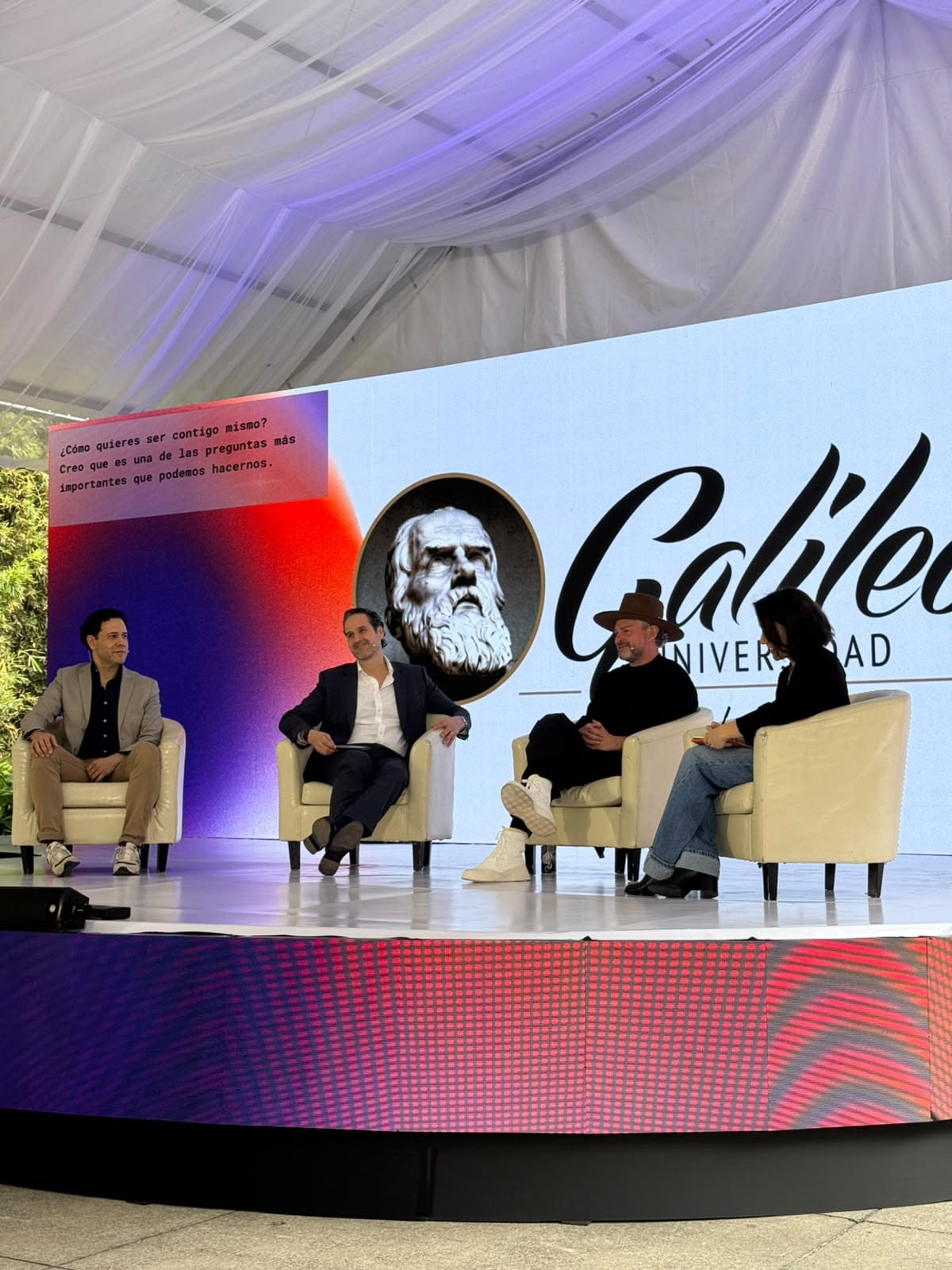
The second session took place on September 8 at Universidad Galileo, with BAC as strategic partner.
The event featured Dr. Frederik G. Pferdt, Google's first Chief Innovation Evangelist, who participated in the panel “The New Work DNA: Hacking the Mindset to Thrive with AI.”
The discussion explored the changing role of technology in the workplace, moving beyond using it simply to execute instructions and toward leveraging it to create, solve problems, and expand human capabilities.
Panelists included Dr. Rocael Hernández Rizzardini, Director of the GES Department and Von Neumann Institute at Universidad Galileo; Daniel Pérez Umaña, Senior Corporate VP of Legal and Public Relations at BAC LATAM; and Pferdt. The conversation was moderated by Fabiana Calvinisti, Chief Culture Officer of Volcano.
Pferdt closed the session with “Ready for What's Next? (Your Future/Ready Mindstate),” an experience focused on developing a mindset capable of anticipating change and turning new possibilities into concrete actions.
Pferdt spent more than a decade developing innovation initiatives at Google, where he co-founded Google Garage. He had also worked on training processes with organizations including NASA, the NBA, and the United Nations, and is the author of What's Next Is Now.
A conversation that goes beyond technology
The Volcano Purpose Series formed part of the broader Volcano Innovation Summit ecosystem, bringing conversations about the future of technology to a wider audience.
The program connected students, professionals, business leaders, and other sectors with international perspectives on artificial intelligence, robotics, and technology, while also addressing a broader question: what capabilities people need to develop to take advantage of technological change rather than simply react to it.
Echoes of Expansion: the movement continues
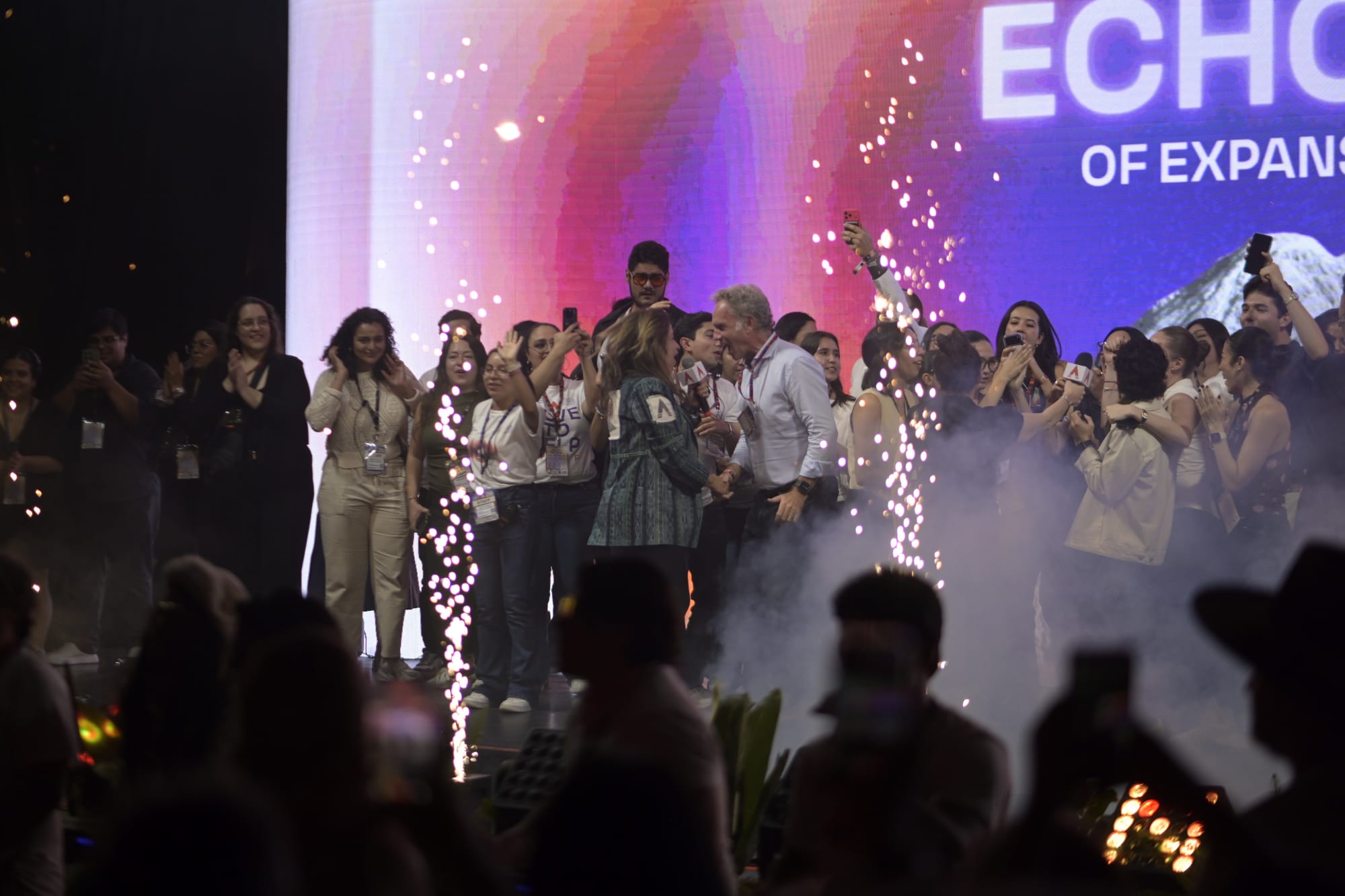
The conclusion of Volcano Innovation Summit 2026 marked the end of three days of activities, but not the end of the movement behind the ecosystem.
Under this year's concept, “Echoes of Expansion,” the seven ecosystems of Purpose, Trust, Community, Innovation, Impact, Transformation, and Expansion provided the framework for conversations, connections, startups, social initiatives, and collaborations.
The summit closed with an ecosystem described as more connected and expansive, supported by strategic allies including Castillo Hermanos, Banco Industrial, MultiMoney, BAC, Visa, Progreso, and Mastercard, among others.
The three days may have come to an end, but the connections created across the Latin American ecosystem continue beyond Antigua Guatemala.