RecebeAqui Buys Kolek to Build Multi-Vertical Fintech Holding
Kolek has been acquired by RecebeAqui, forming a new fintech holding focused on expanding payment solutions across multiple industries.

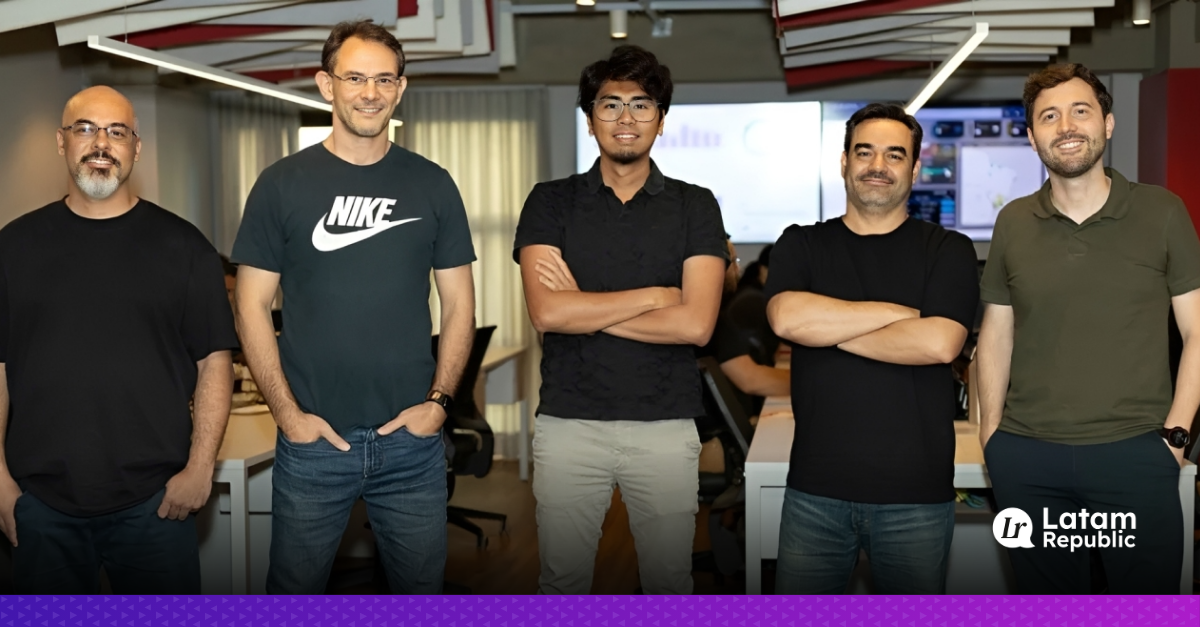
Kolek has been acquired by RecebeAqui in a transaction that reflects the ongoing consolidation of Brazil's fintech market. While the financial terms were not disclosed, the companies confirmed they will operate under a newly created holding company, whose name has yet to be announced.
The deal also changes Kolek's ownership structure, with its founders no longer serving as majority shareholders, although they will remain actively involved in the business.
Holding structure brings complementary fintech businesses together
Founded in 2022, Kolek provides a payment collection and receivables management platform designed for accounting firms and small businesses. RecebeAqui, meanwhile, specializes in financial and payment solutions for the tourism sector and is part of Grupo VPA, which operates across several countries in Latin America and Europe.
Although both companies will now share a unified management structure, they will continue operating with separate brands and product offerings.
Kolek will remain focused on recurring payment transactions, including invoice and Pix collections for accountants, law firms, agencies, and other subscription-based businesses. RecebeAqui, on the other hand, will continue serving businesses that process high-value, one-time transactions through card payments and payment links.

Regulatory changes helped drive the transaction
According to Murilo Pinheiro, CEO and co-founder of Kolek, increasing regulatory requirements influenced the decision to combine the businesses.
He explained that tighter rules surrounding Banking as a Service (BaaS) have made operating payment infrastructure more expensive and restrictive, reinforcing the need to internalize those capabilities. He also pointed to Brazil's Central Bank Resolution No. 522, which expanded compliance requirements for payment ecosystem participants, increasing operational costs for smaller fintechs.
"Essentially, we're pursuing a strategy of vertically integrating and consolidating sector-focused fintechs. We saw strong complementarity with the RecebeAqui team in Belo Horizonte. They have expertise in credit card processing, which we didn't offer, along with a more robust infrastructure," Pinheiro said.
Expansion beyond their original markets
The combined company plans to leverage its complementary capabilities to move beyond the sectors where each business originally built its customer base.
While Kolek was initially focused on accounting firms and RecebeAqui on tourism, both companies now intend to serve additional industries that share similar payment needs, whether recurring collections or high-volume transactional processing.
Growth targets focus on scaling transaction volume

Together, Kolek and RecebeAqui currently process between US$2.95 million and US$3.93 million in monthly transactions.
The new holding aims to increase that figure by five to six times, reaching between US$9.83 million and US$11.80 million per month, equivalent to nearly US$197 million in annual transaction volume, a milestone the company expects to achieve by the end of 2027.
Pinheiro believes the opportunity lies in serving highly specialized industries.
"The market is enormous, but it's still fragmented. Even the largest players remain relatively small. We strongly believe in focusing on niche markets with very specific pain points that are not being adequately addressed. We've proven this in accounting and tourism, and now we want to expand into additional verticals."
Investors remain part of the combined company
The integration of platforms and teams will be carried out gradually over the coming months while maintaining uninterrupted services for customers of both businesses.
Kolek was backed by Antler, which led the fintech's first pre-seed investment in 2022 in exchange for approximately 10% of the company. In 2024, the startup raised an additional funding round from angel investors, including Insper Angels.
According to Pinheiro, the acquisition was structured primarily as a share swap, allowing existing investors to remain part of the combined business.
"Our investors are staying with us. There isn't an exit for anyone—they will continue investing in the combined company," he said.
He added that both founders also remain shareholders, although no longer in majority positions.
"We continue as shareholders, but we're no longer the majority owners. Our vision is to keep advancing this consolidation strategy by bringing additional fintech players into the group," Pinheiro concluded.