
Runflow Raises US$1.4M Pre-Seed to Scale AI Agent Management Platform
Runflow raises US$1.4 million in a pre-seed round to expand its enterprise AI agent management platform, engineering team, and operations across Brazil.

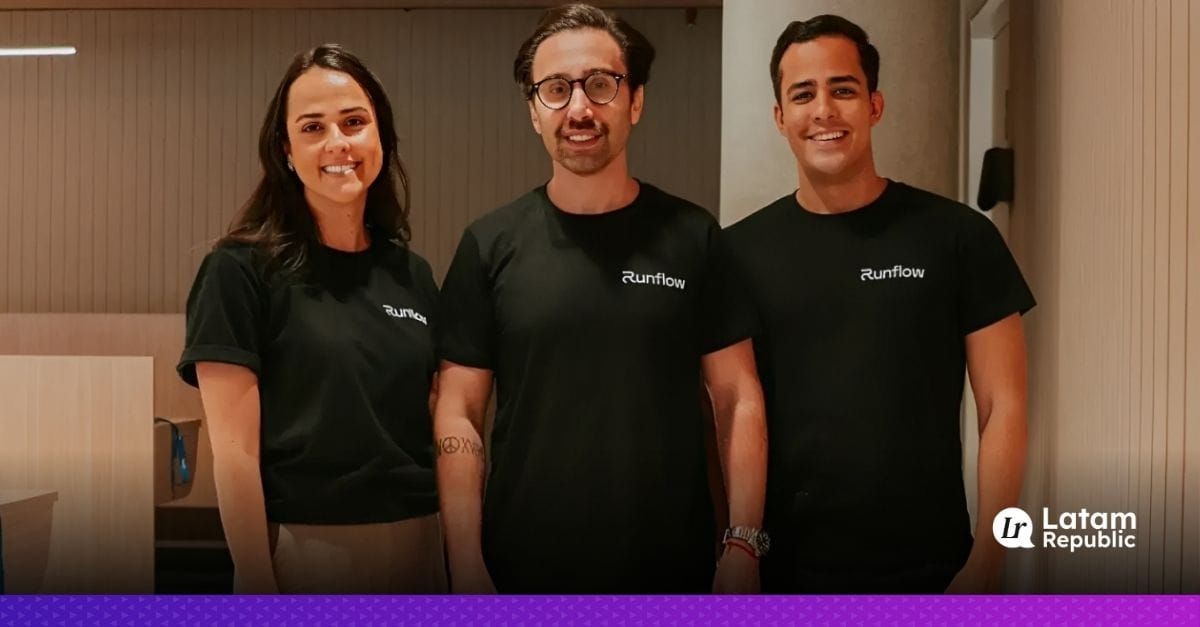
Runflow has secured a R$7 million (approximately US$1.4 million) pre-seed investment to accelerate the expansion of its AI agent management platform. The funding will support engineering, infrastructure, and enterprise growth as the Brazilian startup strengthens its position in the rapidly growing market for corporate AI governance.
Honey Island by 4UM leads Runflow's pre-seed investment
The investment round was led by Honey Island by 4UM, with participation from Airborne Ventures, STAMINA Ventures, and strategic investors.
Honey Island is the venture capital firm created by EBANX founders Wagner Ruiz, João Del Valle, and Alphonse Voigt. Operating a US$20 million investment fund in partnership with asset manager 4UM Investimentos, the firm focuses on seed and pre-seed startups with investments ranging from US$200,000 to US$1 million.
The newly raised capital will be allocated to expanding Runflow's forward-deployed engineering team, strengthening its infrastructure, and accelerating enterprise growth.
Runflow was built to manage AI agents at enterprise scale
Founded in 2025 as a spin-off from the AI education community IFTL, Runflow was created by CEO Edmee Moreira alongside co-founders Danrley Morais and Mariana Pastorelli.
Before launching the company, Moreira and Morais founded LinkAPI, an API integration platform acquired by Semantix in 2021 in a transaction valued at approximately US$20 million.
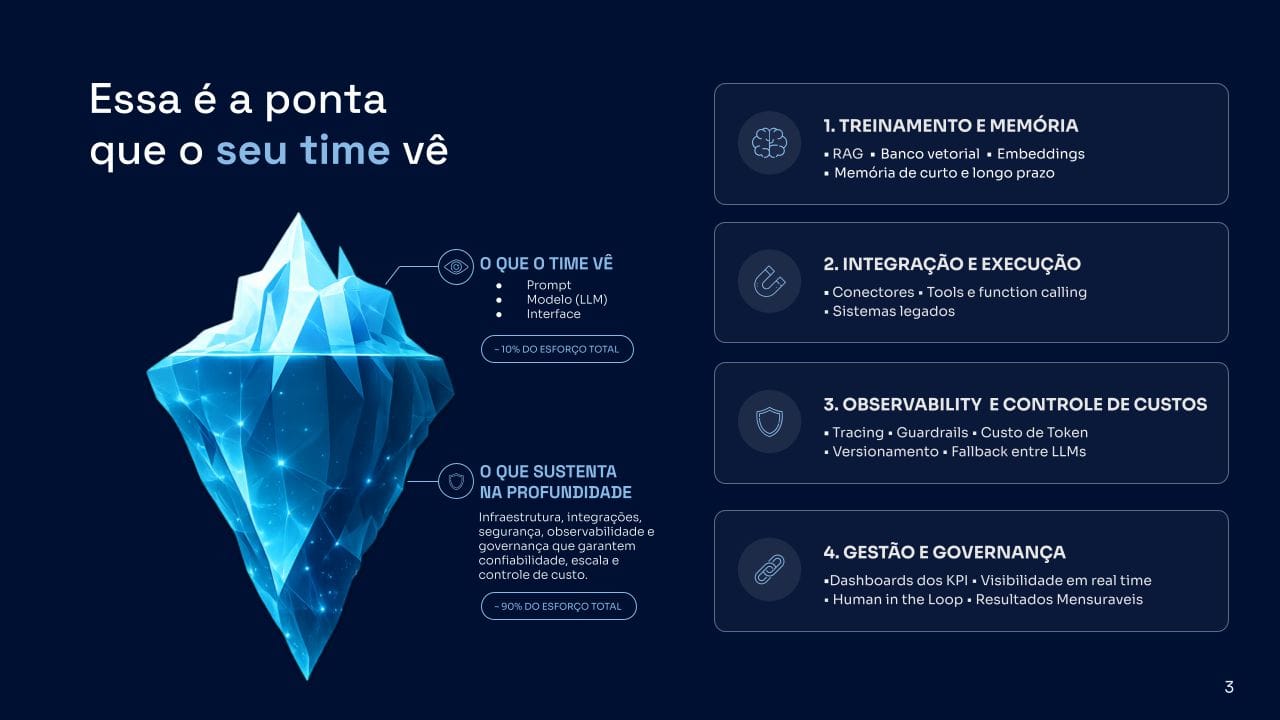
Runflow developed a platform that serves as the governance and operations layer for AI agents operating inside companies. The solution manages permissions, tracks operational costs, monitors performance, and maintains human oversight while connecting to more than 150 enterprise systems, including ERPs, CRMs, APIs, and databases.
Today, the platform manages more than 500 AI agents responsible for approximately 250 million tasks every month across customers including Vero Internet, Brasal, Grupo Osten, PX Ativos Judiciais, CTRC, and Demarest.
"We're creating a kind of HR for AI agents. Each agent needs functions, correct access, targets, cost, and performance tracking," said Edmee Moreira, co-founder and CEO of Runflow.
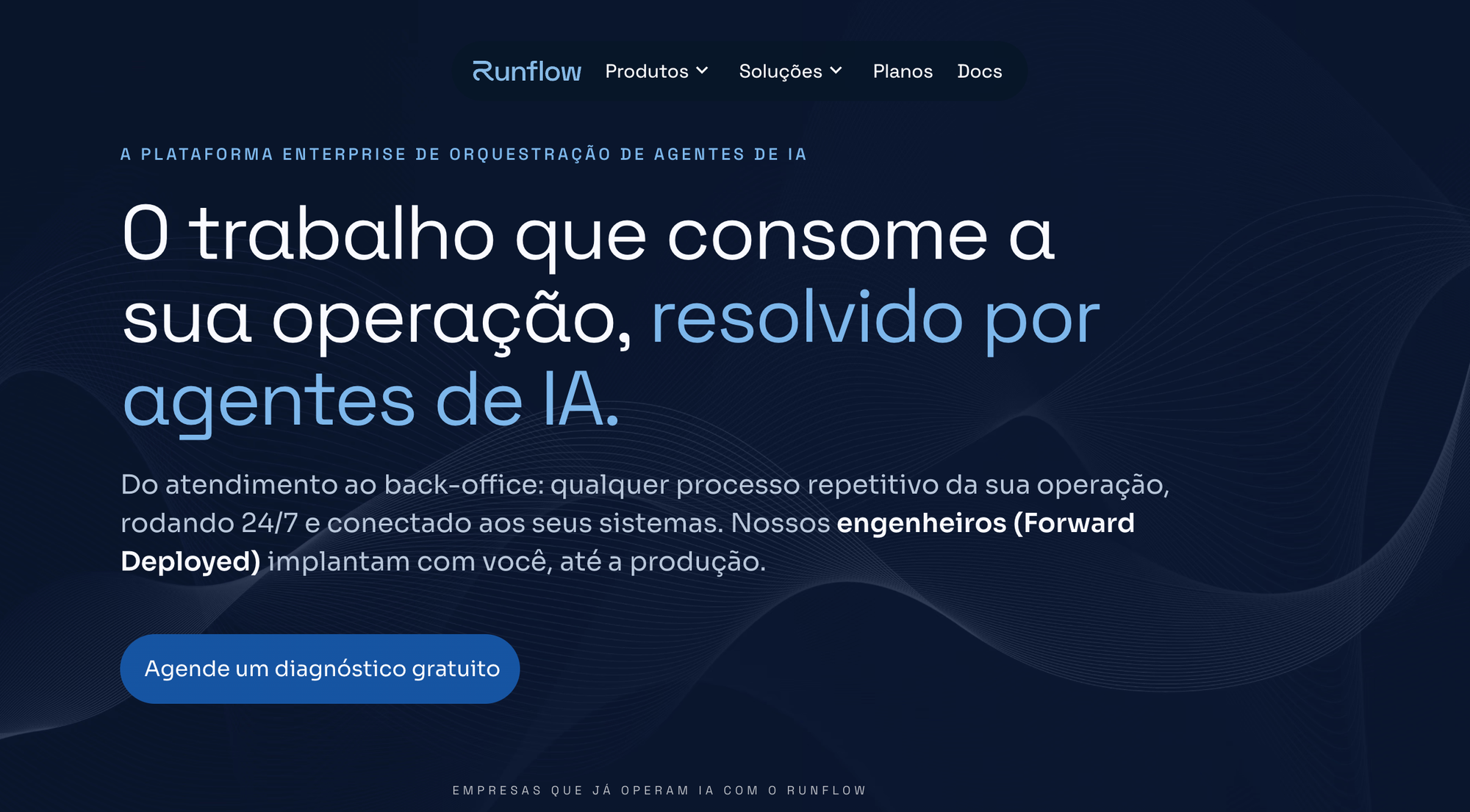
Enterprise AI shifts from deployment to governance
According to the company, enterprise demand is moving beyond experimenting with AI agents toward managing them once they become part of core business operations.
Moreira argues that traditional low-code automation platforms become insufficient when AI reaches mission-critical processes, requiring higher levels of control and security.
As of July 2026, Runflow reports annual recurring revenue (ARR) of approximately US$900,000. The company expects to reach US$2.4 million by December and targets US$20 million in ARR by 2027. It also states that monthly recurring revenue has increased tenfold since its launch, while customer projects deliver payback in approximately three months on average.
AI investment continues to accelerate worldwide
Runflow's fundraising comes during a record period for global AI investment. Venture capital funding reached US$510 billion during the first half of 2026, with AI startups accounting for 43% of total investments, representing approximately US$217 billion.
Within this environment, Runflow is positioning itself against international competitors by emphasizing local relationships and Brazil-specific integrations. Israeli company Wonderful, currently valued at US$2 billion, recently entered the Brazilian market.
Runflow focuses on large enterprises, targeting companies with annual revenue between US$10 million and US$100 million. Its founders believe that enterprise relationships established since the launch of LinkAPI in 2017 provide a competitive advantage in the domestic market.
AI adoption delivers measurable operational results
The company says its platform has already generated operational improvements for customers.
At PX Ativos Judiciais, automation reduced a team from 15 employees to three. At Grupo Osten, a support team decreased from seven people to one while lead-to-visit conversion increased by 35%.
These results position Runflow as part of Brazil's broader discussion around how AI is transforming administrative and customer service functions, sectors that employ millions of workers across the country.
Beyond Brazil, the company reflects how AI agent governance is emerging outside Silicon Valley. The founders' previous entrepreneurial experience and enterprise relationships demonstrate how regional software companies can compete by developing solutions tailored to local business environments.
Challenges remain as competition intensifies
Despite the new funding, Runflow faces significant challenges as larger international competitors expand into Latin America.
Wonderful entered Brazil with a valuation that exceeds Runflow's funding round by more than a thousand times. Although local integrations and enterprise relationships may provide differentiation, large organizations often favor better-capitalized providers when selecting infrastructure platforms for mission-critical operations.
The company's financial targets also represent an ambitious path. Moving from approximately US$900,000 in ARR to US$20 million by 2027 will require rapid customer acquisition and significant expansion within existing accounts, despite an enterprise sales model that relies heavily on long-term relationships.
Another challenge lies in organizational adoption. While Runflow highlights customer cases where automation significantly reduced team sizes, those efficiency gains may also create resistance among employees and managers responsible for implementing and supervising AI agents, a factor that has historically slowed enterprise automation projects.