
Sanii Raises US$2.35M led by Sororitê Ventures, to Expand its AI-powered Platform in Brazil
Sanii raises US$2.35M in a follow-on round to expand its AI-powered platform connecting families with qualified caregivers, as Brazil faces rapid population aging and growing demand for home-based elderly care.


Brazil is undergoing a rapid demographic shift, and Sanii is positioning itself at the center of this transformation. Founded in 2022, the Brazilian healthtech is scaling its AI-driven platform that connects families with qualified caregivers, nurses, and physiotherapists, enabling elderly people to age safely at home while bringing structure to a highly informal market.
Brazil’s demographic shift is reshaping elder care
In 2023, Brazil reached a historic milestone: for the first time, the number of people aged 60 and over surpassed the number of young people, according to data from IBGE. Between 2000 and 2023, the share of elderly people in the population nearly doubled, rising from 8.7% to 15.6%.
This demographic trend is accelerating demand for home-based care solutions, particularly those aligned with the concept of aging in place, which allows seniors to remain in their own homes rather than move to institutional settings.
Sanii secures US$930k follow-on investment
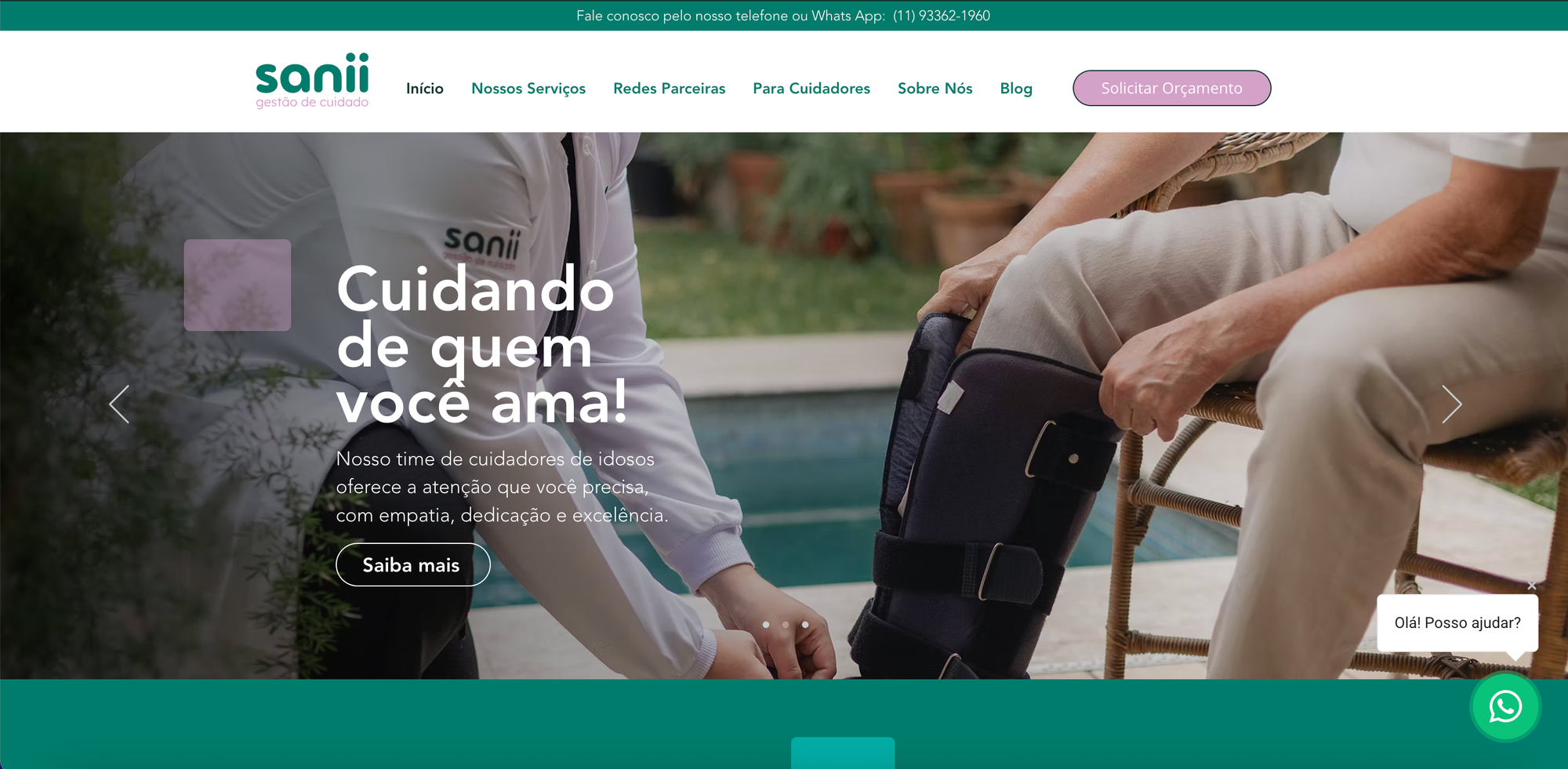
Against this backdrop, Sanii has closed a US$930k (R$5 million) follow-on round with participation from venture capital fund Sororitê Ventures. The new funding brings the startup’s total capital raised to US$2.4 M (R$13 million), including a US$1.5 M (R$8 million) pre-seed round secured in 2023 from international investors.
The fresh capital will support Sanii’s expansion into São Paulo’s inland and coastal regions, as well as further investments in technology to strengthen its platform.
Tackling informality in home-based elderly care
According to co-founder Renato Tilkian, the company operates in a market with significant growth potential due to its fragmented and informal nature. For families, identifying a suitable caregiver is complex, requiring alignment between availability, technical skills, and the specific needs of each patient.
Care professionals, on the other hand, often face unstable income, lack of formal protection, and long gaps between assignments, particularly when a long-term patient passes away.
Sanii addresses these challenges by operating as a closed marketplace, recruiting and vetting qualified professionals before matching them with families based on highly specific criteria.
AI-driven matching and rigorous selection

"The matching process considers nearly 30 variables, including geographic proximity, professional skills, and schedule compatibility," explains co-founder Michael Kapps.
To maintain quality, the selection process is highly selective: although thousands of candidates apply every month, only about 3% are approved after screening, background checks, and interviews.
This model provides greater stability for professionals, as Sanii guarantees payment and facilitates reassignment to new families if a permanent patient relationship ends. Caregivers also retain flexibility by being able to accept or decline shifts.
Training and professional development for caregivers
To keep professionals engaged and up to date, Sanii offers ongoing training programs, including specializations in palliative care and the handling of medical devices such as catheters and probes.
“Our goal is to ensure consistency and quality in home care, while giving professionals better working conditions,” the founders emphasize.
Artificial intelligence at the core of operations

A significant portion of the new investment will be directed toward technology. Sanii has developed its own system, Care IA, built using Google’s Gemini, to enhance caregiver-to-patient matching. AI agents are also used during recruitment interviews and when assessing the needs of new families.
“With half a million hours of care delivered, we understand what works and what doesn’t,” says Kapps. “At the beginning, errors were frequent. Today, mismatches are close to zero.”
In addition, caregivers use an AI-powered WhatsApp bot during shifts. The tool generates handover reports, sends medication reminders, and analyzes prior procedures to support daily patient care.
Growth strategy and long-term vision
Sanii aims to become the leading reference in elderly home care across Latin America, a sector that remains largely informal and decentralized. Without disclosing revenue figures, Tilkian states that the company expects to grow 300% in 2025.
The strategy combines organic growth, especially in São Paulo, with mergers and acquisitions in other regions. Acquiring established local home care providers could allow Sanii to quickly access new customer bases and leverage existing reputations.
In the long term, the startup plans to expand beyond caregiver matching, adding complementary services such as medication and vaccine delivery, dental care, and the use of smart sensors and cameras for remote monitoring.
“Aging populations present one of the biggest social challenges of our time,” says Angelina Clarke, COO and co-founder of Sanii. “Our technology not only connects families and caregivers, but helps transform the entire home care value chain, enabling older adults to remain at home with safety and dignity.”