Santander Brasil Soars 13.9% After Parent Announces Buyout Offer
Santander Brasil shares surge 13.9% after Santander announces a US$2.2B offer to acquire about 10% of its Brazilian subsidiary.

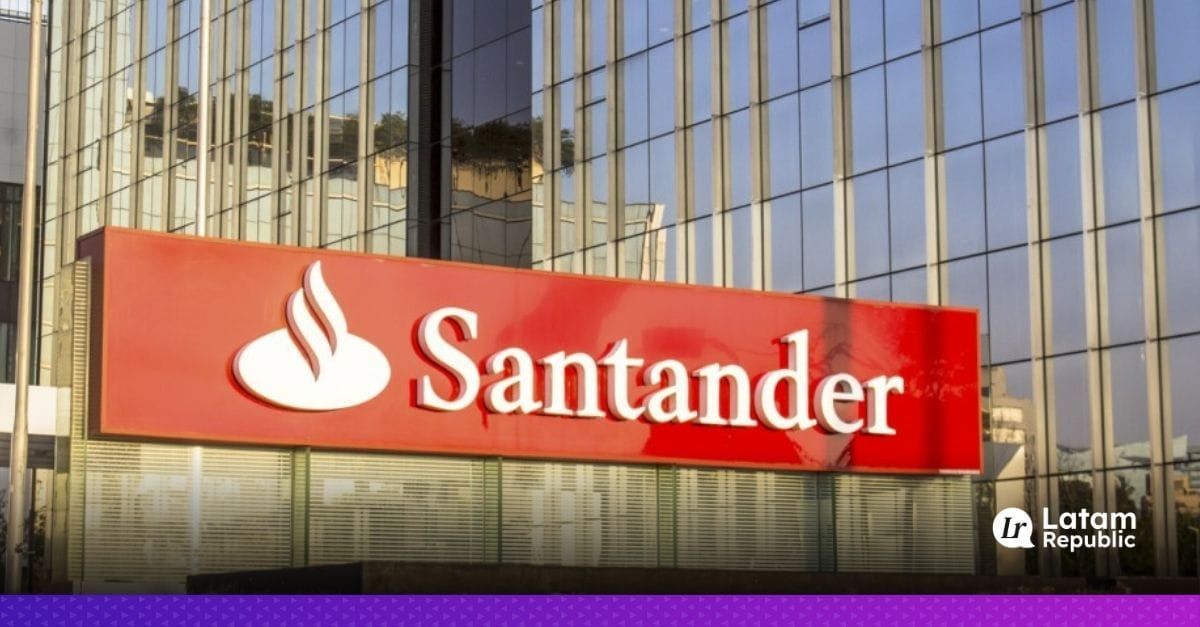
Santander Brasil shares recorded their biggest increase in more than six years after Banco Santander SA, the Spanish parent company, announced a voluntary public tender offer for shares it does not already own. The transaction could involve up to €1.9 billion (US$2.2 billion) as Santander seeks to acquire approximately 10% of the Brazilian subsidiary’s share capital.
The Spanish bank plans to exchange the shares of Santander Brasil for its own shares through the issuance of new stock.
Santander Offers 15% Premium for Santander Brasil Shares
Although the offer extends to all outstanding shares, Santander said it does not intend to delist Santander Brasil and that the offer is voluntary. Depending on the outcome, however, the shares could potentially be delisted from the New York Stock Exchange.
According to Santander, the offer represents a 15% premium over the reference price of Santander Brasil shares. The Spanish parent also said it would issue shares equivalent to approximately 1.1% of its own share capital, assuming all Santander Brasil shareholders participate.
“This transaction represents another step in our group simplification strategy, while reinforcing our long-term commitment to Brazil,” Santander Executive Chair Ana Botín said in a statement.
She also said the transaction is expected to contribute to higher earnings.
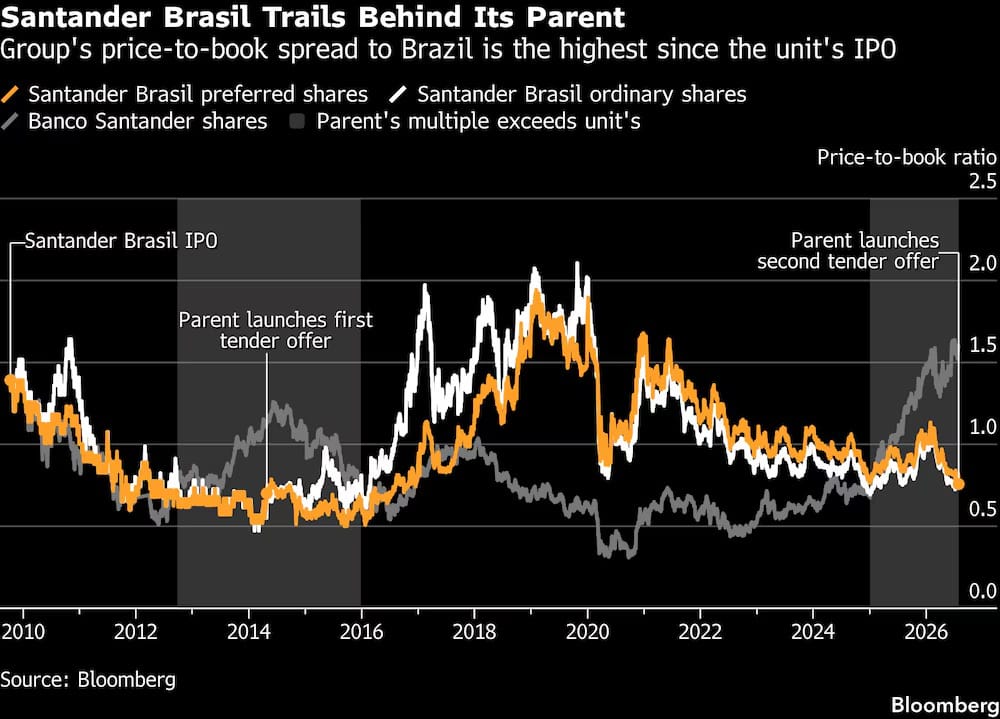
Santander Brasil Shares Jump 13.9%
Santander Brasil shares rose as much as 13.9% on Friday in São Paulo, marking their largest intraday gain since March 2020.
Trading in Brazil was delayed by three hours because of a technical failure at the local stock exchange.
Market speculation about a potential tender offer began early last year, when Santander Brasil’s valuation fell behind that of its Spanish parent amid growing credit challenges in Latin America’s largest economy.
The valuation gap has continued to widen as Banco Santander has become the most valuable bank in continental Europe.
Why Santander Is Increasing Its Stake in Brazil
Santander Brasil is one of Santander’s largest operations. More than one-quarter of the group’s global workforce is employed in Brazil, and the subsidiary ranked first in revenue during the first half of this year.
However, profitability has declined in recent years as high interest rates have pressured its business model, which relies heavily on consumer financing and customers with lower incomes.
Fernando Siqueira, research director at Eleven Financial, said the decline in Santander Brasil’s share price, the depreciation of the Brazilian real, and the subsidiary’s relatively small free float help explain the decision.
He also said the transaction appears to signal confidence that the bank’s weak results in recent quarters are temporary.
Analysts Raise Concerns Over Santander Brasil’s Free Float
The transaction could also create challenges for minority shareholders if Santander Brasil’s free float declines without the company being delisted.
Gustavo Schroden, an analyst at Citigroup, warned that a smaller free float could increase valuation discounts, reduce institutional investor interest, and raise the risk of future corporate transactions taking place on less attractive terms.
Bloomberg Intelligence analysts Gabriel Gusan and Lento Tang described the offer price as reasonable rather than particularly generous. They noted that Santander Brasil had been trading slightly below book value, while the 15% premium takes the implied multiple to a more acceptable level for a bank still facing weak credit conditions, slower revenue growth, and a slower recovery in return on equity.
For local investors, the analysts highlighted a practical question: whether holding Santander Spain BDRs would be an adequate substitute for an investment focused on Brazil’s banking sector. For many investors, they said, the answer could be negative.
Santander Brasil Faces Recent Management Changes
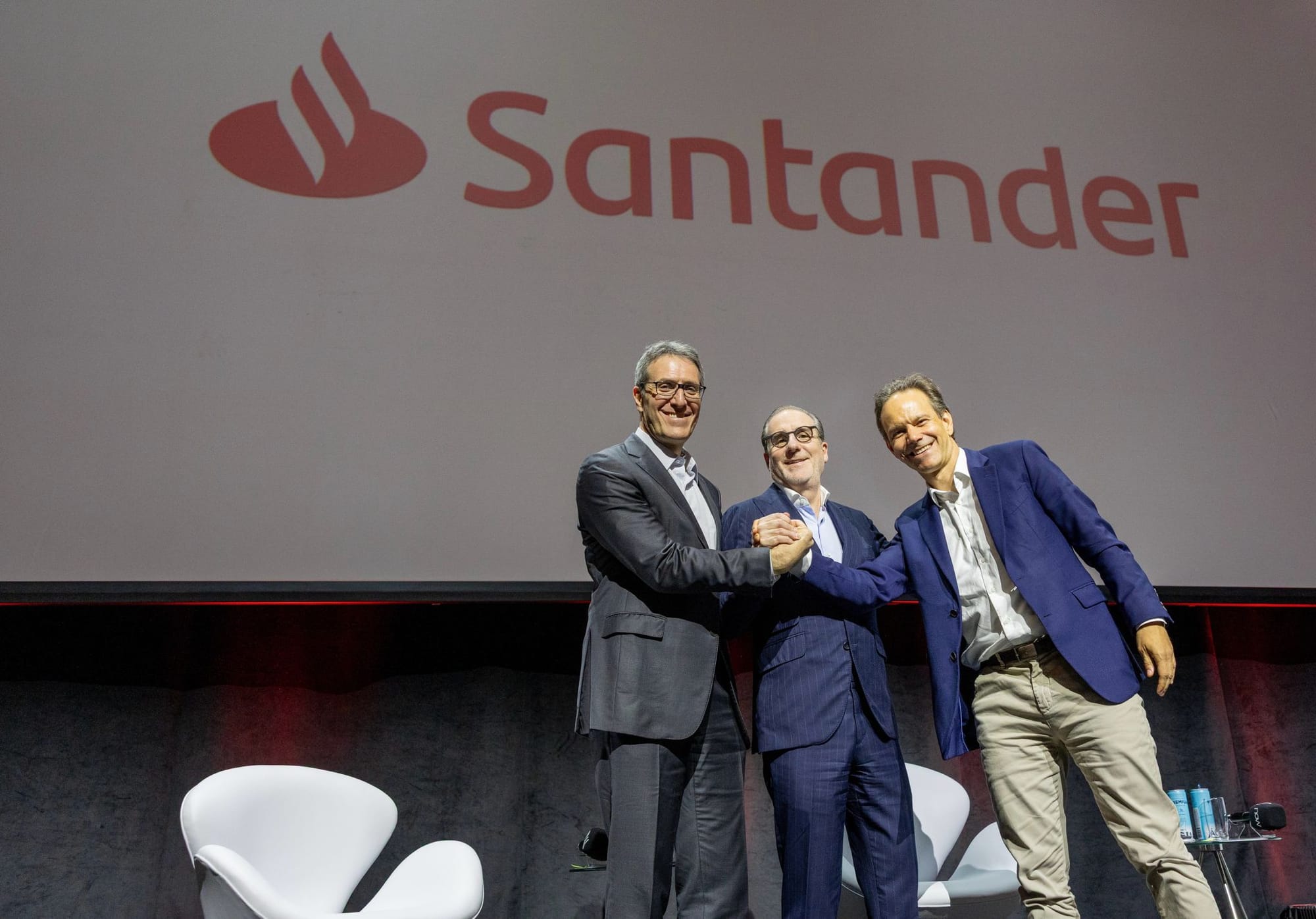
The announcement comes amid several recent changes to Santander Brasil’s leadership.
Chief Executive Officer Mario Leão left the position this month and was replaced by Gilson Finkelsztain. Earlier this year, Chief Financial Officer Gustavo Alejo resigned and was replaced by Carlos Muñiz.
The leadership changes followed a difficult second quarter for the Brazilian subsidiary. On Wednesday, Santander Brasil shares recorded their largest decline in more than six years after the bank reported second-quarter results below analysts’ expectations, driven by a sharp increase in credit costs.
Muñiz said Santander is reducing its exposure to higher-risk products and does not expect the macroeconomic environment to change before next year.
Against this backdrop, Santander’s proposed acquisition represents both a move to simplify the group and an effort to strengthen its long-term commitment to its Brazilian operation.