
10 Rising AI Startups in Latin America 2026


Artificial intelligence is no longer exclusive to Silicon Valley. A new generation of Latin American founders is building deeply localized AI solutions, tackling real problems and scaling from markets that global capital has historically overlooked. This is the map of ten pre-Series A startups shaping the future of AI in the region.
Latin America is experiencing a unique moment in its technological history. According to the Latin America VC Report 2026 by Cuantico VP and Startuplinks, venture capital investment in the region reached US$4.126 billion across 681 rounds in 2025, representing 13.8% growth compared to 2024 and the first meaningful recovery after the post-2021 correction cycle.
However, the paradox is revealing: more capital, but for fewer startups. The number of transactions fell to its lowest level since 2017, while the average ticket size rose 16% to US$6.1 million — a clear sign of a market rewarding quality over volume. Even more concerning for emerging founders: pre-seed funding dropped 40% in capital and 39.4% in number of deals, marking the weakest activity at this stage since 2018.
In this more selective environment, the startups that stand out do so through strong fundamentals, real traction, and strategic use of artificial intelligence applied to local problems. These are not copies of Northern models. They solve challenges that only exist — or are especially acute — in emerging markets. From AI agents replacing hospital call centers in Brazil to virtual crop simulations eliminating field testing in Argentina, the common denominator is clear: AI applied with purpose.
Below are ten startups at the pre-Series A stage already demonstrating exactly that — and that could define a more promising future for the region.

1. Edtools — Colombia | EdTech
Edtools was born from a family story. Founder and CEO Andrés Salcedo grew up watching his parents — both teachers — struggle with the administrative burden that consumes much of educators’ time. When he began sharing tools he built for them with other teachers, he realized the issue was systemic.
Although often perceived as an ERP for schools and universities, Edtools is more ambitious: an AI-powered operating system where institutions can run their full operations from one place. Admissions, academic management, student portals, payments, complaints handling, and family communication are all centralized and automated.
Backed by international incubator 51LABs, Edtools was born in Barranquilla, Colombia, but has had a global mindset from day one, already operating in Asia and participating in global education innovation events.

2. Patagon AI — Ecuador | SaaS
Founded between Ecuador and Argentina, Patagon AI is an AI agent platform designed to automate sales and marketing processes, delivering conversion increases of up to 400% for clients.
The company raised US$1.1 million in a round led by OneVC (Brazil) and 17Sigma (Argentina), and already operates in Colombia, Brazil, Mexico, Chile, and Argentina. Clients include Autos OK, Alvarez Bravo, and Humana S.A.
With a projected US$2 million ARR for 2025, Patagon AI has been highlighted by Cuantico VP as one of the most promising startups for 2026.

3. Carecode — Brazil | HealthTech
Thomaz Srougi was already well known in healthcare before founding Carecode, having previously built Dr. Consulta, one of Brazil’s most recognized clinic networks.
After a decade in the industry, he identified a massive inefficiency: patient interactions surrounding appointments — scheduling, confirming, rescheduling, and follow-up — consume up to 50% of revenues for healthcare companies in Brazil.
Together with co-founder Pedro Magalhães, former CTO of Zé Delivery and BEES Bank Brazil, Srougi launched Carecode in 2024. Its AI agents operate through WhatsApp text and audio to automate the full patient administrative journey.
The startup raised US$4.3 million in pre-seed funding led by a16z and QED, with participation from Endeavor Catalyst and Nubank co-founder David Vélez.

4. MetaBIX — Uruguay | Biotech
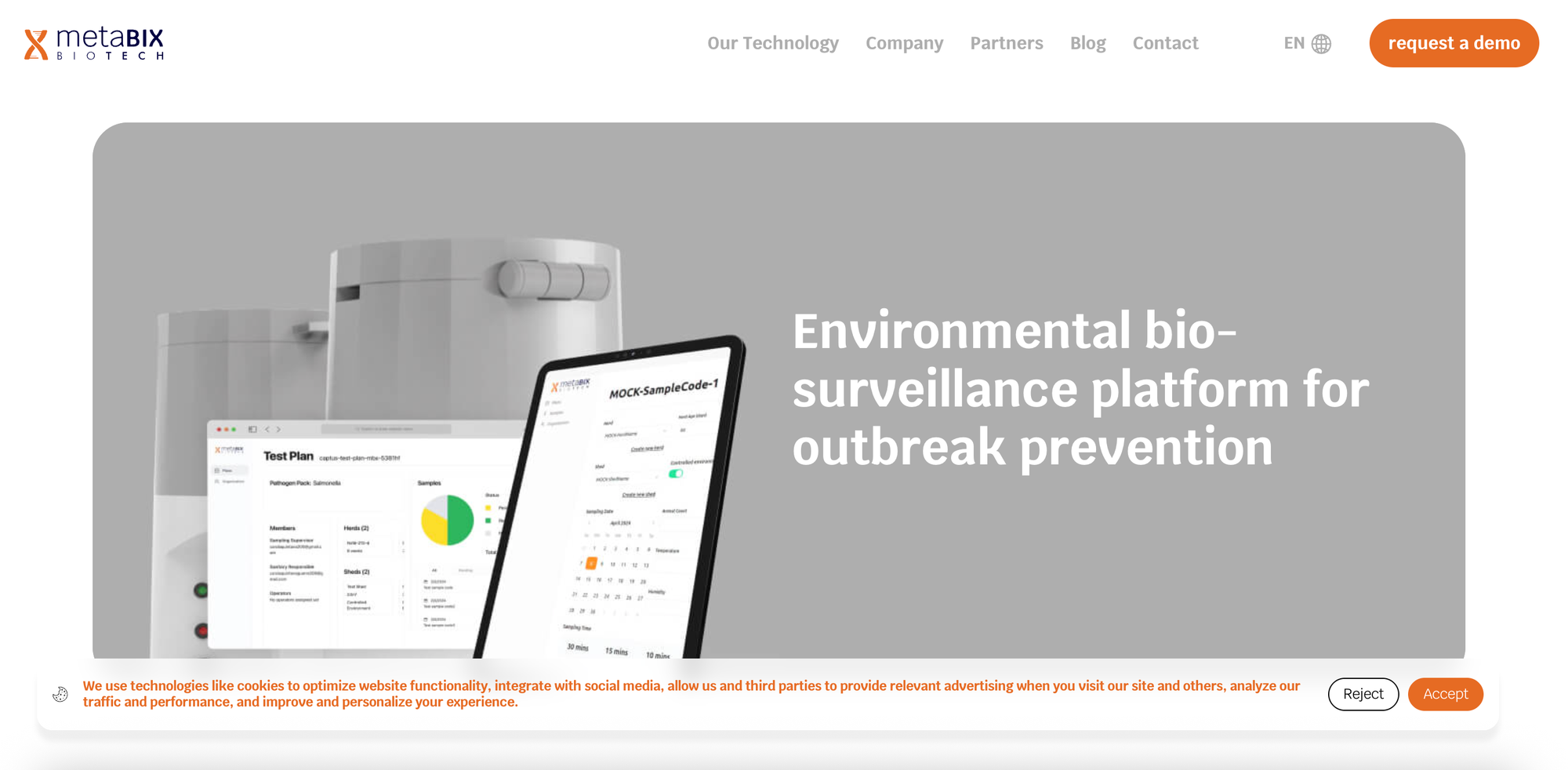
Uruguay-based MetaBIX Biotech operates at the intersection of biotechnology, hardware, and artificial intelligence to predict disease outbreaks in farm animals.
Co-founded by Laura Macció, the startup analyzes air samples in poultry and pig farms to detect emerging pathogens and microbiological risks, issuing alerts at least two weeks before outbreaks occur.
Founded in 2022, MetaBIX already operates with clients in Brazil, Ecuador, India, and the United States. It has raised more than US$1 million and was recognized by StartUs Insights as one of the top 20 deep tech startups globally.
5. Calice — Argentina | AgTech
Founded in 2018 by Ramiro Olivera, Esteban Hernando, Andrés Rabinovich, and Pablo Romero, Calice initially focused on crop gene editing.
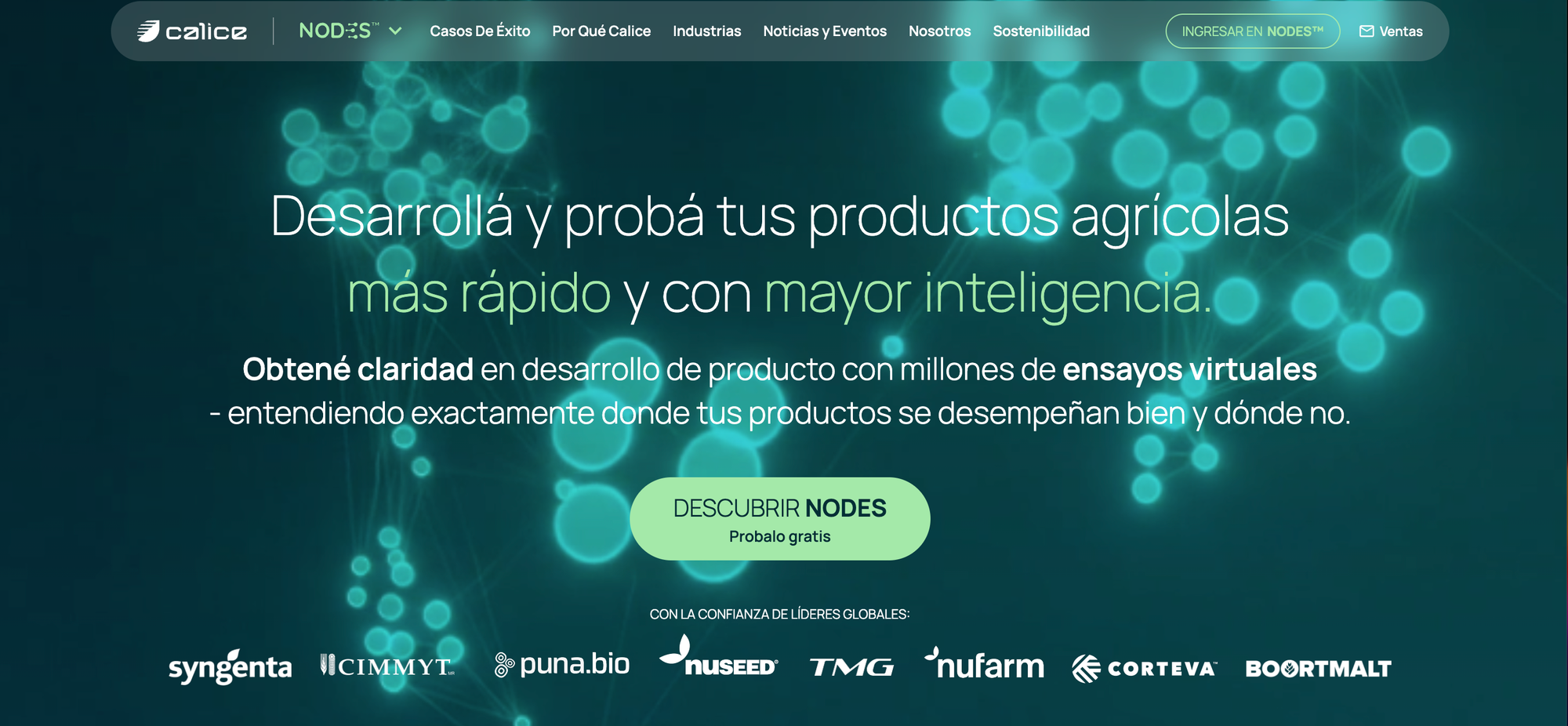
In 2023, the team made a strategic pivot, launching NODES, an AI platform that runs computational field trials — virtual crop simulations predicting yield and quality without physical testing.
The impact is substantial: NODES can reduce field trials by up to 80% and cut new variety development times in half.
Calice raised US$2.5 million in a seed round led by Astanor, with participation from Draper Cygnus, Xperiment Ventures, AIR Capital, Innventure, and GrainCorp Ventures.
6. Aviva — Mexico | FinTech
Founded in 2022 by Filiberto Castro, David Hernández, Amran Frey, and Israel García, Aviva started with a bold premise: smartphones are not the universal solution to financial inclusion.
More than 70 million Mexicans live in towns with fewer than 500,000 inhabitants, where banking infrastructure is scarce and connectivity is limited.
Aviva created a “phygital” model combining physical kiosks with AI to offer microloans between US$100 and US$1,000 in just seven minutes through a bot-assisted video call.
The company has served over 200,000 customers, operates 200 kiosks in more than 100 cities, and has maintained a 3.1% delinquency rate.

7. Sento AI — Guatemala | SaaS
From Guatemala, Diego Fernández is proving that Central America can produce software startups with regional ambition.
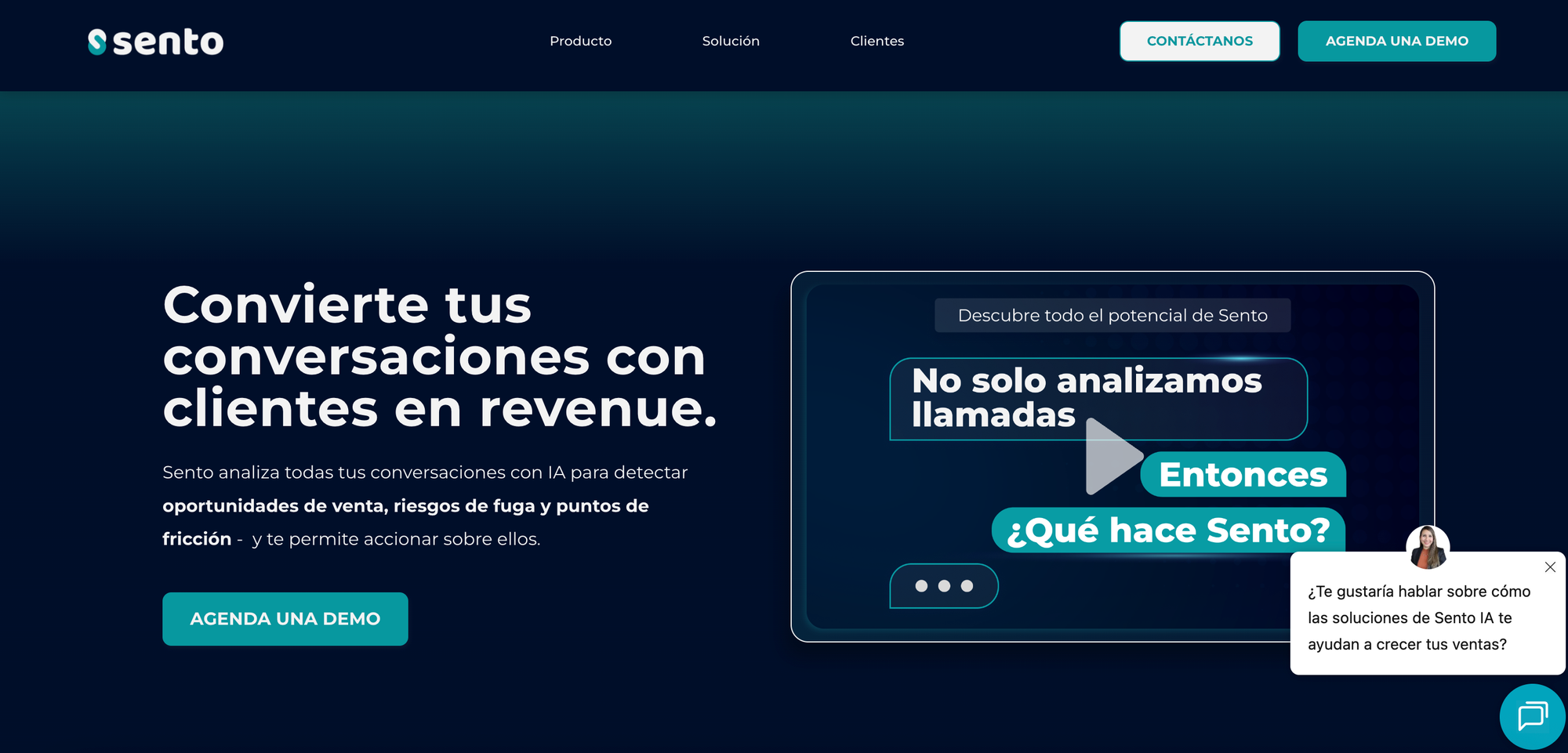
Founded in 2022, Sento AI is a B2B SaaS platform enabling companies to analyze 100% of customer calls using artificial intelligence, replacing manual auditing and transforming conversational data into actionable insights.
With more than 20 corporate clients and 80% quarterly growth, Sento won the Central America AI Challenge organized by Google for Startups and CAFI, receiving US$250,000 in Google Cloud credits.
It was also the first Guatemalan startup selected by Chilean accelerator Platanus Ventures.
8. Hunty — Colombia | HRTech
In a Latin American labor market where hiring remains slow, expensive, and biased, Hunty is rebuilding recruitment with generative AI.
The Colombian startup automates sourcing, screening, and candidate matching, significantly reducing hiring time and costs.
Hunty was selected by AWS as one of the world’s top AI startups in its Generative AI Accelerator 2024 and was featured at Google Cloud Next 2024 as a case study in AI innovation.
With expansion plans into the United States, Europe, and Africa, Hunty is addressing one of the region’s most urgent operational needs.

9. Bruna — Chile | Industrial AI
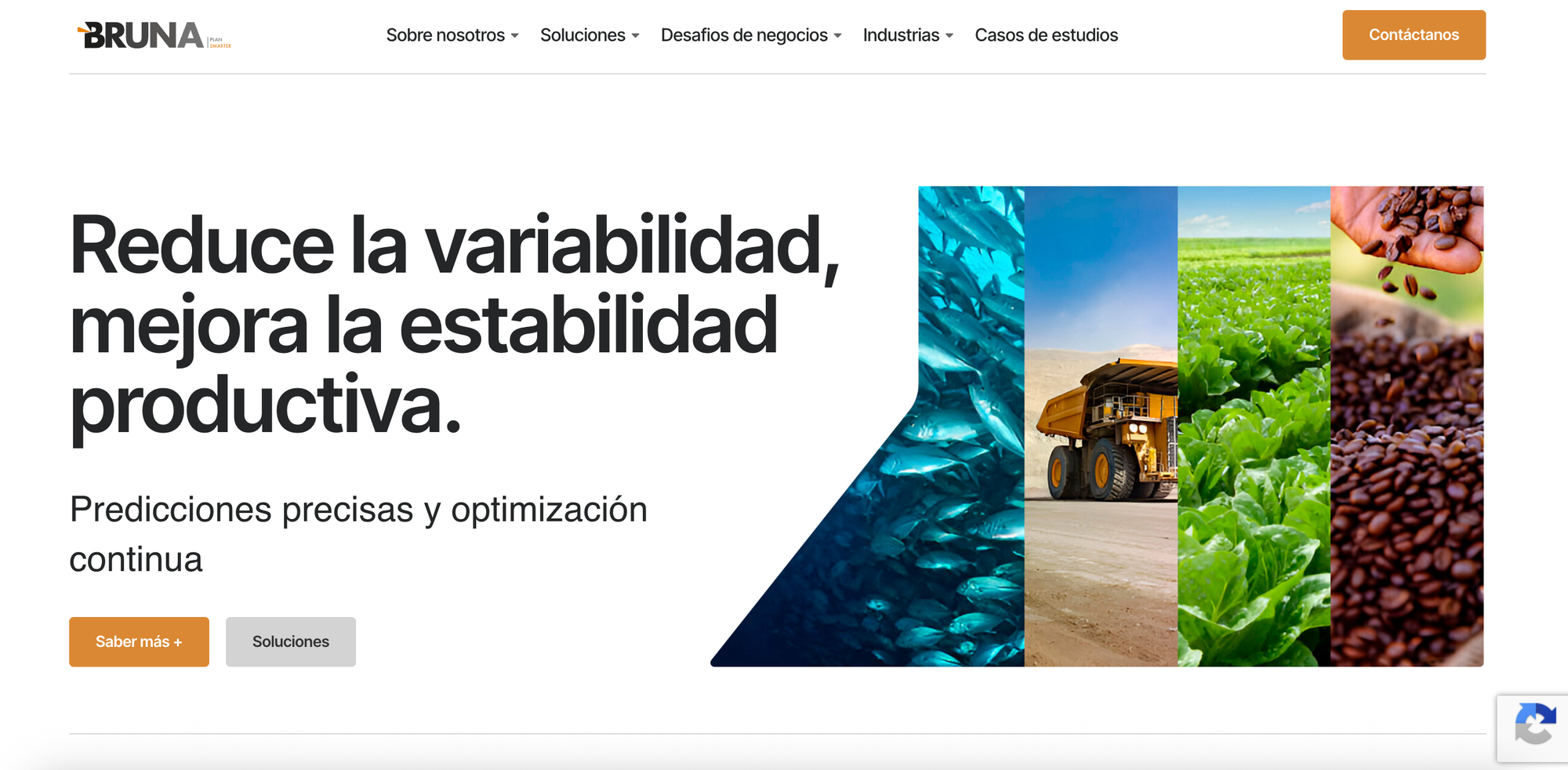
Bruna is a Chilean startup using AI to predict raw material quality and optimize production processes in industries dependent on natural resources.
Its applications range from predicting seed germination to optimizing meat processing blends.
The company raised US$3.85 million in a seed round led by Brazilian and Mexican funds and plans to expand into Mexico and the U.S. Hispanic market.
10. Cora — Mexico | LegalTech / RegTech
Regulatory compliance in Mexico has become increasingly complex. In 2024, the CNBV recorded nearly 800 anti-money laundering fines, while Cofepris launched over 130 sanctioning procedures in the final quarter alone.
Founded in 2023 by Juan Pablo Vera, Cora is building AI infrastructure to help companies navigate that complexity.
Its platform automates end-to-end compliance management: identifying expirations, validating documentation, flagging regulatory changes, and centralizing records.
With more than 7,000 completed regulatory processes and a 0% sanctions rate among clients, Cora is turning compliance from obstacle into competitive advantage.
The landscape: local AI, global impact
What connects these ten startups is not only technology, but a shared thesis: the most powerful AI is built from context.
WhatsApp as a healthcare channel. Physical kiosks for populations without smartphones. Air analysis in South American farms. Credit scoring based on life stories instead of bank statements. Virtual crop simulations replacing months of field testing. Operating systems digitizing entire schools. Regulatory automation reducing million-dollar fines to zero-risk scenarios.
These companies are AI-first in the most literal sense: without AI, the product would not exist.
None of these solutions are copy-paste versions of what is being built in San Francisco. They are native regional products, created by founders who understand that in Latin America, innovation is born not from abundance, but from necessity.
For investors, corporations, and ecosystem observers, this list sends a clear message: Latin American AI talent is not waiting for permission. It is already building.