
Ab Astra Closes US$2 Million Funding Round to Develop Next-Generation Subsurface Imaging for Mining
Ab Astra has secured a US$2 million pre-seed round led by Draper Cygnus to accelerate the development of its muography technology for critical minerals mining, including lithium, copper and uranium.

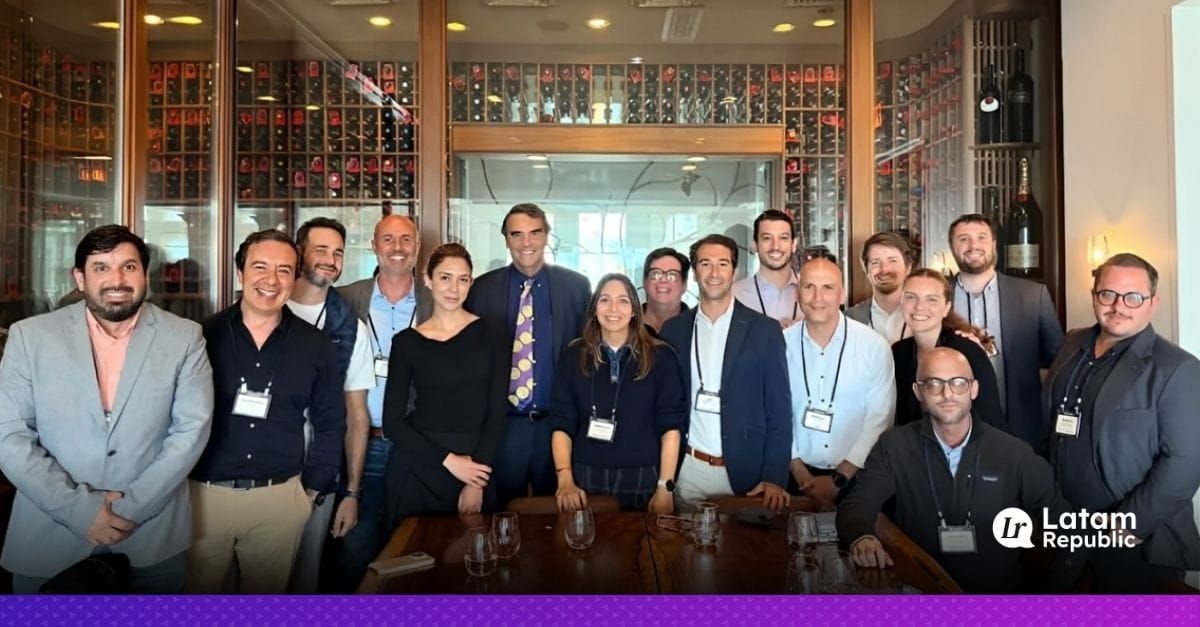
Ab Astra, a deep-tech startup developing advanced muography solutions for the mining industry, has secured a US$2 million pre-seed funding round. The investment will support the development of its first mining-focused system, enhance subsurface imaging capabilities, and advance pilot projects in critical minerals operations.
The round was led by Draper Cygnus, with CITES participating as an anchor investor after previously investing US$275,000 in the company. Air Capital and two angel investors also joined the financing.
According to Germán Serrano, CEO and co-founder of Ab Astra, the newly raised capital will be used to design and build the company's first mining-grade equipment, refine interpretation models for subsurface tomography, and conduct initial proof-of-concept tests in a salt flat environment.
Using Cosmic Rays to See Beneath the Surface
Founded in December 2024 in Neuquén, Argentina, Ab Astra was created by Germán Serrano and Hernán Asorey, former doctoral colleagues in Physics at Instituto Balseiro. Serrano previously served as Director of Special Projects at YPF, while Asorey worked as a researcher at Argentina’s National Atomic Energy Commission (CNEA).
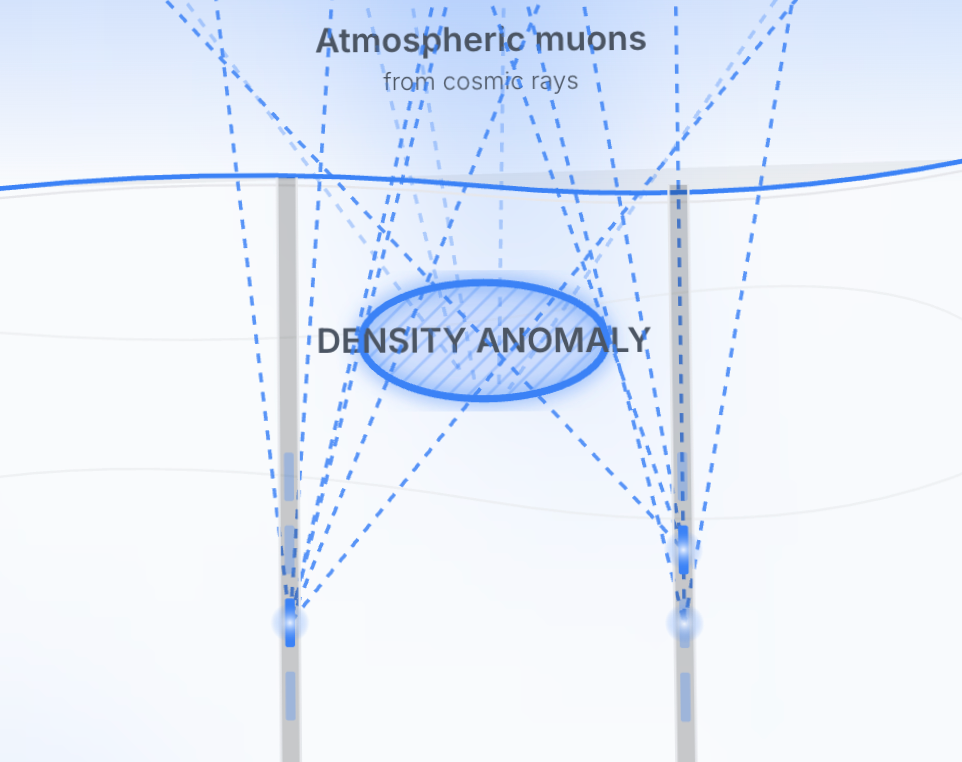
The company is developing a technology that leverages cosmic rays, specifically subatomic particles known as muons, to generate high-resolution images of the interior of large geological formations and critical infrastructure.
"Our primary focus is critical minerals mining, both in exploration and production, with specific applications in lithium brines, copper, uranium, rare earth elements, and other strategic resources," Serrano said.
The technology is designed to improve subsurface models, increase asset value, reduce exploration costs, optimize production decisions, and strengthen environmental monitoring efforts. It also has the potential to support the protection of aquifers and water resources that are important to nearby communities.
Nicolás Tognalli, Managing Partner at CITES, believes the company has the potential to reshape the mining sector globally.
"Ab Astra is poised to revolutionize mineral exploration on a global scale. This new round will enable the company to carry out pilot testing in productive environments and secure its first commercial agreements."
Combining Sensors, AI and Advanced Reconstruction Models
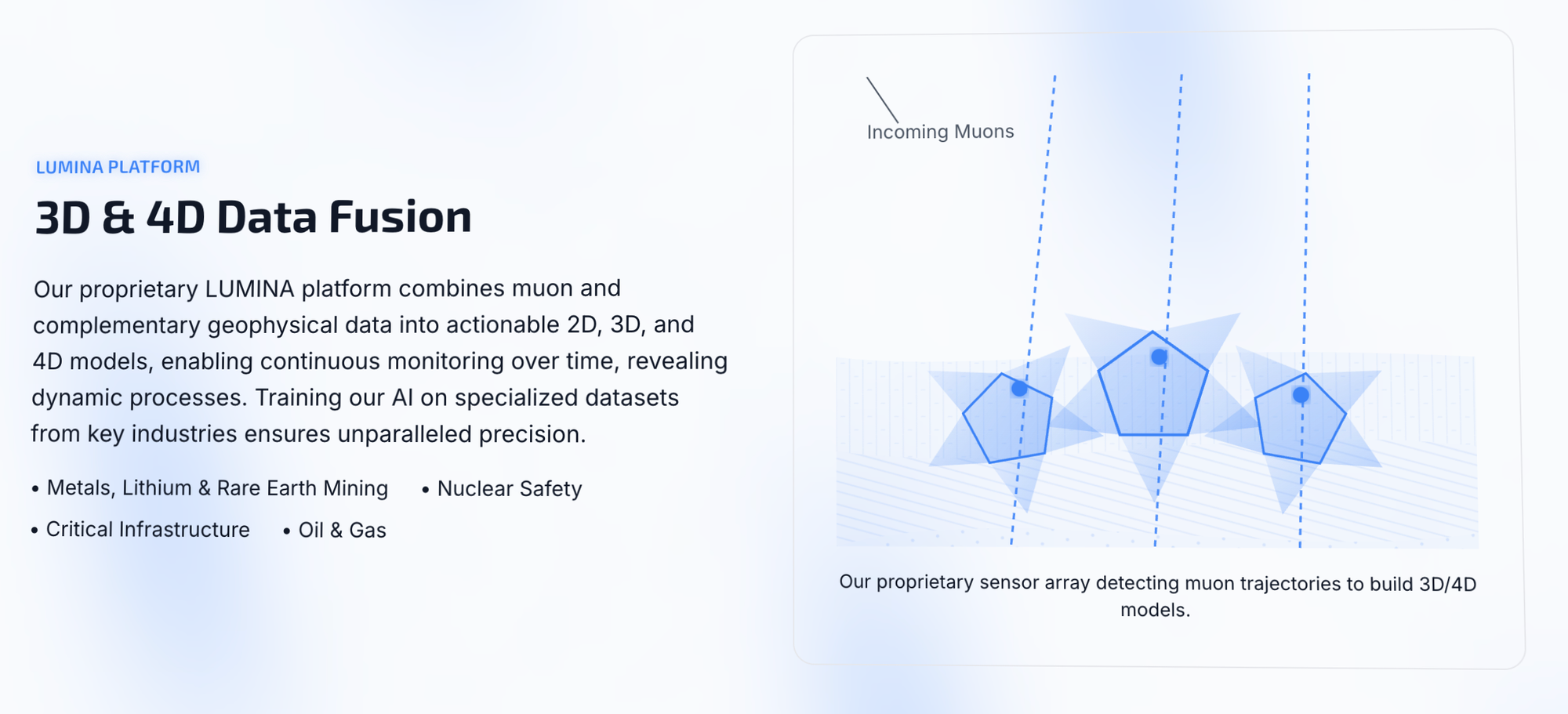
A key differentiator for Ab Astra lies in the integration of compact next-generation sensors, advanced reconstruction algorithms, and artificial intelligence models capable of generating 3D and 4D interpretations of the subsurface.
According to Serrano, the company aims to achieve up to 100 times greater spatial resolution than comparable alternatives, enabling a new generation of tomography applications for natural resources and critical infrastructure.
Among the applications currently under development are:
- Subsurface tomography for critical minerals mining, helping optimize exploration and development activities for lithium, copper, uranium and rare earth resources.
- 4D monitoring of mining operations, integrating time-based measurements to improve production decisions and track subsurface changes.
- Dual-use applications in defense and nuclear sectors, where the ability to inspect critical structures without invasive methods can provide significant value.
The company remains in a pre-commercialization phase. Current efforts include testing early equipment prototypes, developing interpretation algorithms, and designing a new generation of sensors.
A Business Model Built Around Data and Continuous Monitoring
Ab Astra plans to combine measurement and analysis services, field equipment deployment, and a data-driven 4D interpretation platform powered by reconstruction algorithms and artificial intelligence.
For specific exploration campaigns, the company intends to monetize through tomography services. In longer-term deployments, the model is expected to evolve toward continuous monitoring solutions.
Serrano believes current market conditions create a favorable environment for the company’s growth, particularly as Argentina expands its role in the production of critical minerals.
"The country has an extraordinary opportunity in lithium, copper, uranium and other strategic resources," he explained. "However, capturing that opportunity requires better exploration, greater production efficiency, lower technical uncertainty and increasingly demanding environmental standards."
He argues that mining companies face major economic decisions when determining where to drill, how to model a salt flat, estimate the continuity of mineralized bodies, or monitor subsurface behavior during operations. Improving the quality of available information can reduce exploration capital expenditures, avoid unnecessary campaigns, accelerate investment decisions, and increase asset value.
Supporting More Sustainable Mining Operations
Beyond operational efficiency, Ab Astra sees environmental monitoring as a critical component of modern mining.
According to Serrano, the ability to incorporate 4D monitoring of subsurface conditions and water resources can help protect aquifers, anticipate risks, and strengthen relationships with local communities.
"The opportunity is not only to produce more, but to produce better, with more information, less uncertainty and stronger social acceptance," he said.
Investors See Global Potential
For Daniel Salvucci, Managing Partner at Draper Cygnus, the timing is right for the company.
He believes Ab Astra can address a global market while leveraging existing mining, energy, and natural resource opportunities across Argentina and the broader region. Salvucci also highlighted the scientific expertise of the founding team and the industry connections built through Serrano’s experience in mining, oil and gas, and energy sectors.
According to Salvucci, the new financing positions the startup to accelerate adoption within the mining industry while also advancing proof-of-concept projects in two additional verticals: energy and critical infrastructure.
He further noted that Serrano participated in Draper Cygnus' annual summit held in San Francisco alongside Tim Draper’s event in May, an experience that helped reinforce the pace at which the company should scale.
"We saw him successfully engage with peer funds and validate the level of interest the company is generating," Salvucci added.
As Ab Astra moves toward commercialization, the startup is positioning its muography technology as a new tool for improving exploration, operational decision-making, and environmental stewardship across the critical minerals sector.