How Simón's Matthieu Dahirel Is Tackling Frontline Turnover in Latin America

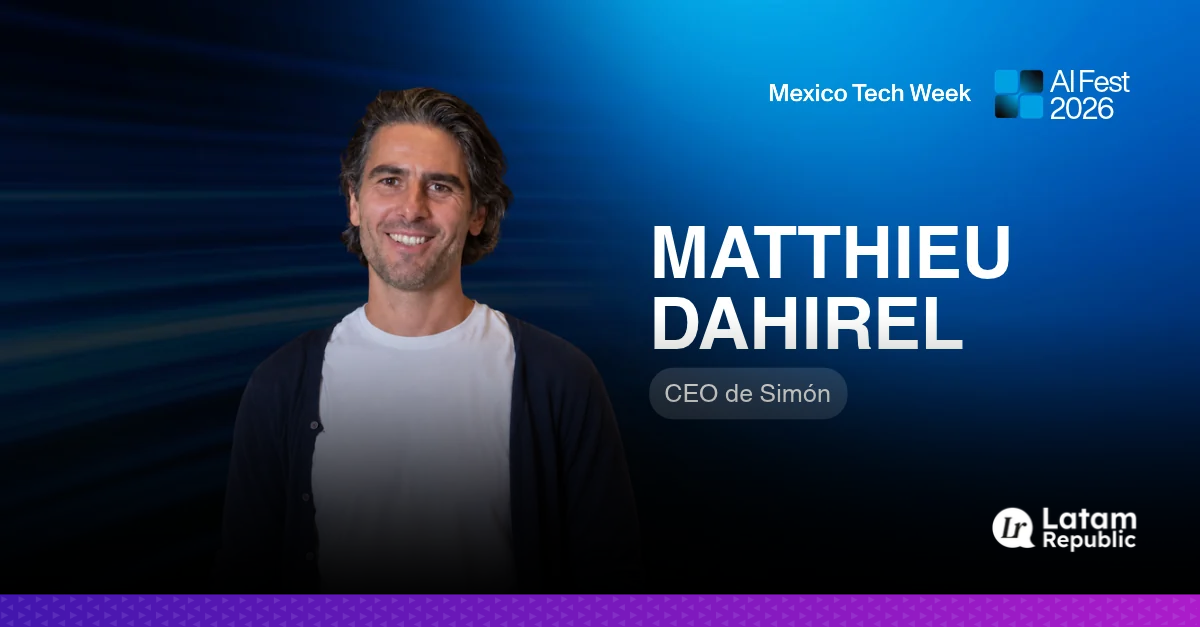
Matthieu Dahirel, CEO of Mexico-based edtech platform Simón, has built his company around a simple premise: the workers who keep stores stocked, routes running, and branches open rarely receive formal training, and the format that reaches them best looks a lot like social media.
Simón delivers short, mobile-first lessons in a style inspired by TikTok to frontline employees and micro-entrepreneurs. Its clients include Arca Continental, FEMSA, Mars, Nestlé, and financial firm dmX, according to El Cronista México, and the platform has trained about 29,000 frontline workers across large Coca-Cola bottlers and retail.
A Decade in Digital Learning
Dahirel, who is French and has lived in Mexico for 16 years, describes himself as passionate about building innovative and effective solutions for digital learning, with more than 10 years in the education sector. His stated mission is to create products that make quality education accessible to everyone, especially in Latin America.
Before Simón, he founded La Tatuadora, a venture that taught professional tattoo artists monetizable skills through short digital content. That experience shaped the model he later applied at scale. Simón was co-founded with Mexican entrepreneur Pablo Campos and built with the venture studio Fundamental.
He is also an investor in Colectivo Jaguara, according to his professional profile.
Training the Traditional Channel
Simón focuses on the traditional channel of corner stores, distributors, and small retailers. The company says its goal is to help micro-entrepreneurs become as productive as their corporate partners.
The platform lets companies build interactive courses for employees, suppliers, franchisees, and retailers, customized with their own branding and delivered via web, WhatsApp, or a client's app. It also tracks each user's progress with metrics that clients can use to measure return on investment. A Tec de Monterrey edtech listing describes Simón as a platform that combines microlearning with behavioral science to improve course completion and skill adoption.
In 2023, the startup was named one of the winners of B2B Xponencial, Nestlé's accelerator, which gave it access to a USD 50,000 fund for a pilot program focused on small businesses. Dahirel said at the time that Simón was determined to be "the catalyst for a sustainable transformation in Mexico's traditional channel."
Turnover as a Business Problem
Dahirel frames training as a tool to reduce employee churn. He has said that frontline employees turn over at a rate of 32% each year, often because they do not see a path to growth. Short, contextual lessons are meant to build skills that lead to promotion.
"If we want to train everyone, we will have to make very contextualized, short content," he told El Cronista. He sizes the opportunity at 135 million frontline workers in Latin America.
Simón entered the market through the Coca-Cola bottler ecosystem and expanded to Arca Continental, FEMSA, and Grupo Rica. It relies on quick pilots with productivity metrics to show return on investment.
Capital and Growth Targets
The company is backed by New Ventures, the corporate venture capital arm of Arca Continental, and Potencia, a U.S. edtech fund. El Cronista reported that Simón was closing a seed extension of more than USD 1 million. The startup reported USD 280,000 in revenue and eight clients in 2023 and has set a 2026 goal of USD 1.7 million in revenue and about 40 clients.
Why It Matters for the Region
Small businesses dominate Latin American economies. In Mexico, micro, small, and medium-sized enterprises account for 99.8% of all businesses, according to INEGI data cited by Marketing4eCommerce. Tools that upgrade skills at that level can lift productivity across entire supply chains.
Investor interest in early-stage companies also remains firm. LAVCA reported that early-stage rounds drew USD 2.2 billion in 2025, about 52% of regional tech venture capital, with Mexico closing much of its gap with Brazil.
For Dahirel, the bet is that the same habits that drive social media engagement can close one of Latin America's most persistent skills gaps.