Jonathan Muszkat Builds an AI-Native Recruiting Platform at Selenios

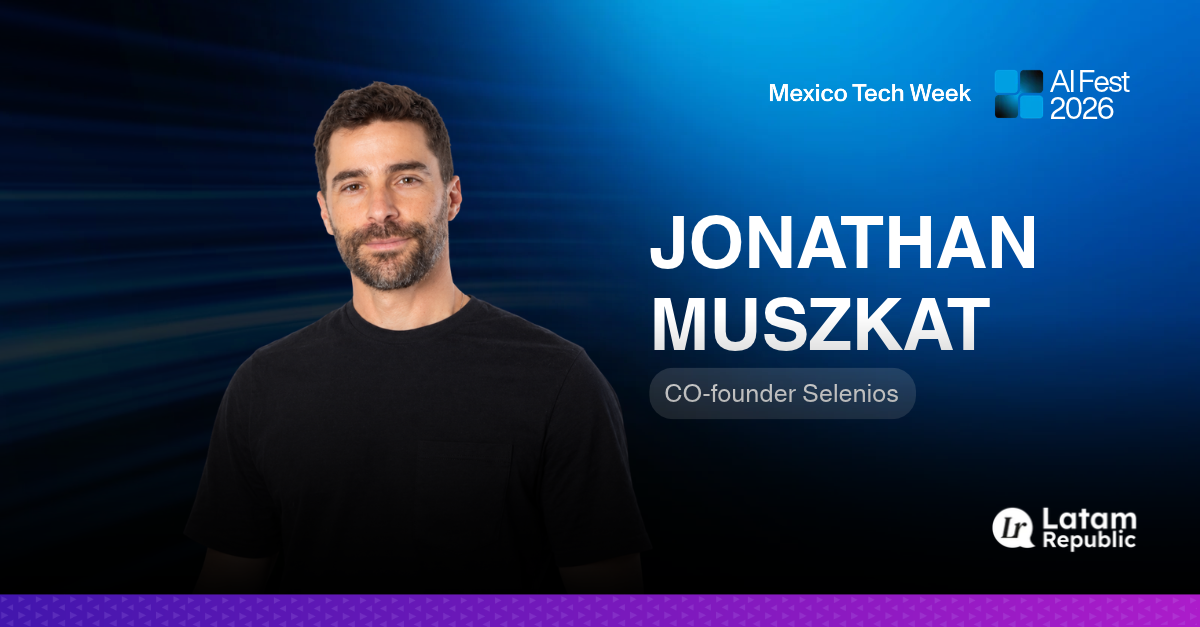
Jonathan Muszkat has spent nearly two decades building software. As co-founder and CTO of Selenios, a Buenos Aires-based startup, he is now applying that experience to a function that has changed little in years: corporate recruiting.
Selenios is building what it calls an AI-native applicant tracking system, designed from the ground up around AI agents rather than adding AI features on top of traditional recruiting software. The platform uses specialized agents across the hiring workflow, from headhunting and candidate screening to interview intelligence, automation, onboarding, and decision support.
From Idea to Enterprise Platform
Muszkat built Selenios' technology and engineering organization from scratch, taking the company from an initial idea to an enterprise-ready platform now used by companies across Latin America. His responsibilities span AI and product architecture, engineering strategy, security, compliance, and scaling the technology for large clients.
He co-founded the company in 2025 in Buenos Aires with Esteban Zecler, now CEO, who previously co-founded TuRecibo.com, later acquired by Visma, and Julián Bender, now COO, who co-founded Sirena, which was sold to Zenvia. Muszkat brought about a decade of experience building AI products at Silicon Valley companies, according to iProfesional.
Security is central to his approach. Selenios operates with high security standards and has implemented a SOC 2-aligned security and governance program as it scales with enterprise customers.
Rethinking the ATS
Muszkat is direct about the limits of legacy tools. "A traditional ATS is basically a repository of CVs with static filters," he told ITSitio. He identifies the time lost between opening a vacancy and reaching relevant candidates as recruiting's main bottleneck.
Selenios responds with agents that cover the entire funnel. "We have specialized agents that cover everything from creating the vacancy to the post-interview report," he said. Its components include candidate matching and scoring, a headhunter agent that searches multiple sources, and pre-screening via WhatsApp or video call. The platform integrates with more than 50 existing tools and supports migrations from legacy systems, drawing on CVs, public company information, and technical profiles.
The company takes a model-agnostic approach. "We run our own benchmarks and evaluations to always use the best available model," Muszkat said. Agents adapt tone and content to each interaction, while recruiters keep control over sensitive stages.
Selenios says its platform can cut time-to-fill by up to 60%. "You don't just hire faster, but also better," Muszkat said.
Funding and Traction
In December 2025, Selenios raised a USD 1.2 million pre-seed round from Nazca, Fen Ventures, Latitud, FJ Labs, Alina VC, and angel investors. The startup was also one of ten Latin American companies selected for Latitud's accelerator.
At the time, Muszkat said the goal was "to free HR teams to focus on people." The company then counted more than 35 clients in technology, retail, and financial services and said it could shorten hiring from 90 days to under 10, at up to 50% lower cost. It also cited estimates that about 90% of corporate recruiting tasks remain manual.
By April 2026, Selenios had more than 60 active clients and a presence in Argentina, Mexico, and Spain, with plans to strengthen its position in Latin America and expand into the United States. "The international traction we are seeing validates that the problem is universal," Muszkat said.
The Bigger Picture
Muszkat's interests reflect where enterprise software is heading: AI-native products, agentic systems, enterprise AI, developer productivity, security, and the future of work. He describes his own focus as having evolved from building software to building technology organizations that turn emerging AI capabilities into reliable, secure, and scalable systems.
That direction matches regional investment trends. LAVCA reported that venture-backed AI startups in Latin America focus mainly on enterprise applications, and that early-stage rounds drew USD 2.2 billion in 2025, about 52% of regional tech venture capital.
For employers across Latin America that still run much of their hiring by hand, Muszkat's agent-based approach offers a path to faster, more consistent hiring at enterprise scale.