
Kesh Raises US$ 110M to Expand Its Employee Credit Platform in Brazil
Kesh raises R$550M to expand its employee credit model, returning interest through cashback while targeting 1M users by 2029


Kesh, a Brazilian fintech founded in April 2025, has raised R$550 million (approximately US$110 million) in a financing round combining equity with funding for a proprietary FIDC, the receivables fund structure commonly used in Brazil to finance credit portfolios.
The round was led by Grupo Leste, an alternative asset manager overseeing approximately R$22.3 billion (US$4.46 billion), with participation from BR Angels and strategic partners from Across Capital. Kesh did not disclose its valuation or the breakdown between equity and debt.
A New Approach to Employee Emergency Credit
Kesh was founded by CEO Marcelo Ramos, who previously created flexible benefits startup Vee Benefícios before selling it to French unicorn Swile in 2021. He co-founded Kesh with Emmanuel Hermann, CEO of Grupo Leste and an early backer of Vee Benefícios.
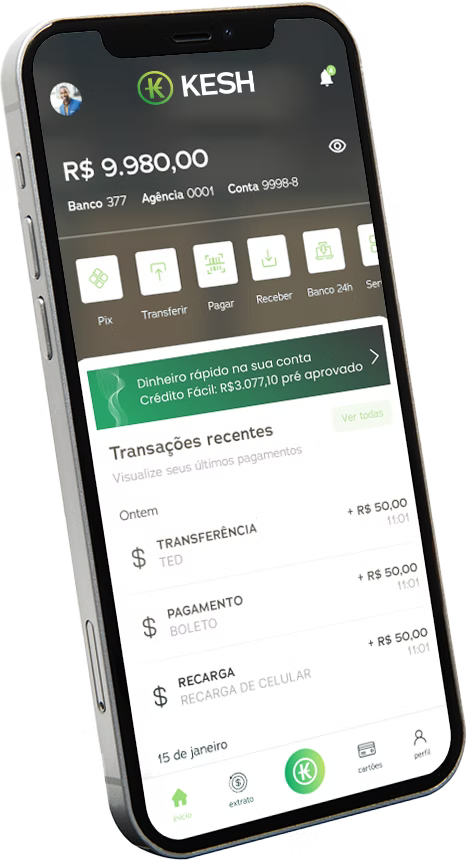
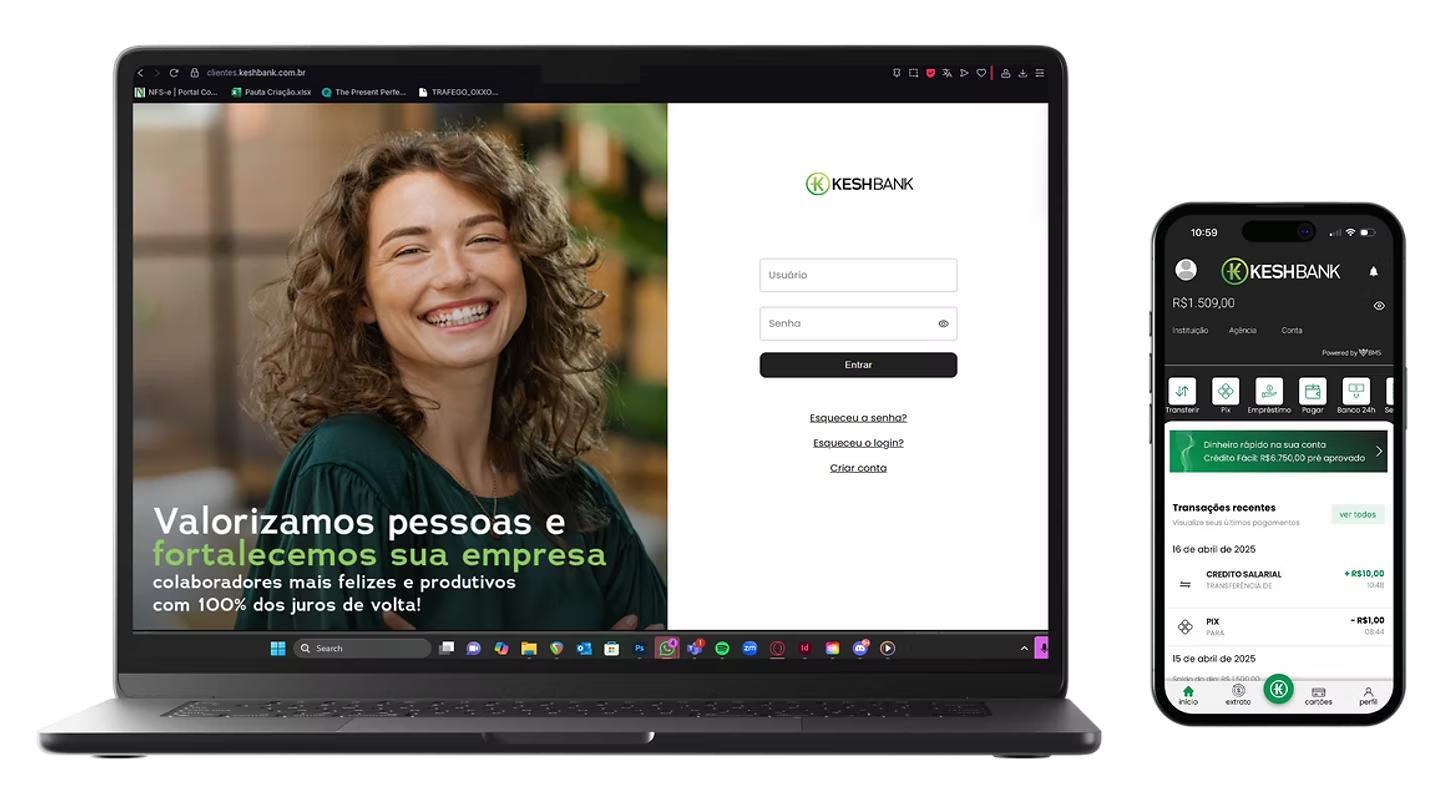
The fintech offers employers free payroll account management and provides employees with short-term emergency loans that can be approved in approximately one minute.
Its model is built around a cashback mechanism: Kesh returns 100% of the interest and fees paid on the loan as cashback, which employees can redeem at more than 150 partner brands, including Uber, Vivo, TIM, Claro, Netshoes and Bob's.
Rather than charging borrowers directly for the cost of the credit, Kesh generates revenue through wholesale pricing negotiated with its merchant partners and commissions related to payroll administration.

As Ramos explained:
“We identified that it wasn't possible to significantly reduce the cost of money. So we thought: what if we compensated 100% of the interest?”
The company currently reports approximately 40,000 users, R$65 million (US$13 million) in monthly payroll processed, and R$8 million (US$1.6 million) in monthly loan disbursements.
The average loan is around R$650 (US$130), while Kesh says it has extended more than R$30 million (US$6 million) in credit since launching.
The company is targeting one million users by 2029 and expects to reach profitability by mid-2027.
Why Emergency Credit Matters in Brazil
Around 80% of Kesh users earn up to five minimum wages, placing the company directly in a segment where emergency borrowing can be particularly expensive.
Revolving credit card debt in Brazil exceeds 14% per month, while the emergency credit products criticized by Ramos can reach rates of 20% per month.
“Nobody helps anyone by lending money at 20% monthly interest,” Ramos has said.
At the same time, more than 80% of Brazilian families carry some form of debt, increasing demand for lower-cost alternatives when households need immediate liquidity.
One of the most direct alternatives is payroll-deducted credit, or consignado. This market currently moves approximately R$9.7 billion (US$1.94 billion) per month in Brazil, at rates close to 3.4% per month.
The market expanded significantly following Law 15.179/2025, which eliminated the requirement for agreements between employers and financial institutions and allowed workers' FGTS severance balances to be used as collateral.
Kesh is entering this expanding market, although its average loan of approximately R$650 (US$130) is significantly below the R$2,251 (US$450) average value of a typical consignado contract.
That difference places Kesh closer to emergency cash-flow needs than to traditional structured borrowing.
The Business Model Behind the Cashback
Kesh's proposition is based on a relatively simple premise: instead of trying to eliminate the cost of borrowing, the company compensates borrowers for the interest they pay.
The cashback, however, does not return the money to users as unrestricted cash. It is converted into spending power at Kesh's network of more than 150 partner brands.
This distinction is important because the value of the cashback depends on whether users would have spent money with those merchants anyway.
The model also means that Kesh's credit economics depend partly on the commercial relationships it maintains with partner brands, which negotiate wholesale pricing with the fintech.
The Investment Signal
The R$550 million (US$110 million) round is notable given that Kesh was founded only in April 2025.
The company is attracting institutional capital at a time when Brazil's consumer credit market is undergoing significant changes, particularly following the expansion of payroll-deducted lending.
Ramos' previous experience building Vee Benefícios and selling the company to Swile in 2021 provides a track record behind the new venture.
The investment also highlights the growing intersection between employee financial services, payroll infrastructure and consumer credit.
Regional Relevance: Brazil and the United States
Kesh's model addresses a challenge that also has a direct analogue in the United States: earned wage access.
According to CFPB data cited in the company's market context, employer-partnered earned wage access providers advanced US$22.8 billion across 214 million transactions to 7.2 million workers in a single year.
Approximately 90% of users paid fees, while an illustrative effective APR was around 109.5%, with significantly higher rates possible for smaller advances.
The category has become a focus of regulatory discussions in the United States, with Congress and state legislatures examining how earned wage access should be regulated. A federal earned wage access bill was also advancing through the House Financial Services Committee in 2026.
Kesh's approach represents a structurally different model for addressing the same underlying problem: rather than relying on borrower fees as the primary economic driver, it seeks to generate the economics of its product through merchant margins and payroll-related commissions.
The Other Side of Kesh's Model
Is Store Credit the Same as Returning the Interest?
Kesh describes its model as returning 100% of the interest and fees through cashback. However, employees do not receive that value as unrestricted cash.
A worker borrowing R$650 (US$130) and paying interest receives the corresponding value as purchasing power at participating merchants.
For someone borrowing because they are short on money, that distinction matters. The refund has its full face value only if the worker would have spent at those partner brands anyway.
The structure also directs part of the user's spending toward Kesh's commercial partners rather than allowing the household to use the money wherever it considers most necessary.
Who Bears the Cost if Merchant Margins Tighten?
Kesh's economics depend on two main sources: wholesale pricing negotiated with partner brands and payroll administration commissions.
That means the model depends on merchants continuing to provide enough margin to support the cashback proposition.
Kesh is targeting profitability by mid-2027, based on current loan disbursements of approximately R$8 million (US$1.6 million) per month.
If partner economics become less favorable as the company scales, pressure could ultimately affect either the cashback proposition or the underlying cost of credit.
How Should Investors View the Related-Party Structure?
There is also a structural consideration around the round itself.
Grupo Leste, which led Kesh's financing, is headed by Emmanuel Hermann, who is simultaneously a Kesh co-founder.
Such arrangements are legal and not uncommon, particularly when an investor connected to a founder helps seed a new company. However, a lead investor negotiating on both sides of the relationship provides less independent price validation than a round led entirely by an unrelated third party.
Because Kesh has not disclosed its valuation, outsiders have limited visibility into how the company was priced in the transaction.
What Comes Next for Kesh
Kesh enters its next phase with approximately 40,000 users, US$1.6 million in monthly loan disbursements, and more than US$6 million in cumulative credit extended since launch.
Its stated objectives are ambitious: reaching one million users by 2029 and achieving profitability by mid-2027.
The company's growth will ultimately test whether its merchant-funded cashback model can scale alongside its credit portfolio while maintaining the proposition that differentiates Kesh from conventional emergency lending in Brazil.