Maggu Secures US$4.4M Led by DGF Investimentos, to Expand AI in Pharmacy Retail
Maggu raises US$4.4M to scale its AI copilot for pharmacies, targeting 30,000 locations and expanding across Brazil and Latin America.


Maggu is capitalizing on the rapid adoption of artificial intelligence across industries by focusing on a niche of its own: AI copilots for pharmacy assistants. The Brazilian startup has just raised a US$4.4 million seed round after growing its customer base nearly 20x over the past year.
A US$4.4M seed round backed by top investors
The round values Maggu at approximately US$27.6 million and was led by DGF Investimentos, with participation from Norte Ventures and IC Ventures as new investors. Existing backers Latitud and Airborne Ventures also joined the round with follow-on investments, after supporting the company in its 2024 pre-seed round.
With this new capital, the startup plans to continue improving its AI platform while accelerating adoption. Currently, Maggu’s solution is present in approximately 17,500 pharmacies, with 2,200 actively using the platform and the remainder undergoing technical activation and rollout.
From SMB traction to enterprise conversations
According to co-founder Felipe Trevisan, early growth has been driven mainly by small and medium-sized pharmacies, which tend to adopt new technologies faster.
“Today we are already in advanced conversations with large national pharmacy retail chains, and we aim to close our first major contract within 30 to 60 days,” he said.
The company is now aiming to significantly increase its growth pace, targeting the addition of around 2,000 pharmacies per month by the end of the year, up from the current 500 monthly additions. By 2027, Maggu expects to reach close to 30,000 active pharmacies, representing roughly 30% of Brazil’s pharmaceutical retail market.
“It’s an ambitious but achievable goal,” Trevisan noted.

An AI copilot for pharmacy assistants
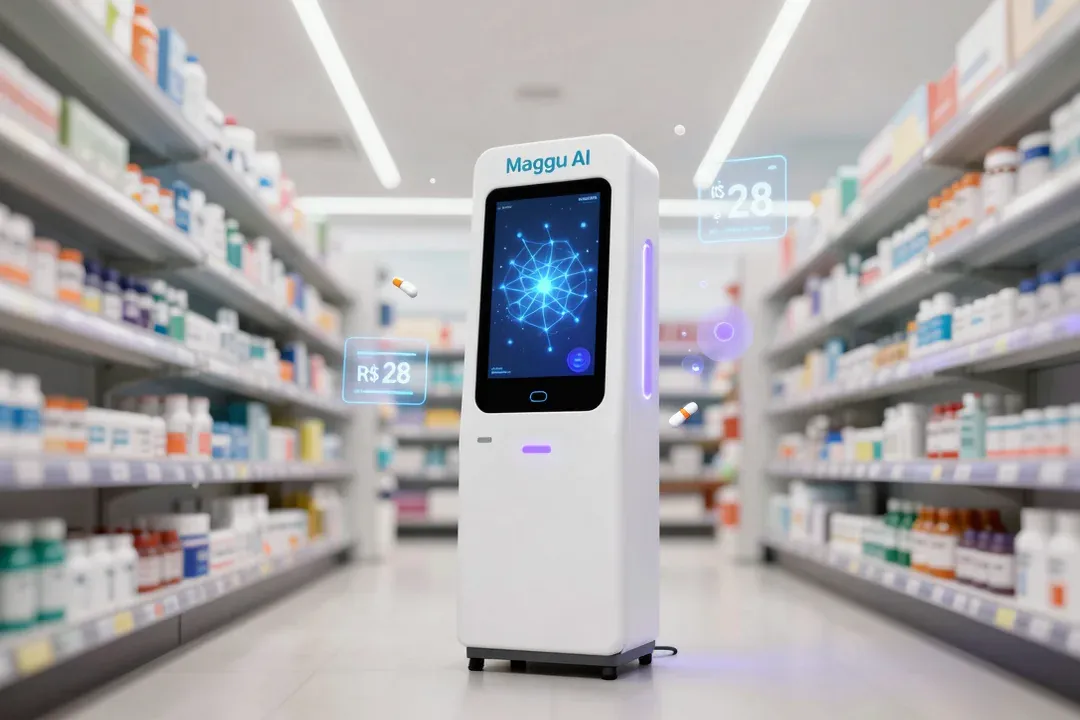
Maggu’s core product functions as an AI copilot that supports pharmacy staff in real-time decision-making at the counter, enhancing pharmaceutical care and customer service.
The platform has been trained on technical data, package inserts, and information related to more than 1.6 million pharmacy products. It integrates directly with pharmacy management systems, adding an intelligence layer within existing workflows.
“We interviewed more than 100 pharmacy attendants and found that most cannot answer more than two questions about the majority of products,” explained co-founder Pedro Magela. “Even for pharmacists, it’s impossible to know everything. Our solution provides support at the exact moment they need to inform the customer.”
Trevisan added that better-informed service can directly impact customer outcomes.
“For example, some anti-aging treatments contain acids that shouldn’t be exposed to sunlight after application. These are critical details that improve both safety and customer experience.”
Experienced founders driving execution
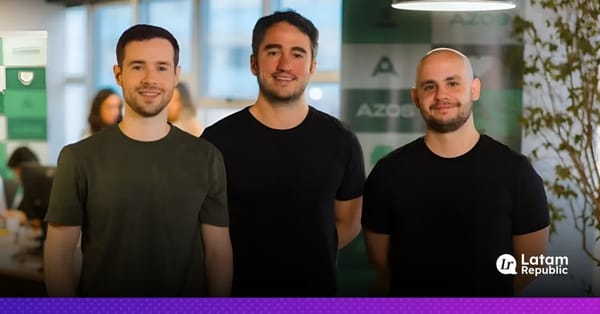
Maggu is built by a team of second-time founders with prior exits. Trevisan previously founded Vuxx, a logistics startup acquired by Box Delivery, which was later acquired by Rappi. Co-founder Luiz Andrade was behind Tevec, an AI retail startup acquired by Infracommerce in 2022.
Other founders include Pedro Magela and Reslley Gabriel, who created SnackIn, a company in the autonomous retail space that had part of its operations acquired by Shopper. The founding team is rounded out by Rérica Lins, an executive with experience in pharmaceutical retail.
According to Trevisan, this track record has been key in validating the product with both customers and investors.
Scaling in Brazil before expanding to Latin America
Looking ahead, Maggu is preparing for a Series A round later this year as it continues to scale.
“There is a lot of room to expand quickly. We are seeing strong demand from pharmacy owners—nine out of ten conversations convert immediately. Our biggest challenge has not been selling, but scaling onboarding,” Trevisan said.
While the company sees strong opportunities across Latin America, home to nearly 300,000 pharmacies, its immediate focus remains on consolidating its presence in Brazil.
“Our goal is to reach as many pharmacies as possible in Brazil over the next 12 to 18 months, and potentially launch a pilot in Mexico by the end of next year,” he concluded.