
Autonomy Raises US$8 Million Series A to Expand Across the Southern Cone
Autonomy Lands $8 million in Series A funding to expand its rent-to-own vehicle fleet from 1,500 to 10,000 cars by 2027.


Autonomy lands an US$8 million Series A round as the Buenos Aires-based mobility and financial services startup seeks to significantly expand its vehicle fleet and provide access to financing for ride-hailing drivers who are often excluded from traditional auto loans.
The round, backed by Magna Capital, Comafi, Natan VC and repeat investor Murchison Ventures, will support the company's goal of reaching 10,000 vehicles across the Southern Cone by December 2027.
A Rent-to-Own Model for Ride-Hailing Drivers
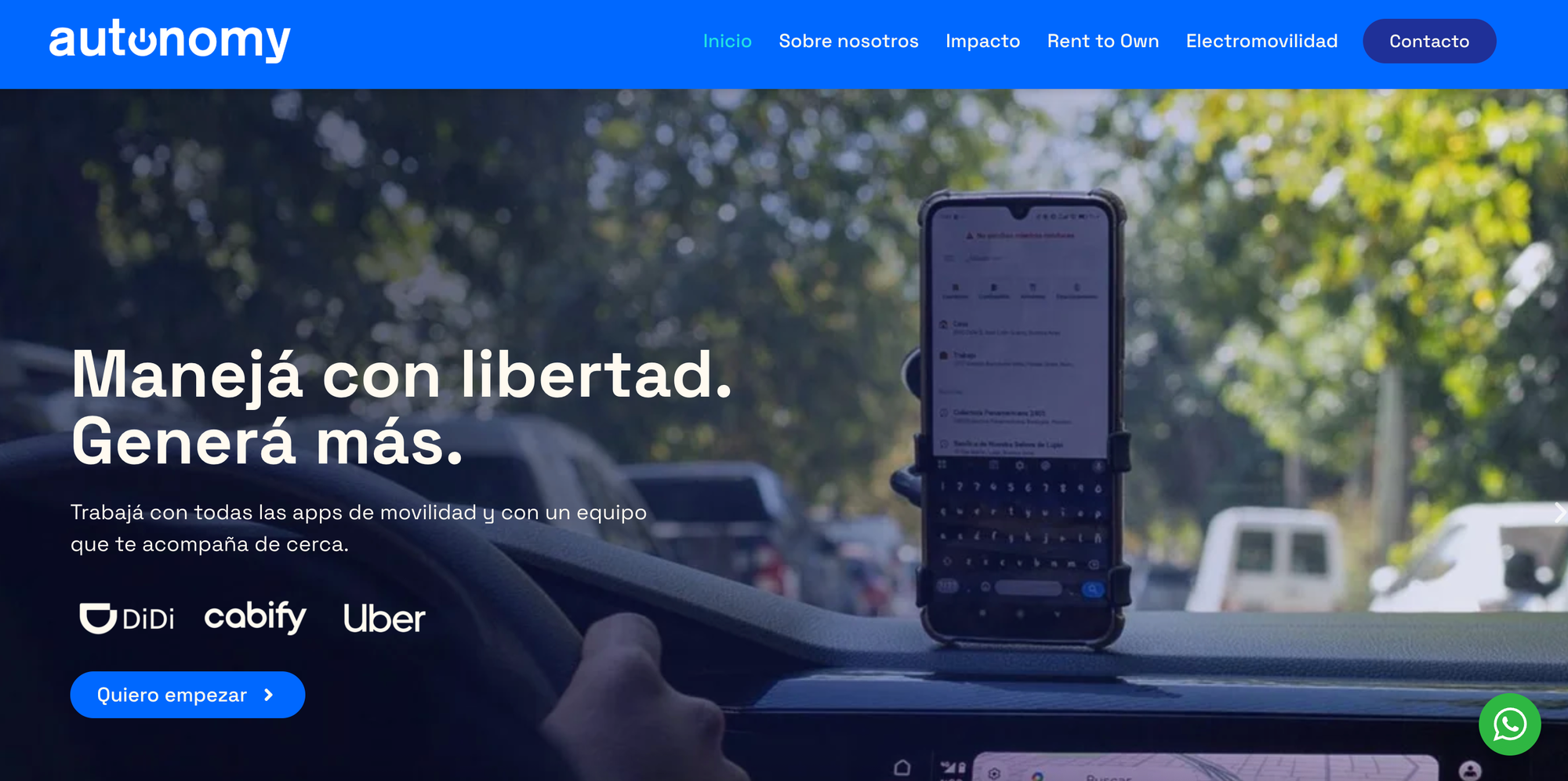
Founded in 2022 by José Trusso, a former Deutsche Bank and J.P. Morgan banker, and co-founder Leandro Cuccioli, Autonomy provides new vehicles to drivers working with platforms such as Uber, DiDi and Cabify.
Its model combines vehicle leasing with insurance, maintenance and permits in a single monthly payment. Rather than relying on conventional credit scores, Autonomy evaluates prospective drivers based on their earnings history on ride-hailing platforms.
Drivers can choose to purchase the vehicle outright after 36 or 48 months.
The company currently operates more than 1,500 vehicles, a significant increase from the ten cars and five employees it had when the model launched in 2023.
With the new funding, Autonomy plans to increase its fleet by roughly seven times, reaching 10,000 vehicles across the Southern Cone by December 2027.
Growing Demand for Alternative Vehicle Financing
Autonomy's expansion comes as ride-hailing demand in Argentina grows by approximately 30% annually, while the supply of drivers has not kept pace.
According to the company, traditional banks frequently reject auto loan applications from gig workers because they lack fixed payroll income, guarantors or the savings required for a down payment.
This has created an opportunity for alternative financing models based on data generated through gig platforms. Autonomy says it receives around 3,000 inquiries from prospective drivers every month, but currently has the capacity to serve only half of them.
The company's approach reflects a broader pattern in emerging markets such as Brazil and Mexico, where mobility and fintech businesses are using gig-platform data as an alternative indicator of creditworthiness for workers who have limited access to traditional financial services.
Funding History and New Capital
Autonomy has raised capital in several stages since its launch in 2022. In 2025, the company secured a US$1.5 million tranche from investors including Gabriel Martino, former CEO of HSBC Argentina.
Before the latest Series A, its cumulative funding, combining equity and debt, had reached approximately $10 million.
The startup is also part of Endeavor Argentina's ScaleUp program, which provides high-growth startups with mentorship and access to investors.
“This round is much more than capital — it's a vote of confidence in the team, in the model we built, and in our long-term vision,” said José Trusso, founder of Autonomy.
Expanding Across the Southern Cone

The planned fleet expansion positions Autonomy to grow beyond its current operations and establish a presence across the Southern Cone, with Chile and Uruguay among its expansion targets.
The company is also considering electric and CNG vehicles as part of its fleet strategy.
For Argentina and the region, the company's expansion addresses one of the main constraints affecting ride-hailing supply: access to vehicles. By increasing the number of drivers able to obtain vehicles through alternative financing, Autonomy's model is aimed at supporting the growth of the ride-hailing ecosystem.
For international investors, the company sits at the intersection of embedded fintech and the formalization of gig work. Its model also reflects continued interest in asset-backed lending approaches in emerging markets, particularly those that use behavioral or platform data instead of traditional credit bureau information.
The Challenge of Scaling the Fleet
Reaching 10,000 vehicles from a current fleet of more than 1,500 will require significant ongoing capital. Vehicle purchases, maintenance and insurance make the model more capital-intensive than traditional asset-light fintech businesses.
As a result, additional debt financing or follow-on equity rounds could be required to reach the company's stated fleet target.
Autonomy's underwriting model also faces the challenge of managing fluctuations in drivers' income over repayment periods of 36 to 48 months. Changes in earnings, as well as shifts in the value of the Argentine peso, could affect repayment performance as the fleet grows.
At the same time, the gap between the approximately 3,000 monthly inquiries Autonomy receives and the number of drivers it can currently serve highlights the scale of demand for its model. The company's ability to expand while maintaining its underwriting standards will become increasingly important as it seeks to accelerate growth.