iFood Launches Drone Delivery Route in Greater São Paulo to Solve Last-Mile Challenges
iFood has launched its first drone delivery route in Barueri, São Paulo, reducing delivery times from up to an hour to just five minutes in hard-to-access residential areas.

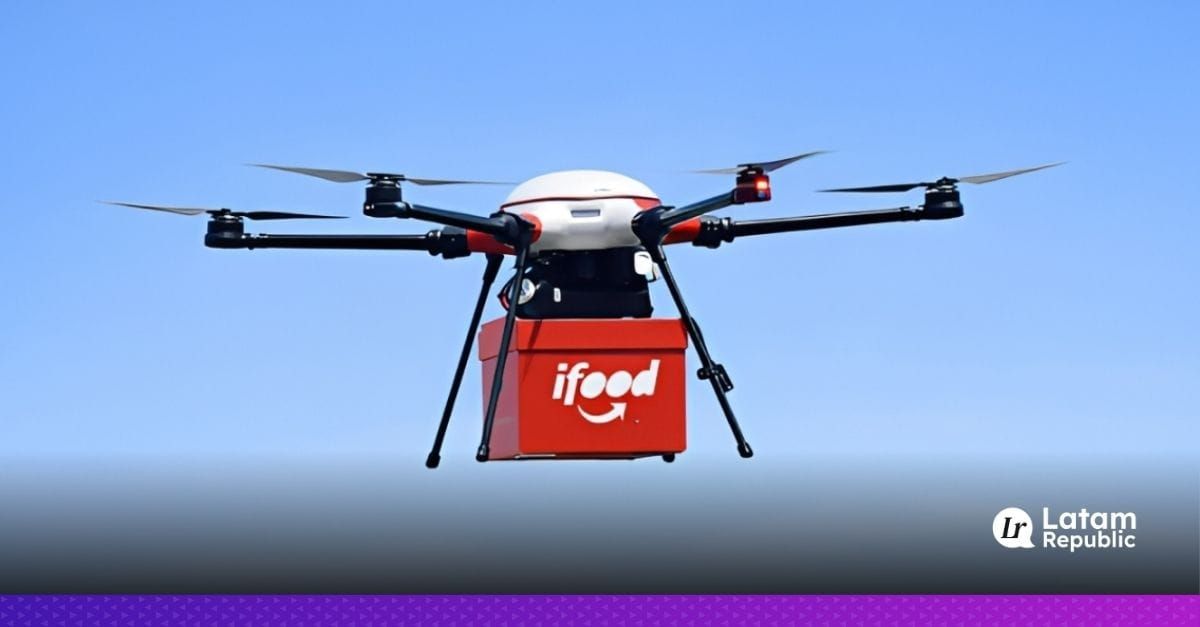
What once required up to an hour can now be completed in just five minutes. iFood has activated its first drone delivery route in Barueri, one of the areas within Greater São Paulo where access restrictions in large residential condominiums have historically complicated deliveries.
The aerial corridor spans 3.6 kilometers, linking Iguatemi Alphaville shopping center with designated delivery points and introducing a new approach to solving last-mile challenges.
Addressing a long-standing logistics bottleneck
Barueri is home to numerous residential complexes where delivery workers often spend extended periods waiting for authorization to enter. As a result, nearly half of the orders destined for the area were never completed.
Restaurants and customers were particularly affected during peak demand periods, when delivery capacity became even more constrained.
Rather than changing the workforce behind the service, iFood redesigned the route itself.
"The solution was to modify the delivery path, allowing drones to cover the most complex portion of the journey."
Under the new model, a drone transports the order through the difficult-access segment. The meal is initially collected from the restaurant either by a courier or by ADA, the company's autonomous robot. Once the drone completes its flight, another delivery worker handles the final stretch to the customer's doorstep.
The technology powering the operation
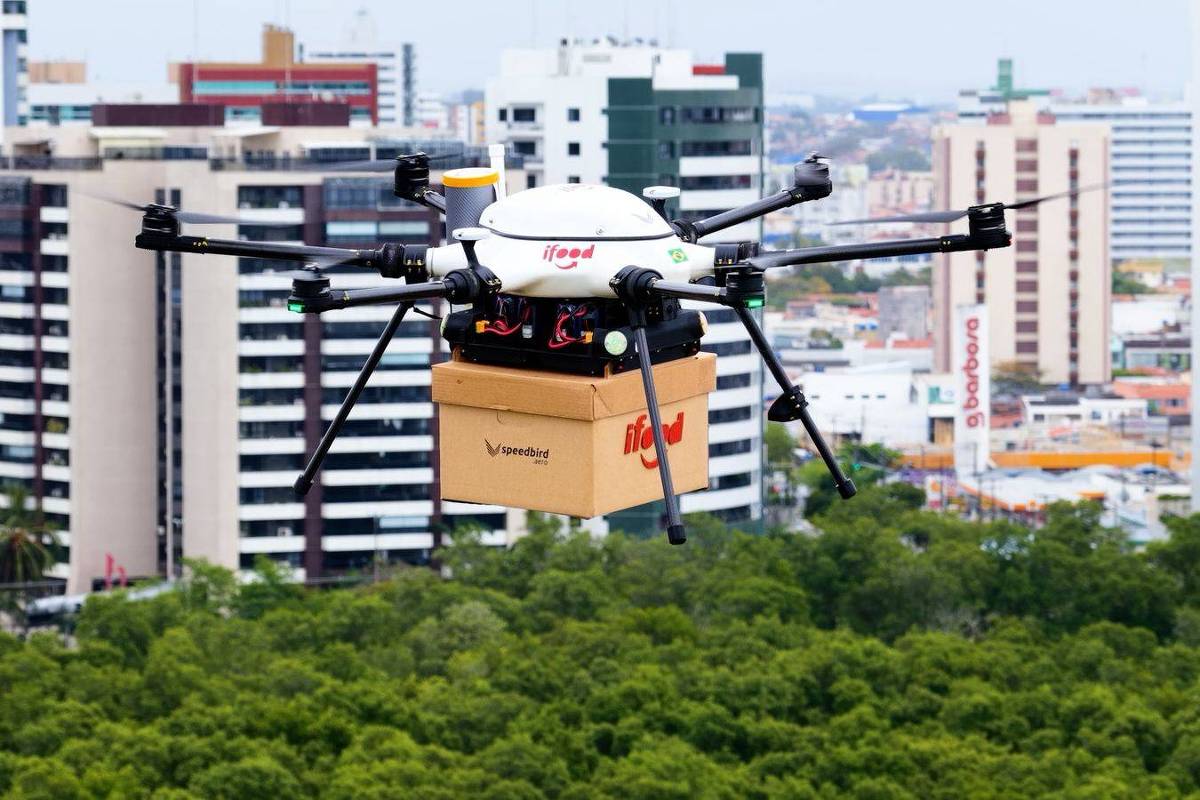
The drone used in the operation was developed by Speedbird Aero, a Brazilian company that has collaborated with iFood since 2019.
The aircraft travels at speeds of up to 50 kilometers per hour and is capable of operating in winds reaching 55 kilometers per hour, as well as under light rain conditions. During flight, it produces approximately 70 decibels of noise, comparable to the ambient sound level of a busy restaurant.
Every flight is supervised in real time through a control center located in Franca, in the state of São Paulo.
Regulatory approval opened the door
The deployment of drone operations over densely populated residential areas required regulatory authorization from Brazil's National Civil Aviation Agency (ANAC).
Approval was granted in December 2025, marking the first time the agency authorized drone flights in Brazilian urban areas with population densities of up to 5,000 inhabitants per square kilometer.
This milestone enabled iFood to bring the technology into one of Latin America's most challenging urban environments.
From Sergipe to São Paulo
@tecnoblog 🍔 O iFood começou a usar drones em entregas na cidade de Barueri (SP) nesta segunda-feira (01/06). O modelo será empregado nos condomínios fechados da região para facilitar a entrada e diminuir o tempo de entrega. Como explica a companhia, os drones vão trabalhar de forma integrada às modalidades existentes. Nos pedidos feitos a restaurantes do shopping Iguatemi Alphaville, um mensageiro ou robô coleta a refeição e a leva até a aeronave. O equipamento, então, percorre um trecho de 3,6 km em cinco minutos, deixando o pacote com um motociclista, que fica responsável pela entrega ao consumidor. A empresa explica que a escolha por Alphaville, região de condomínios fechados de alto padrão em Barueri, se deu pelas “rotas de rejeição” da localidade. Esse termo é usado pela companhia para designar áreas com alta taxa de recusa pelos entregadores. #iFood #SaoPaulo #Delivery #Drone #ANAC ♬ som original - Tecnoblog
Before arriving in Greater São Paulo, iFood had already tested the model in Sergipe.
There, a land route covering 36 kilometers was replaced by a drone flight lasting less than four minutes. After more than 5,000 completed deliveries, the company demonstrated that the system could operate successfully under real-world conditions.
São Paulo now represents the next stage of that strategy. With higher population density, greater order volumes and increased visibility, the city's deployment could become an important benchmark for the evolution of last-mile logistics in Latin America's largest metropolitan area.
If the initiative proves scalable, it may reshape how food deliveries are carried out in some of the region's most complex urban settings.